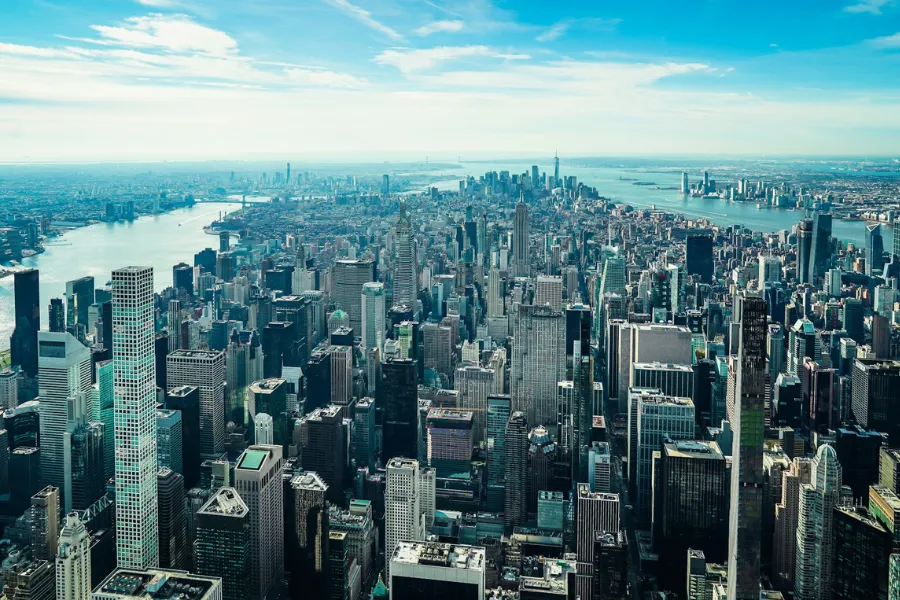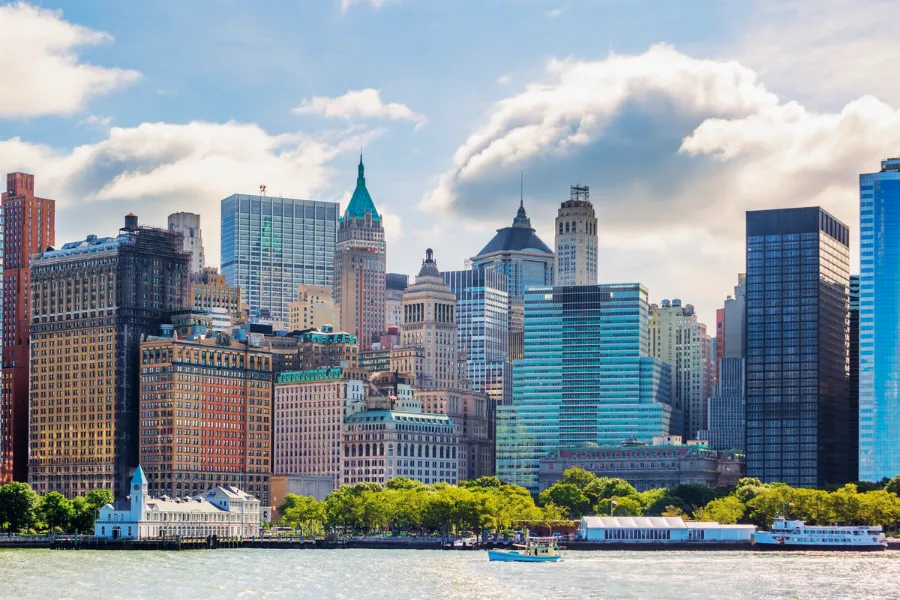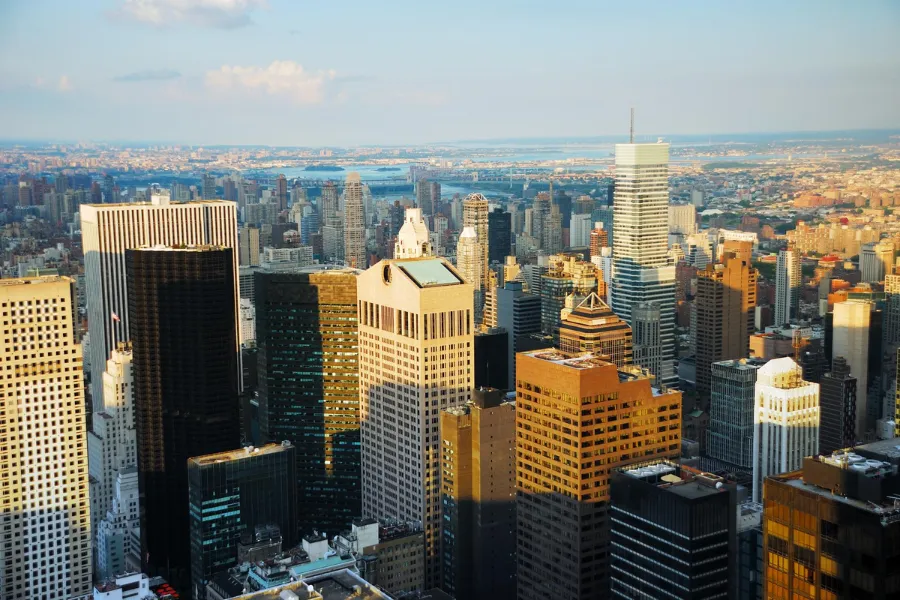

Battery Park City looks like Manhattan, feels like a suburb, and sits on land that did not exist fifty years ago. The Financial District is where New York City was born. One street separates them and almost nothing else is the same. They sit separated by a single street. West Street runs between them like a border, with Financial District on one side and Battery Park City on the other. From the outside, buyers looking at downtown Manhattan sometimes treat them as interchangeable, assuming that proximity means similarity. It does not. These two neighborhoods have fundamentally different characters, different real estate structures, and different long-term ownership profiles. Understanding those differences before you commit is the entire point of this comparison.
Financial District is a neighborhood still building its residential identity after decades as a purely commercial district. Battery Park City is a planned residential community that was purpose-built from reclaimed land. Both sit at the southern tip of Manhattan. Both offer Hudson River access, extraordinary transit connectivity, and a price-to-quality proposition that competes seriously with neighborhoods that command far more attention. But the buyer who thrives in one is not always the buyer who thrives in the other. As potential residents explore the top neighborhoods in financial district, they may find that lifestyle amenities vary significantly. Access to green spaces, cultural institutions, and vibrant nightlife options can define their choice, making it essential to understand what each area offers. With its proximity to Wall Street and other financial hubs, the appeal of these neighborhoods continues to grow as new developments emerge.
What Each Neighborhood Actually Is
Financial District occupies the southernmost tip of Manhattan, bounded roughly by Chambers Street to the north, the East River to the east, and Battery Park to the south. It is where New York City began, and the streets reflect that history. Narrow colonial-era lanes run into wide ceremonial plazas. Landmarked facades sit beside glass curtain walls. The Fulton Center transit hub consolidates access to nine subway lines within walking distance of virtually any residential building in the neighborhood. The residential transformation of FiDi, which accelerated meaningfully after September 2001, has produced a dense concentration of converted office towers and purpose-built luxury condominiums that now house a substantial and growing residential population.
Battery Park City occupies 92 acres of landfill on the southwestern edge of Manhattan, bounded by the Hudson River to the west, West Street to the east, Chambers Street to the north, and Battery Park to the south. It was master-planned in the 1970s and built primarily through the 1980s and 1990s, making it one of the newest neighborhoods in Manhattan from a construction standpoint. More than a third of its total acreage is dedicated to parks and open space. The 1.2-mile Hudson River Esplanade runs the full length of the neighborhood. The North Cove Marina sits at its center. The result is a neighborhood that feels deliberately designed for residential life in a way that FiDi, which evolved organically from a commercial district, simply does not.
The Real Estate Structures Are Fundamentally Different
This is the most important distinction for buyers to understand, and it is the one most frequently overlooked. Financial District real estate is predominantly condo ownership in the conventional sense. You purchase the apartment, you own it as real property, and you hold title directly. The buildings are either converted commercial towers or purpose-built residential condominiums. There is no special legal structure layered on top of the standard ownership model.
Battery Park City’s real estate is built on ground leases. The land beneath every residential building in Battery Park City is owned by the Battery Park City Authority, a New York State public authority. Residents do not own the land their buildings sit on. Instead, the buildings operate under ground leases with the Authority, and the costs of those leases are passed through to unit owners in various forms depending on the building and the lease structure. These leases have terms, escalation provisions, and expiration dates that affect carrying costs and resale values in ways that buyers must understand and underwrite carefully before purchasing.
This is not a reason to avoid Battery Park City. Many buyers purchase there fully informed and are entirely satisfied with the ownership experience. It is, however, a reason to engage a Manhattan real estate attorney who is specifically experienced with Battery Park City ground lease structures before going into contract. The carrying cost picture in BPC is more complex than in a standard FiDi condo purchase, and the resale dynamics are different in ways that require building-specific analysis rather than general assumptions.
Lifestyle and Daily Life
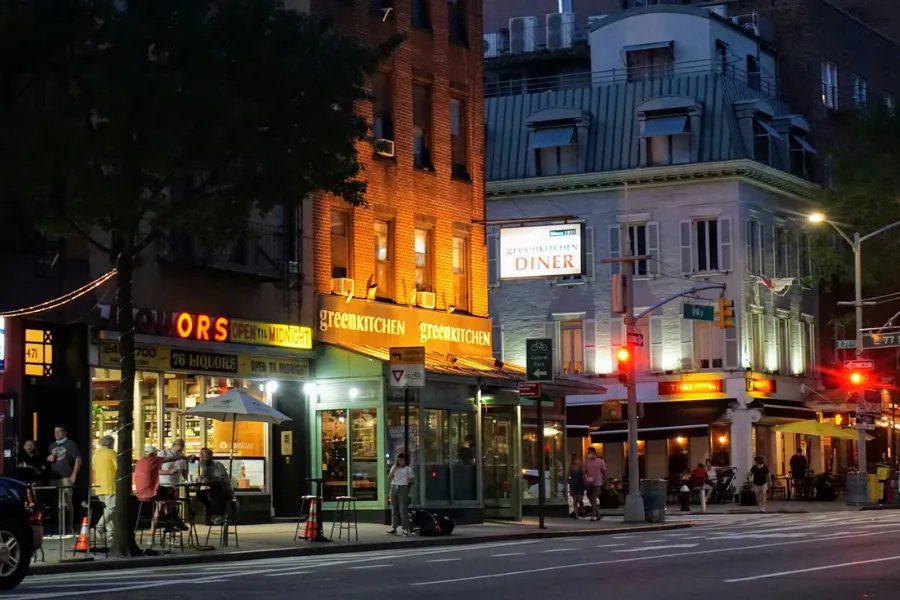
Financial District has spent the past two decades building the residential infrastructure that its commercial heritage never required. The arrival of Whole Foods at One Wall Street, Eataly Downtown, the Tin Building at South Street Seaport, and Brookfield Place’s dining and retail complex at the BPC border has transformed the retail and dining environment meaningfully. Stone Street is one of downtown Manhattan’s most characterful dining and drinking corridors. The Oculus and the broader World Trade Center complex have added cultural and retail programming that has changed the neighborhood’s daily energy substantially.
What FiDi still carries from its commercial origins is a weekday-versus-weekend contrast that is more pronounced than in most established residential neighborhoods. The morning and lunch energy of hundreds of thousands of office workers flooding the streets gives way to a quieter evening and weekend character that some residents embrace and others find limiting. The neighborhood is still building its residential identity, and buyers who are honest about whether that suits their lifestyle will make better decisions than those who discover the contrast after moving in.
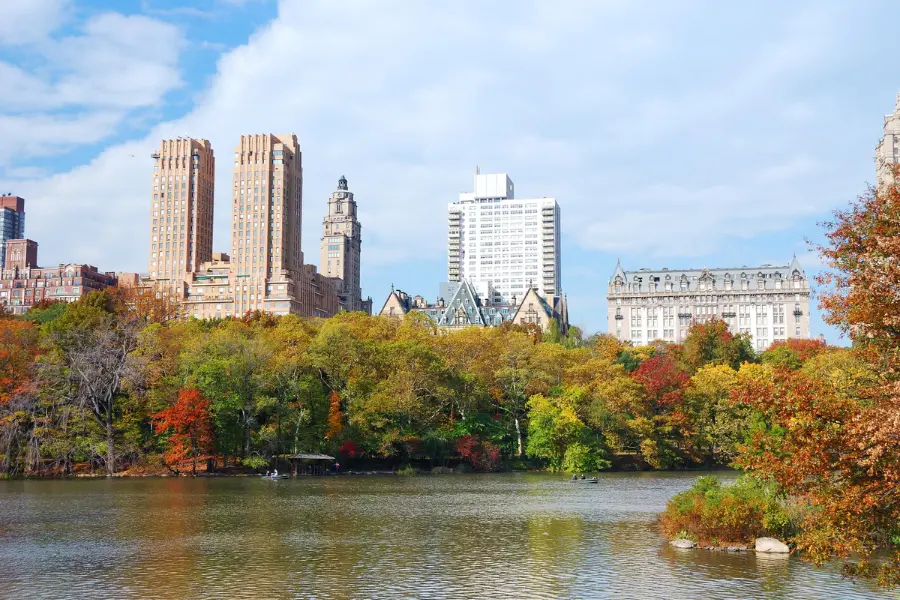
Battery Park City was designed from the beginning as a residential neighborhood and it functions like one. The esplanade along the Hudson is a daily amenity that residents treat as an extension of their homes, running, cycling, walking dogs, watching the sun set over New Jersey. The parks, playgrounds, and green spaces that cover more than a third of the neighborhood’s acreage create a residential quality that genuinely feels different from the density of the rest of Manhattan. Brookfield Place, the mixed-use complex at the northern end of the neighborhood, provides dining, retail, and cultural programming within walking distance. The overall character of BPC is quieter, more ordered, and more intentionally livable than FiDi, and that is both its appeal and, for buyers who want more urban energy, its limitation.
Transportation
Both neighborhoods are exceptionally well connected, though in importantly different ways. Financial District’s Fulton Center consolidates access to the 2, 3, 4, 5, A, C, J, and Z trains, the PATH train to New Jersey, and ferry service in a single hub that gives residents connectivity to virtually any part of the city within reasonable transit time. For buyers who need to reach multiple parts of the city regularly, the FiDi transit infrastructure is among the strongest in Manhattan.
Battery Park City has no subway station within its boundaries. Transit access requires walking to the Financial District subway lines, which is a realistic walk of several blocks for most BPC buildings, or using the NYC Ferry service that connects BPC directly to several Brooklyn destinations and other Manhattan points. The ferry is a genuine amenity and a pleasant commute option, but it operates on a fixed schedule and is weather-dependent in a way that subway service is not. Buyers who rely heavily on multiple subway lines will find FiDi’s transit position meaningfully stronger. Buyers whose primary destinations are accessible by ferry or whose commute is walkable to the Financial District will find BPC’s transit situation entirely manageable.
The Investment Comparison

For FiDi, the investment case is supported by the neighborhood’s continued residential maturation, its number one ranking on StreetEasy’s most searched neighborhoods for 2026 with a 46.7 percent year-over-year jump in buyer searches, and a condo structure that provides clean ownership, strong liquidity, and the resale optionality that serious investors value. The ongoing conversion of commercial office buildings to residential use continues to add product to the neighborhood, and each successful conversion expands the residential identity that supports long-term appreciation.
For Battery Park City, the investment case requires building-specific analysis that accounts for the ground lease structure, the lease escalation schedule, and the remaining term on the specific building’s agreement with the Battery Park City Authority. Buildings with longer remaining lease terms and more favorable escalation provisions trade more competitively than those approaching renewal negotiations or facing significant lease cost increases. This is not information that is available from a listing description. It requires document review and attorney analysis, which is exactly the kind of due diligence that separates informed buyers from those who discover the complexity after closing.
Co-op vs. Condo

Financial District is overwhelmingly a condo market, and that structural fact is a meaningful advantage for certain buyers. No board approval required, flexible financing, strong sublet rights, and clean resale liquidity are features that FiDi condos deliver consistently. The limited co-op inventory in FiDi tends to trade at modest discounts to comparable condos and carries the standard co-op considerations around board approval and sublet restrictions.
Battery Park City is also primarily a condo market, but the ground lease overlay means that the standard condo ownership analysis is only the starting point. Buyers who are comparing a FiDi condo to a BPC condo at similar purchase prices should be comparing total carrying costs, ground lease terms, and long-term ownership cost trajectories rather than purchase price alone.
Seller Strategy
Sellers in Financial District are operating in a market with transparent pricing, a sophisticated and data-informed buyer pool, and a neighborhood narrative that is genuinely compelling in 2026. The StreetEasy search volume data supports the story, and sellers who price accurately relative to genuine comparables and present their properties professionally consistently achieve strong outcomes.
Sellers in Battery Park City need to be precise about communicating the ground lease structure and its implications clearly and early in the selling process. Buyers who encounter the complexity mid-transaction after having committed emotionally to a property become frustrated and sometimes walk away. Sellers who front-load the disclosure, price accurately against genuine BPC comparables rather than FiDi comparables, and work with buyers who are specifically prepared for the BPC ownership model consistently achieve cleaner and faster transactions.Both Financial District and Battery Park City are compelling downtown addresses with genuine strengths. The right choice between them depends on how much you value transit convenience versus planned residential calm, and whether the ground lease structure of BPC is something you are prepared to analyze and accept. If you are working through this decision and want a direct conversation about what each neighborhood actually delivers for your specific situation, send a message and we can work through it together.
FAQs
Neither is categorically better. Financial District offers conventional condo ownership with no ground lease complexity, superior transit access via the Fulton Center hub, and a neighborhood that ranked number one on StreetEasy’s most searched list for 2026. Battery Park City offers a purpose-built residential environment with extraordinary park and waterfront access, a quieter and more ordered daily pace, and pricing that can compare favorably to FiDi on a per-square-foot basis. The right choice depends on your transit needs, your lifestyle preferences, and your preparedness to navigate Battery Park City’s ground lease ownership structure. When considering the financial implications of renting vs. buying, it is essential to evaluate how each option aligns with your long-term financial goals. Investing in a property can provide equity growth over time, while renting may offer more flexibility and lower upfront costs. Ultimately, your decision should reflect both your financial situation and your intended lifestyle trajectory.
Every residential building in Battery Park City sits on land owned by the Battery Park City Authority, a New York State public authority. Buildings operate under ground leases with the Authority, and the costs of those leases are passed through to unit owners in ways that vary by building. Ground leases have terms, escalation schedules, and expiration dates that affect carrying costs and resale values in ways that require building-specific analysis before purchasing. Buyers should engage a Manhattan real estate attorney specifically experienced with Battery Park City ground lease structures before going into contract on any BPC property.
On a per-square-foot basis, Battery Park City pricing is generally comparable to Financial District, with variation across specific buildings and product types. BPC has historically traded at a modest discount to comparable FiDi product in certain market conditions, which some buyers attribute to the ground lease complexity and the transit limitation. However, buyers evaluating total carrying costs need to account for ground lease pass-through costs in BPC buildings, which can make the effective monthly cost higher than a purchase price comparison alone suggests.
Battery Park City has no subway station within its boundaries. Transit access requires walking to Financial District subway lines, which is a realistic walk of several blocks from most BPC buildings. The 1 train at Rector Street is accessible from the southern end of the neighborhood. The Fulton Center hub with nine subway lines is accessible from the northern end. The NYC Ferry provides direct service from BPC to several Brooklyn destinations and other Manhattan points. For buyers whose destinations are concentrated in the Financial District or accessible by ferry, the transit situation is manageable. For buyers who rely heavily on express trains or multiple subway lines, FiDi’s Fulton Center location is a meaningful advantage.
Financial District is a neighborhood in active residential evolution. The architectural character is distinctive, with landmarked commercial towers converted into condominiums sitting alongside purpose-built luxury residential buildings. The retail and dining landscape has improved substantially with the arrival of Whole Foods, Eataly Downtown, the Tin Building, and Brookfield Place. The neighborhood has a pronounced weekday energy from its commercial function that gives way to a quieter evenings and weekends character. Transit access via the Fulton Center is among the strongest in Manhattan. FiDi ranked number one on StreetEasy’s most searched neighborhoods for 2026, reflecting sustained and growing buyer and renter interest in the area.
Battery Park City is known for its extensive park and open space network, which covers more than a third of the neighborhood’s 92 acres. The Hudson River Esplanade, a 1.2-mile waterfront walkway running the full length of the neighborhood, is a defining daily amenity for residents. The North Cove Marina, Brookfield Place’s dining and retail complex, and a calendar of community programming maintained by the Battery Park City Parks Conservancy contribute to the neighborhood’s distinct residential identity. BPC is also known for its green building credentials, with several of its residential buildings among the earliest in New York City to achieve LEED certification. Flood risk assessments for homeowners are increasingly important in urban areas like Battery Park City, where proximity to water can pose significant challenges. Local authorities have initiated programs to educate residents on the importance of these assessments and to provide resources for homeowners to mitigate potential risks. As a result, a heightened awareness of environmental factors has further strengthened the community’s commitment to sustainability and resilience.
Financial District ranked number one on StreetEasy’s most searched neighborhoods for 2026 with a 46.7 percent year-over-year jump in buyer searches. The condo-dominant market provides clean ownership structure, strong resale liquidity, and the flexibility that investors value. The ongoing residential maturation of the neighborhood, supported by continued retail and amenity development, points toward continued appreciation in well-positioned buildings with strong management and healthy reserves. As with any Manhattan investment, building-specific due diligence on financials, reserve funds, and tax abatement status is essential. Investors should also consider the impact of living costs in financial district, which can significantly affect rental yields and overall investment viability. With amenities constantly evolving and the area’s infrastructure improving, understanding these costs will be crucial for both buyers and renters alike. Ultimately, a thorough analysis will help navigate the competitive landscape and maximize potential returns.