You already know the Upper East Side is one of the most layered residential neighborhoods in the world. What you also know is that the UES is not one monolithic thing. Two blocks can feel completely different from each other. The character of the street changes. The buildings shift. The price point moves. And for buyers who have made up their minds that this is where they want to be, the question stops being “should I live on the Upper East Side?” and becomes something more specific: which blocks actually deliver on everything this neighborhood promises?
This guide is for people who already love the Upper East Side and want to understand its interior geography at a level that most articles never bother to reach. It covers the best blocks to live on the Upper East Side street by street, from the classic Fifth and Park Avenue corridor through Madison, Lexington, and beyond to the East River. Every pocket covered here is one worth understanding in depth before you commit.
The 2026 market context matters here too. The Upper East Side posted a median home price of approximately $1.4 million as of early 2026, with price per square foot up 10 percent year over year. This is a market where location within the neighborhood has always driven meaningful price differences, and those differences have only widened as buyer interest has sharpened.
How to Think About the Best Blocks on the Upper East Side
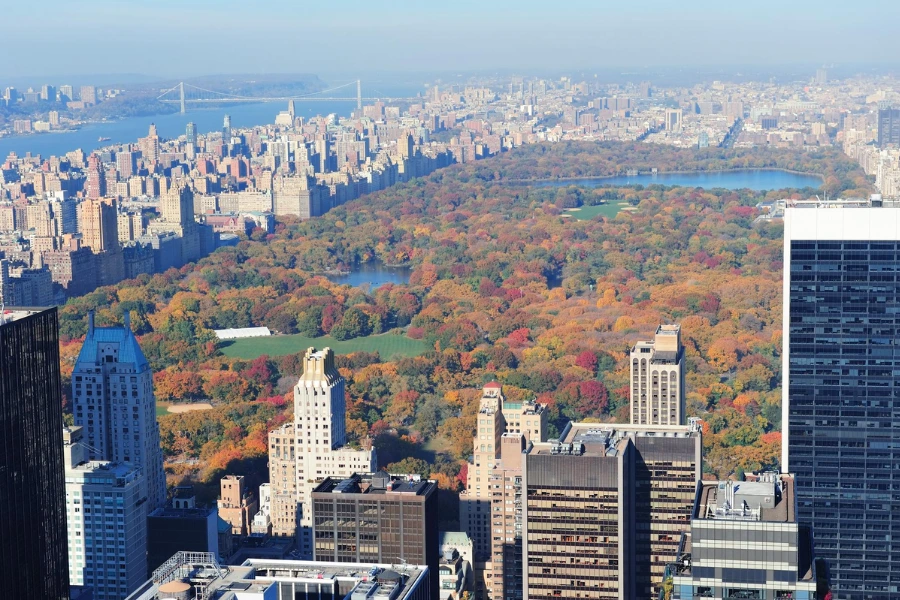
The Upper East Side runs from 59th Street to 96th Street between Central Park and the East River. That is a large footprint, and the blocks within it are genuinely distinct from one another in ways that matter to daily life, resale value, and how the neighborhood feels under your feet.
The horizontal axis is the avenue. Fifth Avenue faces Central Park and carries the highest prestige and the highest prices. Park Avenue is the grand residential boulevard of the UES, lined with Rosario Candela prewar limestone buildings that are among the most architecturally significant apartment houses ever built. Madison Avenue is the luxury commercial spine of the neighborhood, shifting from high fashion in the 60s and 70s to boutiques and galleries as you move north into Carnegie Hill. Lexington Avenue is a true working avenue with subway access, coffee shops, dry cleaners, and the everyday rhythm of Manhattan life. Third, Second, and First Avenues move progressively eastward with generally more accessible price points and a slightly more casual street character.
The vertical axis is the cross streets, which divide the UES into several distinct pockets. Lenox Hill covers roughly 59th to 78th Streets and is where the neighborhood’s most commercial blocks live. The 70s and 80s between Fifth and Park represent the historic center of UES prestige, sometimes called the Gold Coast. Carnegie Hill runs from 86th to 96th Street and carries a quieter, more intimate character. Yorkville, historically its own neighborhood on the eastern side, has seen significant energy in recent years and deserves its own conversation.
Buyers who understand this grid can make decisions with real precision. What follows is a block-by-block breakdown of the pockets that consistently outperform in terms of quality of life, architectural character, and long-term value.
The Gold Coast: Fifth and Park Avenues in the 70s and 80s
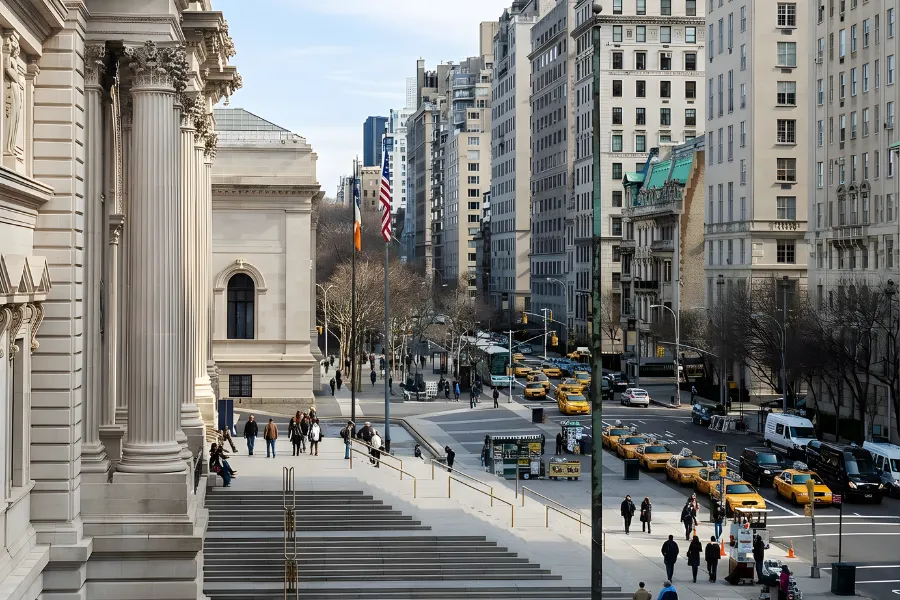
The blocks between Fifth and Park Avenues from the 70s through the mid-80s are some of the most prestigious residential real estate anywhere in the world. This is not promotional language. It is the structural reality of these streets. The buildings here are prewar cooperatives designed by architects like Rosario Candela, Emery Roth, and J.E.R. Carpenter. The layouts are generous. The ceiling heights are real. The construction is masonry.
Fifth Avenue from 72nd to 86th Street
The first apartment house to replace a private mansion on upper Fifth Avenue appeared at 907 Fifth Avenue in 1916, at 72nd Street, which is the neighborhood’s historic carriage entrance to Central Park. That set a precedent that played out over the following decades in limestone and brick up to 86th Street. Today this corridor, sometimes called the Metropolitan Museum Historic District, faces the park on one side and carries properties that trade in the $5 million to $15 million range for co-ops. Exceptional units go significantly higher.
The cultural backdrop is part of the appeal. The Metropolitan Museum of Art anchors Fifth Avenue between 80th and 84th Streets. The Guggenheim sits at 88th Street. The Frick Collection at 70th Street has recently completed renovations and returned to the public. These institutions are not just attractions for visitors. They are the daily backdrop of life on these blocks, which is part of what makes living here unlike any residential neighborhood elsewhere in the city.
Buyers seeking Fifth Avenue co-ops should understand that these buildings have strong boards and typically require substantial financial disclosure. Many prohibit financing entirely or require a minimum of 50 percent cash. For the right buyer, the entry point buys into one of the most durable stores of residential value in New York City.
Park Avenue from 79th to 91st Street
The Park Avenue Historic District, designated a city landmark district in 2014, encompasses 64 properties between 79th and 91st Streets. These are the blocks that define what Park Avenue means when people say it as shorthand for a certain kind of New York life. The buildings here, Candela-designed limestone cooperatives with grand lobbies and white-glove service, are the benchmark for full-service prewar living.
740 Park Avenue, built in 1929 and designed by Rosario Candela and Arthur Loomis Harmon, is among the most celebrated addresses in this corridor. Average co-op prices on Park Avenue today range from $4 million to $10 million, with premier units in landmark buildings exceeding $20 million. Turnover is limited. These apartments hold value across market cycles in a way that reflects the genuine scarcity of what they offer.
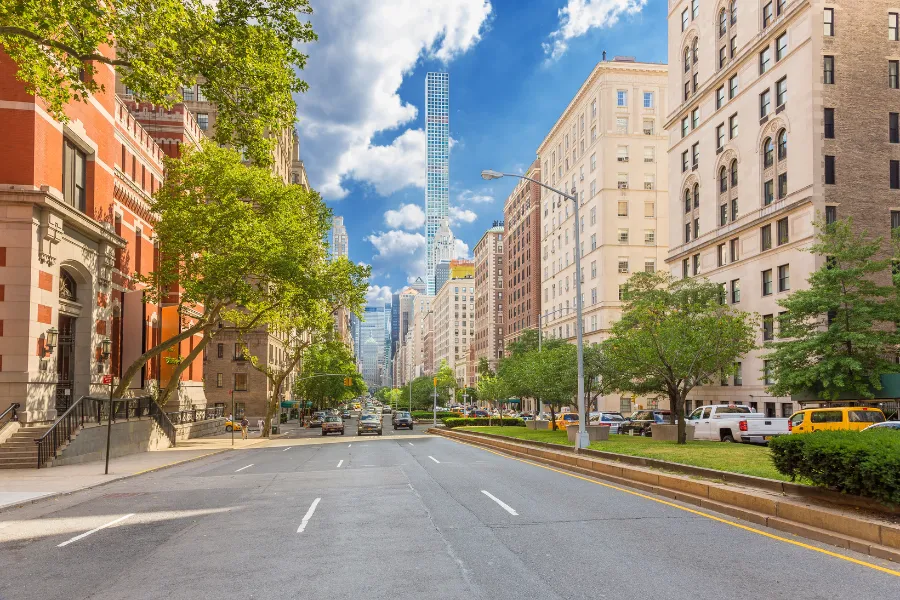
The Park Avenue median of the boulevard itself is landscaped and maintained by the Park Avenue Association, which creates a visual and physical separation between the north and southbound lanes. Living on Park Avenue, you experience the neighborhood at a slower, more composed pace than almost anywhere else on the island.
The Side Streets Between Fifth and Park in the 70s and 80s
The cross streets between Fifth and Park are quiet in a way that people who have never lived on them tend to underestimate. These are not thoroughfares. They carry minimal through traffic. The buildings are mostly residential from lot line to lot line. The architectural continuity creates a visual calm that is unusual even by UES standards.
Historic mansions, many now converted to cultural institutions and schools, line several of these blocks. The Ralph Lauren flagship occupies the Gertrude Rhinelander Waldo House on Madison just at the edge of this corridor at 72nd Street, which gives some sense of the architectural scale of what was built here a century ago. Transactions on these blocks often happen quietly and off-market, among buyers who have been watching a specific building for years.
Carnegie Hill: The Blocks from 86th to 96th Street
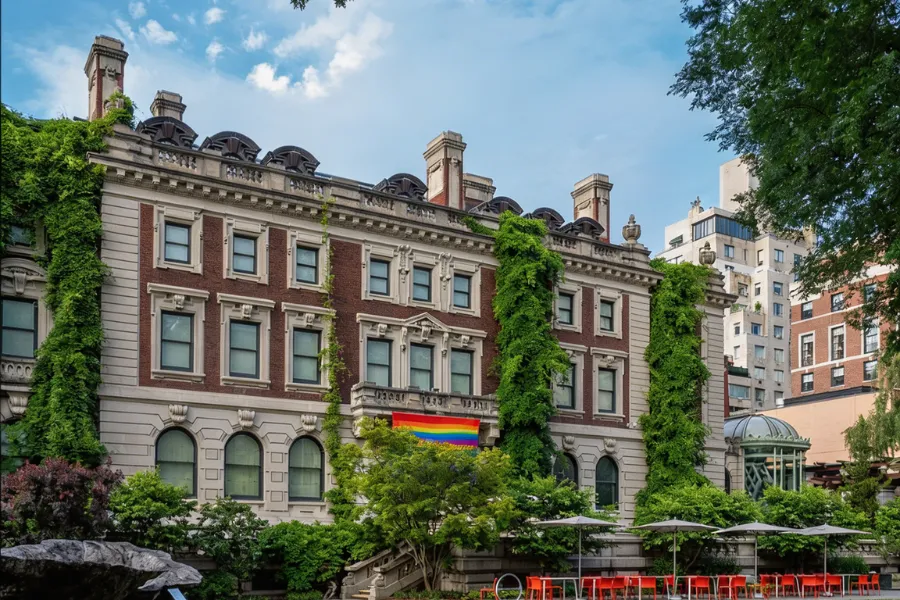
Carnegie Hill occupies a specific emotional and architectural register on the Upper East Side. It extends from 86th Street north to 96th Street, between Fifth Avenue and Third Avenue. Named for Andrew Carnegie’s Georgian Revival mansion built at 2 East 91st Street in 1903, it is one of the most intact prewar residential pockets in Manhattan. A large portion of the area between Fifth and Park Avenues from 79th to 94th Streets is designated as a historic landmark district, which means the architecture is protected and new construction is strictly limited.
Carnegie Hill commands a median sale price of approximately $1.6 million as of 2025 to 2026, reflecting its position as one of the Upper East Side’s most desirable sub-neighborhoods. Premium prewar co-ops on Park and Fifth Avenues in this stretch trade in the $4 million to $8 million range. Inventory turns over less frequently than in other parts of the UES, which is both a reflection of owner satisfaction and a practical constraint for buyers.
Fifth Avenue from 86th to 96th Street
The Carnegie Hill stretch of Fifth Avenue continues the Museum Mile experience northward. The Cooper Hewitt Smithsonian Design Museum, housed in Andrew Carnegie’s original mansion, sits at 91st Street. The Jewish Museum is in the former Warburg Mansion at 92nd Street. Frank Lloyd Wright’s Guggenheim anchors the southern boundary at 88th Street. Walking this stretch on a weekend morning is as specific an urban experience as New York offers.
Residential buildings on this stretch include 1107 Fifth Avenue at East 92nd Street, where Ralph Lauren has maintained a co-op for decades, and several other Candela-era buildings that define the high end of Carnegie Hill pricing. The park-facing aspect on these blocks is a daily amenity that drives consistent demand.
Madison Avenue in Carnegie Hill
Madison Avenue in Carnegie Hill is a different commercial proposition than its southern counterpart. The high 80s and 90s stretch of Madison is lined with independent bookshops, galleries, and boutiques that carry an understated, non-formulaic energy. Specialty food stores and gourmet markets serve residents who live on nearby side streets. The avenue is walkable without being crowded, and the retail mix reflects the character of a neighborhood that has maintained its identity against commercial pressures.
From a real estate standpoint, apartments facing or very near Madison Avenue in Carnegie Hill benefit from the immediate access to this corridor while sitting in a generally low-density residential context.
180 East 88th Street and New Development in Carnegie Hill
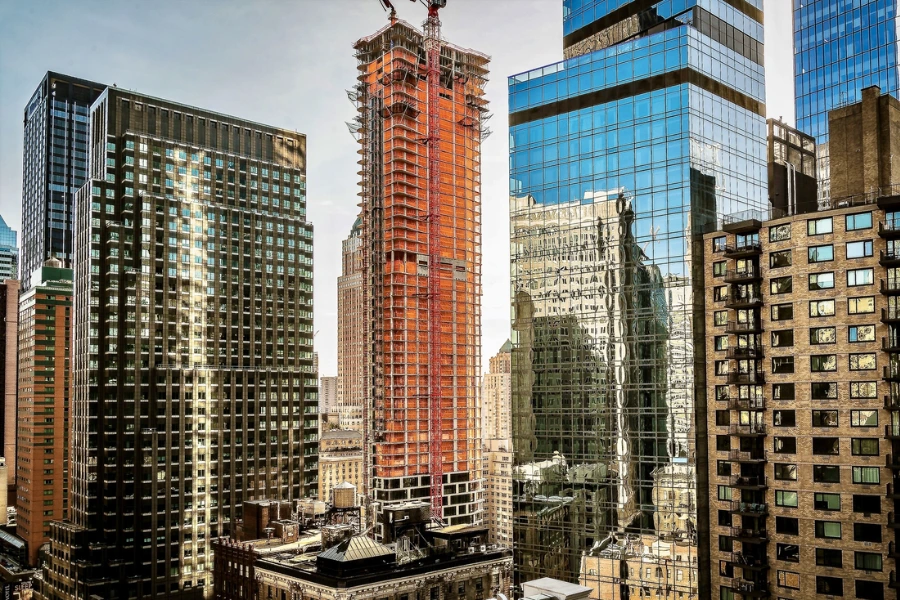
Carnegie Hill has seen a careful addition of new development that has set fresh pricing benchmarks without disrupting the neighborhood’s architectural character. 180 East 88th Street, the tallest residential tower on the Upper East Side, has established prices averaging $2,200 to $3,000 per square foot. The addition of condominiums like The Kent at 200 East 95th Street has broadened the inventory for buyers who want new construction with full amenities.
The broader pipeline for Carnegie Hill includes 800 Fifth Avenue by Robert A.M. Stern, bringing 33 residences, expected to deliver in 2027 to 2028. At that price level and that level of scarcity, it will represent one of the most significant residential additions this pocket has seen in a generation.
Lenox Hill: The 60s and 70s East of Park Avenue
Lenox Hill covers the southernmost stretch of the Upper East Side, running roughly from 59th Street to 77th Street. This is where the neighborhood’s greatest commercial density lives, where Madison Avenue’s flagship luxury retail is concentrated, and where proximity to Midtown creates an energy that is distinctly different from the blocks further north.
Madison Avenue from 59th to 79th Street
This stretch of Madison Avenue is one of the finest luxury retail corridors in the world. Ralph Lauren, Valentino, Christian Louboutin, and virtually every major European fashion house maintains a presence here. The Carlyle Hotel, at 76th Street between Madison and Park, is one of the city’s defining luxury hotels and anchors the upper end of this corridor with Bemelmans Bar, Cafe Carlyle, and one of the most consistently sought-after addresses on the block.
Living in the immediate vicinity of Madison Avenue in the 60s and 70s puts you at the center of the UES’s most commercially active blocks. This suits buyers who want immediate access to high-end shopping, established restaurants like Cafe Boulud and Daniel, and the daily energy of a world-class retail corridor.
Lexington Avenue and the 60s and 70s East of Park
Lexington Avenue is the practical spine of the Upper East Side. The 4, 5, and 6 trains run beneath it with stops every eight to ten blocks, and the 63rd Street F and Q station connects riders directly to the Second Avenue subway line. For buyers who prioritize transit access alongside quality residential product, the blocks between Park and Lexington in the 60s and 70s offer a meaningful combination.
The Treadwell Farm Historic District, on East 61st and 62nd Streets between Second and Third Avenues, is one of the UES’s smaller designated historic districts, covering low-rise apartments on the former farm of Adam Treadwell. Buildings in this area carry an architectural character that predates the neighborhood’s consolidation as a premier residential address, and their scale creates a welcome contrast to the larger prewar buildings a few blocks west.
Second and Third Avenues in Lenox Hill
Second and Third Avenues in the 60s and 70s carry the restaurant and bar scene that makes Lenox Hill genuinely lively after 6 pm. Italian mainstays like Sistina and Campagnola have served this corridor for decades. JG Melon on 74th Street at Third Avenue is one of the most durable neighborhood institutions in the city. The Penrose and other local bars draw a consistent crowd of residents who have built their routine around the grid east of Lexington.
Buyers at lower price points who want to be inside the UES boundary will find significantly better per-square-foot value east of Lexington than west of it. The trade-off in cachet is real, but so is the quality of the apartments and the livability of the corridor.
Yorkville: The Eastern Blocks That Have Come Into Their Own
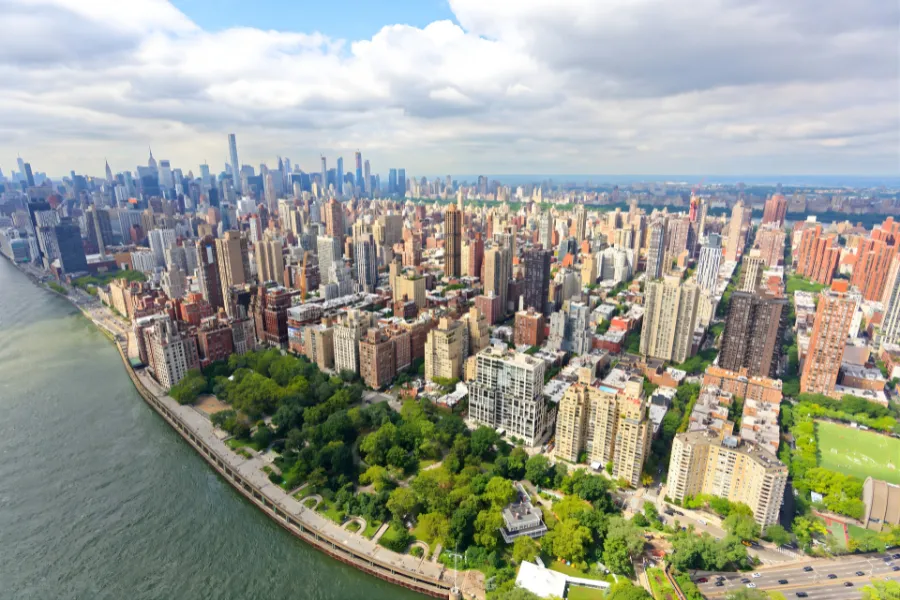
Yorkville occupies the eastern portion of the Upper East Side, generally east of Third Avenue and north of 77th Street toward 96th Street. It was historically its own neighborhood before being absorbed into the broader UES identity, and it retains traces of that independent character in its architecture and street-level culture.
Yorkville has seen substantial energy in recent years with new restaurants and bars that have changed the street-level experience considerably. The Q train on Second Avenue transformed access to this part of the neighborhood, bringing buyers and renters who previously looked elsewhere. First Avenue and Second Avenue carry a casual, neighborhood-bar-and-restaurant culture that coexists with the more formal character of the western UES without any real contradiction.
Second Avenue from 72nd to 96th Street
Second Avenue is the newest major transit corridor on the Upper East Side. The Q train runs beneath it with stations at 72nd, 86th, and 96th Streets, and there is a protected bike lane along Second Avenue between East 68th and 125th Streets. For buyers who want direct subway access built into their daily commute without paying the Fifth or Park Avenue premium, the blocks within a few minutes of Second Avenue stations have strong practical appeal.
The dining scene along Second Avenue in Yorkville leans toward neighborhood regulars rather than destination restaurants. That is part of the appeal for buyers who want a residential experience that feels like the neighborhood is actually theirs rather than a backdrop for visitors.
East End Avenue and Carl Schurz Park
East End Avenue is the eastern boundary of the Upper East Side, running along the riverfront from roughly 79th Street to 90th Street. It is one of the most understated residential addresses in Manhattan. The buildings here are primarily postwar full-service co-ops and condominiums that face the water and Carl Schurz Park, an eight-acre park that sits between the avenue and the East River. Gracie Mansion, the official residence of the Mayor of New York, anchors the northern end of the park.
East End Avenue has historically appealed to buyers who prioritize privacy and a quieter pace over proximity to the commercial energy further west. There is no subway on East End Avenue. The trade-off is a waterfront park, a low-density streetscape, and a level of genuine quiet that is rare inside the 96th Street boundary. The Henderson Place Historic District, designated in 1969, sits on East End Avenue between 86th and 87th Streets, comprising a series of townhouses built by John C. Henderson that are among the most architecturally distinctive in the neighborhood.
How Block Differences Affect Real Estate Strategy in 2026
The block-by-block character of the Upper East Side is not just an interesting piece of neighborhood history. It has direct implications for buyers, sellers, and anyone making a long-term decision about where to put their capital inside this market.
For buyers, the most important insight is that value and prestige are not the same thing on every block. The Fifth and Park Avenue corridor commands the highest prices, but the per-square-foot premium does not always translate directly into proportionally larger or better-finished apartments. Buyers who flex one block east, from Park to Madison or from Fifth to Madison, can sometimes access significantly more living space in buildings of comparable architectural character at better per-square-foot economics.
For sellers, block positioning shapes how you price and how you market. A prewar co-op on Fifth Avenue between 75th and 85th Streets is priced and positioned against a very specific competitive set. A comparable apartment three blocks east and two blocks north is a different conversation with a different buyer profile. Sellers who understand their micro-location, rather than just their neighborhood, set prices more precisely and transact more efficiently.
The 2026 market on the Upper East Side rewards preparation and precision. The median home price sits at approximately $1.4 million, up year over year, with price per square foot moving at roughly 10 percent annual appreciation. In that environment, understanding exactly which blocks drive the strongest demand in your price range is not a bonus consideration. It is the strategy.
New development is adding limited inventory in Carnegie Hill, and the incoming 800 Fifth Avenue project is likely to set fresh pricing benchmarks in that micro-market when it delivers in 2027 to 2028. Buyers who move in the 18 to 24 months before a significant delivery often capture appreciation that accelerates as the area’s profile rises.
A Practical Framework for Choosing the Right UES Block
The best block on the Upper East Side is the one that maps cleanest onto how you actually want to live. Here is a practical framework for thinking through that alignment.
If you prioritize Central Park access and architectural pedigree at the highest level, the Fifth and Park Avenue corridor from the 70s through the mid-80s is the most concentrated expression of what the UES does at its ceiling. The price commitment is significant, the board process is rigorous, and the experience of ownership is singular.
If you want Carnegie Hill’s intimate character with broader inventory options, including new construction condominiums alongside classic prewar co-ops, the blocks between Fifth and Lexington from 86th to 96th Street offer a genuine range. The new development pipeline here means buyers who enter this sub-market now are positioned ahead of the next significant wave of price-setting activity.
If you want the UES’s full residential texture at a more accessible price point, Yorkville east of Third Avenue delivers real quality at meaningfully better per-square-foot numbers than the western avenues. The Q train access has materially improved the case for these blocks, and the dining and bar scene has followed the transit improvement with real energy.
If you are a buyer for whom privacy and waterfront proximity are the primary drivers, East End Avenue and the blocks adjacent to Carl Schurz Park offer something that cannot be replicated in the interior of the neighborhood. The absence of subway access is a real trade-off, but for buyers who are not commuting daily by train, the park-facing, river-adjacent character of this corridor is among the most distinctive residential experiences in Manhattan.
The Upper East Side rewards buyers who think in blocks rather than in neighborhoods. The people who navigate this market most successfully are the ones who have done their homework at the micro-level, who know the difference between a co-op on 74th between Fifth and Madison versus one on 74th between Madison and Park, and who understand why those distinctions affect both daily life and long-term appreciation. If you are serious about finding the right block on the Upper East Side in 2026, reach out directly.
Frequently Asked Questions About Living on the Upper East Side
Fifth Avenue between 72nd and 86th Streets is broadly considered the most prestigious residential address on the Upper East Side. The buildings here face Central Park directly and sit within or adjacent to the Metropolitan Museum Historic District. Park Avenue in the 70s through the low 90s runs closely parallel in terms of prestige and price, anchored by Rosario Candela-designed prewar cooperatives that are among the most sought-after residential buildings in New York City.
Yes. Carnegie Hill is a sub-neighborhood within the Upper East Side. It runs from 86th Street north to 96th Street, between Fifth Avenue and Third Avenue, and is named for Andrew Carnegie’s Georgian Revival mansion built at 2 East 91st Street in 1903. The Carnegie Hill Historic District, designated in 1974 and expanded in 1993, covers approximately 400 buildings and protects the architectural character of its core blocks. It operates as a distinct market within the UES, with its own pricing dynamics, inventory character, and buyer profile.
The most accessible price points on the Upper East Side are generally found east of Lexington Avenue, particularly along First, Second, and Third Avenues in both Lenox Hill and Yorkville. Buildings east of Lexington trade at a per-square-foot discount relative to the Fifth and Park Avenue corridor. This discount has narrowed as the Q train on Second Avenue improved transit access, but the relative value differential remains real. Yorkville north of 77th Street, particularly in the mid-80s to mid-90s east of Third, offers co-ops and condos at entry points that represent genuine value inside the UES boundary.
Yorkville is the eastern portion of the Upper East Side, generally east of Third Avenue and north of 77th Street. It was historically its own distinct neighborhood before being integrated into the broader UES identity, and it retains a slightly more casual street character and a more active restaurant and bar scene than the western avenues. The Q train along Second Avenue significantly changed Yorkville’s transit access, and the neighborhood has absorbed new energy from the retail and dining activity that followed. Architecturally, Yorkville has a mix of prewar walk-ups, postwar full-service buildings, and newer construction that reflects both the neighborhood’s history and its recent growth.
Fifth Avenue and Park Avenue offer distinct residential experiences that appeal to different buyers. Fifth Avenue faces Central Park directly, which means park views from the right apartments and immediate access to the park without crossing a commercial street. Park Avenue is a wider boulevard with landscaped medians, a more symmetrical building typology, and a residential character that is grand but less tied to a single landmark view. Both corridors are dominated by prewar cooperatives with rigorous board processes. Fifth Avenue co-ops typically trade at a modest premium over Park Avenue for equivalent floor plans, but the gap varies building by building and transaction by transaction. The honest answer is that buyers who visit both and have a clear sense of how they want to experience the neighborhood will find their answer quickly.
Co-op board approval on the Upper East Side, particularly on the Fifth and Park Avenue corridor, is among the most thorough in Manhattan. Buyers submit a detailed board package including financial statements, tax returns, personal and professional references, and a purchase application. Many UES co-ops require a significant cash position, and some prohibit financing entirely. Interview processes vary by building, but are taken seriously by boards that have maintained consistent standards for decades. Buyers working in this market benefit from working with a broker who knows the buildings and their boards well, because preparation and presentation make a meaningful difference in the approval process.