
Financial District just posted a 46.7 percent surge in buyer searches, a 28 percent jump in median prices, and the number one spot on StreetEasy’s most watched list, all while most of Manhattan still thinks of it as a place people go to work. There is a specific moment in the evolution of a Manhattan neighborhood when the data catches up to what serious buyers have known for years. For the Financial District, that moment is 2026. The neighborhood claimed the number one spot on StreetEasy’s most searched neighborhoods list, with a 46.7 percent year-over-year surge in buyer and renter searches from 2024 to 2025. The market that has been building steadily since the residential transformation of lower Manhattan accelerated after 2001 is now producing numbers that even skeptics cannot dismiss. Understanding what that means specifically for buyers and sellers requires looking past the headline and into the actual market data.
The Numbers: FiDi Market Data in Early 2026
Financial District home prices as of January 2026 are up 28.1 percent year over year, with a median price of approximately $1.3 million, according to Redfin market data. The median condo price in January 2026 was $1.2 million, up 19.3 percent year over year. Homes are selling after a median of 85 days on market, down from 103 days the prior year, which is one of the most significant improvements in market velocity of any Manhattan neighborhood in the current cycle.
The FiDi market is overwhelmingly a condo market. The neighborhood’s residential transformation came through commercial-to-residential conversions and purpose-built luxury condominiums, not through the co-op development that characterizes much of the rest of Manhattan. This means buyers in FiDi are primarily evaluating condo ownership with the flexibility, financing options, and sublet rights that structure implies.
The median asking price in FiDi sits at approximately $1.199 million, which represents an 11 percent discount to the borough median of $1.35 million. That discount is significant for a neighborhood with the transit infrastructure, waterfront access, and building quality that FiDi provides, and it continues to attract buyers who are doing the per-square-foot math against Tribeca or SoHo prices and finding the comparison decidedly favorable.
What Is Driving the Market
The FiDi buyer demand surge is driven by a convergence of factors that each independently would support the neighborhood, but together have produced the acceleration that the search volume data reflects. The neighborhood’s residential maturation has crossed a threshold. The arrival of Whole Foods at One Wall Street, Eataly Downtown, the Tin Building at South Street Seaport (though now it’s leaving), Life Time Fitness, and the ongoing development of Brookfield Place as a genuine retail and dining destination have transformed the daily living experience in FiDi from tolerable to genuinely excellent. Buyers who visit the neighborhood and walk its blocks now, compared to the same visit in 2015, are encountering a fundamentally different residential environment.
The office-to-residential conversion pipeline has continued producing rental product that is building the residential population density that supports the commercial ecosystem. The 25 Water Street conversion, known as SoMA, became the largest office-to-residential conversion in the United States at 1,320 rental units. The precedent this sets for the broader lower Manhattan conversion pipeline is significant, and the additional residential density that these conversions will bring continues to reinforce the neighborhood’s residential identity.
The pricing discount to neighboring Tribeca continues to attract buyers who want downtown Manhattan proximity, waterfront access, and comparable building quality at a meaningful discount to Tribeca’s mid-$3 million median. The per-square-foot comparison between FiDi and Tribeca is one of the strongest value arguments available anywhere in the Manhattan residential market.
The Building Landscape
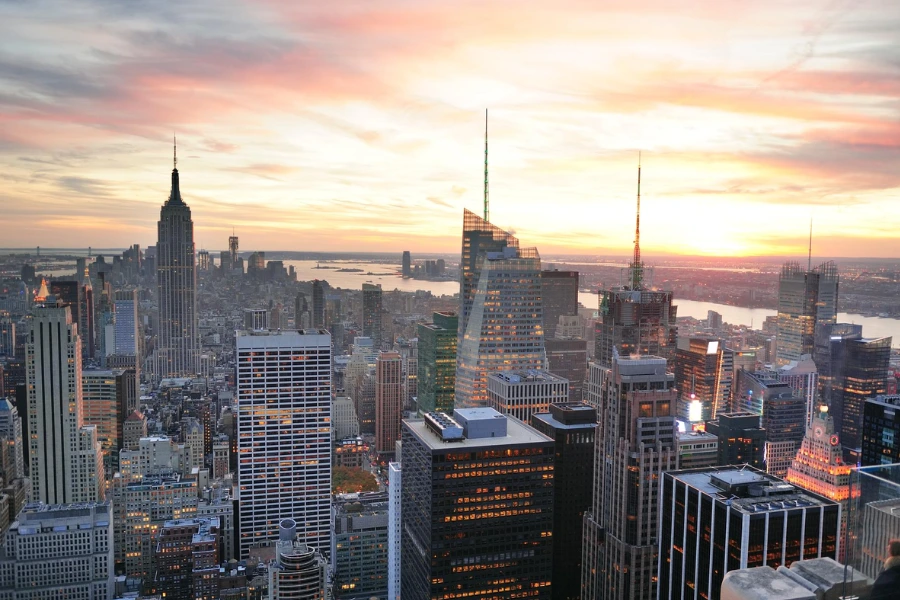
Converted commercial towers and purpose-built luxury condominiums dominate the Financial District’s residential inventory. The converted towers include some of the most architecturally significant residential addresses in lower Manhattan. One Wall Street, the Art Deco landmark that served as the Irving Trust Company headquarters, has been converted to luxury condominiums with the famous Red Room preserved as a resident amenity space. 15 Broad Street, the Philippe Starck-designed conversion known as Downtown by Starck, was the first large-scale luxury conversion in the neighborhood and remains one of its benchmark addresses. 99 John Street, designed by the same architects as the Empire State Building, offers loft-style residences with distinctive Art Deco character.
More recently, 125 Greenwich Street, designed by Rafael Vinoly, has added an 88-story residential tower adjacent to the World Trade Center with dramatic harbor and skyline views. The Diamond Condo, a conversion of the 1892 Diamond Exchange building, brings a boutique nine-unit project to the market with preservation of the building’s historic character. The pipeline for additional conversions and new construction in the neighborhood continues to develop, though the pace of new product entering the market is constrained by site availability and construction costs.
What Buyers Should Know in 2026
FiDi is predominantly a condo market and the flexibility that implies, no board approval, conventional financing, and sublet rights governed by building rules rather than board votes, makes it accessible to buyers whose financial structures or purchase intentions might complicate a cooperative purchase. The building quality range in FiDi is wide. The most prestigious converted towers and purpose-built luxury buildings offer product that competes with any Manhattan address. The older and less renovated buildings in the inventory represent a different ownership experience that should be carefully evaluated before committing. Building-specific due diligence, including reserve fund health, management quality, and common charge history, is essential.

Tax abatement status varies significantly by building. Some FiDi buildings carry active 421-a abatements that materially reduce monthly carrying costs. Buyers should confirm abatement status and the expiration timeline before purchase, as the difference in carrying costs between an active abatement and full property tax exposure can be substantial.
What Sellers Should Know in 2026
FiDi sellers in 2026 are operating with the strongest neighborhood narrative in Manhattan. The StreetEasy number one ranking, the 28 percent median price appreciation, and the improvement in days on market from 103 to 85 days are all data points that support confident listing behavior. Sellers who price accurately against current comparables and present their apartments professionally are finding active buyer pools.
The pricing accuracy point is more important than the neighborhood momentum might suggest. Despite the strong overall trend, FiDi is a market where buyers are doing detailed per-square-foot analysis and comparing against specific competing buildings. Sellers who reach aspirationally relative to their building’s specific competitive position will find the buyer pool less receptive than the neighborhood headlines might suggest. The market rewards precision.
FiDi is one of the most compelling real estate stories in Manhattan right now and the data supports that narrative with real numbers. If you are a buyer evaluating this neighborhood or a seller preparing to list, reach out at TheNewYorkCityBroker.com/contact-me. I specialize in downtown Manhattan and can help you navigate the specific building landscape and pricing dynamics that determine outcomes here.
Frequently Asked Questions
Why is Financial District real estate so popular in 2026?
Financial District ranked number one on StreetEasy’s most searched neighborhoods for 2026 with a 46.7 percent year-over-year jump in buyer and renter searches. The surge reflects the neighborhood’s continued residential maturation, with the addition of major retail and dining amenities including Whole Foods, Eataly, and the Tin Building transforming the daily living environment. The pricing discount relative to Tribeca and SoHo, the extraordinary transit access via the Fulton Center, and the quality of the converted commercial tower inventory are all factors sustaining buyer interest.
What are typical condo prices in Financial District in 2026?
The median condo price in Financial District was approximately $1.2 million in January 2026, up 19.3 percent year over year. The median asking price across all property types sits around $1.199 million, representing an 11 percent discount to the Manhattan borough median. Studios start around $700,000 in the converted towers. One-bedroom condos range from the upper $800,000s to approximately $1.5 million depending on floor, building, and specific unit. Two-bedroom and larger units range from $1.5 million to well above $10 million for penthouse product in the most prestigious buildings.
Is Financial District a good place to buy in 2026?
The data makes a strong case. Median prices are up 28 percent year over year, days on market have dropped from 103 to 85 days, and the neighborhood led all of Manhattan in buyer search volume growth in 2026. The pricing discount to neighboring Tribeca remains meaningful on a per-square-foot basis. The residential infrastructure, transit access, and building quality that FiDi provides are comparable to Manhattan’s most established neighborhoods at a price point that still reflects its historical identity as a commercial rather than residential district. For buyers with a medium-to-long hold horizon, the convergence of these factors supports a compelling investment case.
What are the best buildings to buy in Financial District?
The most recognized addresses in FiDi include One Wall Street for its landmark Art Deco architecture and preserved historic amenity spaces, 15 Broad Street for the Philippe Starck design and building prestige, 99 John Street for its Art Deco character and loft-style residences, and 125 Greenwich Street for dramatic views from its 88-story Rafael Vinoly-designed tower. Building selection in FiDi should account for specific factors including active tax abatement status, reserve fund health, common charge levels, and management quality, which vary significantly across the neighborhood’s inventory.
How does Financial District compare to Tribeca for buyers?
FiDi offers comparable building quality and a similar downtown Manhattan lifestyle at a meaningful price discount relative to Tribeca. The median asking price in FiDi is approximately $1.2 million versus the mid-$3 million range in Tribeca for comparable product. The trade-off is neighborhood character: Tribeca’s cobblestone streets, established luxury retail, and the specific identity of a fully matured luxury residential neighborhood command a premium that FiDi, still building its residential identity, does not yet command. Buyers who prioritize value, transit access, and building quality over neighborhood prestige consistently find the FiDi-versus-Tribeca comparison favors FiDi meaningfully.