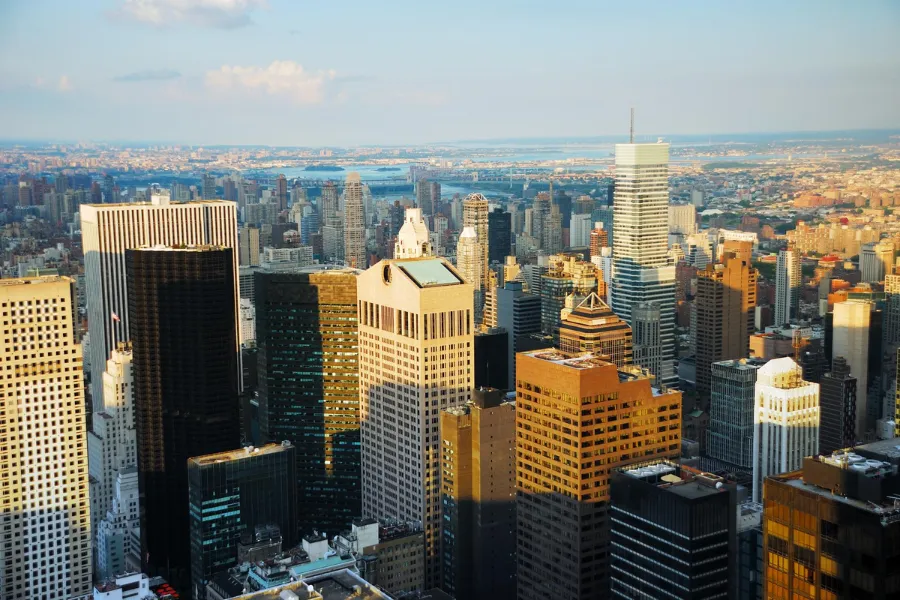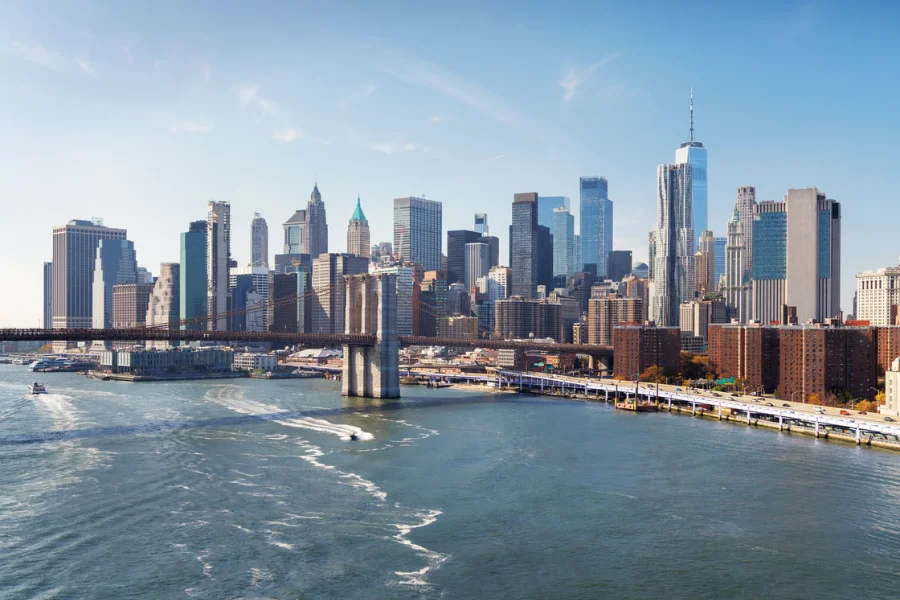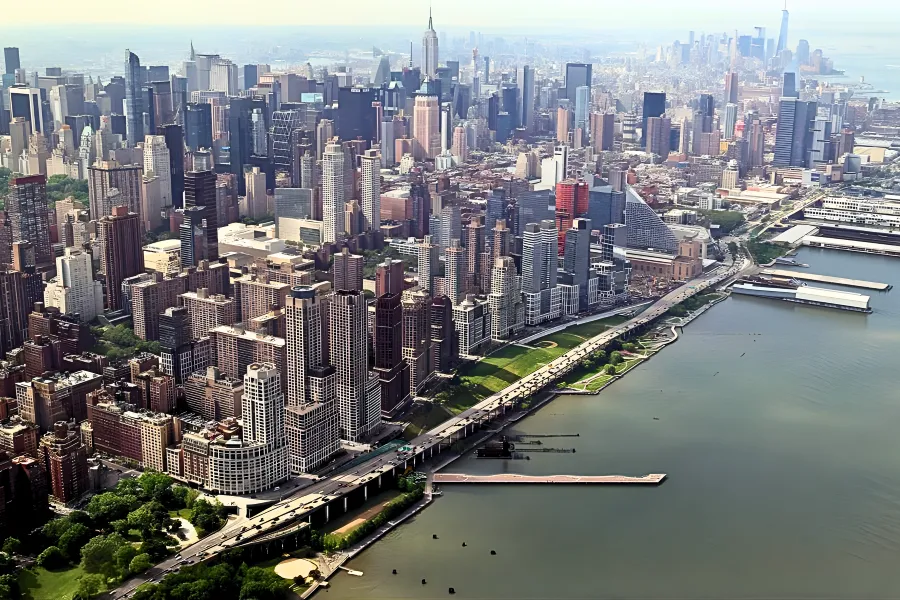

Financial District just claimed the number one spot on StreetEasy’s most searched neighborhoods in New York City for 2026, with a 46.7 percent year-over-year jump in buyer searches. Not Tribeca. Not the West Village. Not the Upper East Side. Financial District. That kind of movement does not happen by accident. It is the market finally catching up to what informed buyers have understood for years: lower Manhattan has quietly assembled one of the most compelling luxury residential offerings in the entire city, and the conversation has officially shifted.
The buildings here are unlike anything available elsewhere in Manhattan. Landmarked Art Deco and Beaux-Arts towers converted into residences with ceiling heights that reframe what a Manhattan apartment can feel like. New construction rising above the harbor with views that take in the Statue of Liberty, the Hudson River, and the Brooklyn Bridge simultaneously. A waterfront position giving residents access to both riverfronts. And a price-to-quality equation that continues to outperform comparable product in neighborhoods that have traditionally commanded more attention and more premium.
What Makes FiDi Luxury Different From the Rest of Manhattan

The luxury condo market in Financial District is built on something no other Manhattan neighborhood can manufacture: the conversion of genuinely historic commercial towers into residential product. When a building like 1 Wall Street or 55 Wall Street is transformed into residences, the result is apartments with architectural character that new construction cannot replicate. Pre-war masonry, soaring ceiling heights, ornate banking hall details preserved as resident amenities, and floor plans shaped by their original commercial purpose create a residential experience that is specific, rare, and increasingly in demand.
This is not a neighborhood where luxury is defined by a single aesthetic. The buyer who chooses a converted Art Deco landmark is making a completely different statement than the buyer choosing a glass tower with harbor views, and both are available here. That range of product is part of what makes the FiDi luxury market so interesting for buyers who have looked carefully at their options across downtown Manhattan.
The arrival of 1 Wall Street, the former Bank of New York headquarters, marked a defining moment for the neighborhood. Converted at a finish level and price point designed to compete with the top tier of Manhattan luxury rather than simply lead the FiDi submarket, it introduced buyer profiles and transaction levels to lower Manhattan that had not previously been associated with the area. Its preserved Red Room, the original Art Deco banking hall with floor-to-ceiling mosaics, now serves as a resident amenity space. Whole Foods anchors the ground floor. The building addressed the neighborhood’s most persistent livability concern directly while delivering architecture that cannot be replicated anywhere in the city.
The Buildings Worth Understanding
FiDi’s luxury condo landscape includes a range of buildings that have established genuine market positioning through quality, consistency, and buyer demand.
1 Wall Street stands as the neighborhood’s most ambitious conversion, bringing a finish level and amenity depth that competes citywide rather than simply within the downtown market. The building’s Art Deco architecture, preserved historic details, and full-service positioning have attracted buyers making a specific and deliberate choice about where they want to live.
55 Wall Street, home to the Cipriani Club Residences, occupies a 19th-century Greek Revival landmark once described as having some of the most service-oriented residential offerings in New York City. The building’s grand banking hall, originally constructed in 1841 and expanded by McKim, Mead, and White, creates a common space of architectural weight that genuinely distinguishes the ownership experience.
125 Greenwich Street, designed by Rafael Vinoly, rises as one of the tallest residential towers in lower Manhattan with floor-to-ceiling windows and views spanning the Hudson River, New York Harbor, the Statue of Liberty, and the skyline in multiple directions. The building includes a 75-foot pool, private IMAX theater, and amenity depth that positions it at the top of the downtown luxury market.
130 William Street, designed by Sir David Adjaye, brings starchitect-level design to the neighborhood with a distinctive facade, generous floor plates, and units that include private outdoor space on a significant portion of the residences. The building has performed strongly in absorption and resale, reflecting buyer demand for the combination of design quality and FiDi positioning.
50 West Street delivers 64 stories of floor-to-ceiling curved glass with harbor and river views, four floors of amenities including a water club and children’s facilities, and upper-floor residences that represent some of the most dramatic views available in downtown Manhattan.
20 Pine, the former American Express headquarters, offers pre-war architectural character at a more accessible entry point with a deep amenity package including a spa, screening room, and pool that punches well above the building’s price tier.
Why FiDi Outperforms on Value
The value equation in FiDi luxury is consistent and well-documented. Financial District offers the strongest value among Manhattan luxury neighborhoods on a price-per-square-foot basis, with averages running well below comparable product in Tribeca, the West Village, and SoHo. The gap reflects real lifestyle differences around retail density and neighborhood energy rather than any inferiority in the residential product. For buyers who evaluate that trade-off clearly, the FiDi value proposition is compelling and the decision tends to hold up well at resale.
The transit infrastructure around Fulton Center, consolidating access to nine subway lines in a single hub along with PATH train and ferry connections, gives FiDi residents connectivity that no other Manhattan neighborhood matches. The waterfront access from two sides of the island is unmatched. And the trajectory of the neighborhood, now leading all of New York City in buyer search volume according to StreetEasy, points consistently in one direction.
What to Evaluate Before Buying
Building financial health is the most important factor beyond the apartment itself. FiDi’s luxury market includes buildings at meaningfully different stages of capital management, and the difference between a well-funded building and one managing deferred maintenance is not apparent from a well-staged apartment. Reviewing audited financials, reserve fund studies, and board meeting minutes before going into contract is standard practice for informed buyers and should be non-negotiable.
Tax abatement status deserves specific attention in this market. Several FiDi buildings carry abatements that significantly reduce property tax obligations during the abatement period, and these expire on fixed schedules. Buyers purchasing into partially expired abatements need to understand the full carrying cost picture going forward. The difference between an active abatement and a fully expired one can be substantial on a monthly basis and affects both the ownership experience and future resale positioning.
The condo structure of virtually all FiDi luxury inventory is a structural advantage that matters at every stage of ownership. Unlike co-op markets, there is no board approval process, financing is flexible up to standard thresholds, and sublet rights are generally available without restriction. For international buyers, investors, and buyers who value the option to rent the apartment in the future, this flexibility is a meaningful feature of the FiDi market.
Seller Strategy in the FiDi Luxury Market

Sellers in FiDi’s luxury market are operating with transparent pricing and a buyer pool that arrives well-informed. Transaction data is public, and overpriced listings are identified quickly by buyers working with experienced agents. Accurate pricing based on genuine comparable transactions, not aspirational benchmarks, is the most reliable path to a strong outcome.
The spring market and early fall consistently produce the most active buyer pools in FiDi. Sellers who combine precise pricing, professional presentation that specifically addresses the spatial qualities of high-ceiling and converted-building apartments, and timing aligned with peak market activity consistently achieve the results this neighborhood’s product quality supports.
FiDi is no longer an emerging market. The number one search ranking on StreetEasy is evidence of where serious buyers are looking. For sellers that means a growing and increasingly sophisticated buyer pool. For buyers it means moving with preparation and clarity matters more than ever in a market that is no longer a secret.If you are evaluating luxury condos in Financial District and want to understand how specific buildings compare, what the carrying cost picture looks like across your target options, and how to position yourself effectively in this market, reach out directly at TheNewYorkCityBroker.com/contact and we can work through it together.
FAQs
Financial District ranked number one on StreetEasy’s most searched neighborhoods for 2026, with a 46.7 percent increase in buyer searches year over year. The combination of landmark architecture, waterfront access from two sides of the island, the strongest transit infrastructure in Manhattan, and a value proposition that consistently outperforms adjacent luxury neighborhoods makes FiDi one of the most compelling luxury condo markets in the city. Buyers who choose it deliberately and understand what it offers tend to be highly satisfied long term.
FiDi condos have shown consistent appreciation in well-positioned and well-managed buildings, supported by the neighborhood’s ongoing residential maturation and a buyer pool that has grown steadily for over a decade. The condo structure provides resale liquidity and investor flexibility that the co-op market cannot match. Buildings with strong reserves, competitive amenities, and tax abatements that are still active or recently expired have historically outperformed the broader market. Buyers evaluating FiDi as an investment should focus on building-specific financial health rather than making broad neighborhood assumptions.
Tribeca and FiDi sit adjacent to each other downtown but serve different buyer profiles. Tribeca carries higher per-square-foot pricing, a deeper dining and retail scene, and stronger brand recognition as a luxury residential address. FiDi offers more architectural variety, superior transit access, waterfront exposure from both the Hudson and East River sides, and a meaningful value advantage relative to comparable Tribeca product. The choice is almost always a lifestyle and priority question rather than a quality question.
Common charges in FiDi luxury buildings vary significantly and deserve careful review before purchasing. Full-service buildings with extensive amenities, 24-hour doorman and concierge services, and large physical footprints carry higher charges reflecting those services. Buildings with deferred maintenance or underfunded reserves may face increases as capital needs are addressed. Buyers should review audited financials and the common charge history over the past three to five years before committing to any building.
FiDi’s residential transformation has been building for over two decades, and the combination of landmark architectural conversions, improving retail and dining infrastructure, superior transit access, waterfront proximity, and strong relative value compared to neighboring luxury markets has created sustained and growing buyer demand. The 46.7 percent jump in StreetEasy searches from 2024 to 2025 reflects buyers recognizing that the neighborhood delivers a quality of residential life that its price point has not historically reflected.
The most important factors beyond the apartment itself are building financial health, reserve fund adequacy, tax abatement status and expiration timeline, common charge history, and the quality and experience of the building’s management. FiDi’s range of building quality is wider than in most Manhattan neighborhoods, which makes building-specific due diligence more important here than almost anywhere else in the city. A buyer’s broker with active knowledge of the FiDi market is one of the most valuable resources a luxury buyer can have in this neighborhood.
Several FiDi luxury buildings carry 421-a or similar tax abatements that significantly reduce property tax obligations during the abatement period. These expire on fixed schedules and buyers purchasing into buildings mid-abatement need to model what their carrying costs will look like when the abatement runs out. The monthly difference between an active abatement and full tax exposure can be substantial. Confirming the abatement status and remaining timeline of any building you are seriously considering is a standard and essential part of the due diligence process.
Financial District is predominantly a condo market by structure, reflecting the neighborhood’s history of large-scale commercial-to-residential conversions that almost exclusively produced condominium product. The limited co-op inventory in FiDi tends to trade at modest discounts to comparable condos and carries the standard co-op considerations around board approval, financing limits, and sublet restrictions. For most buyers in this market, the condo structure is the appropriate choice and aligns with the neighborhood’s fundamental character and the flexibility that its buyer profile typically requires.