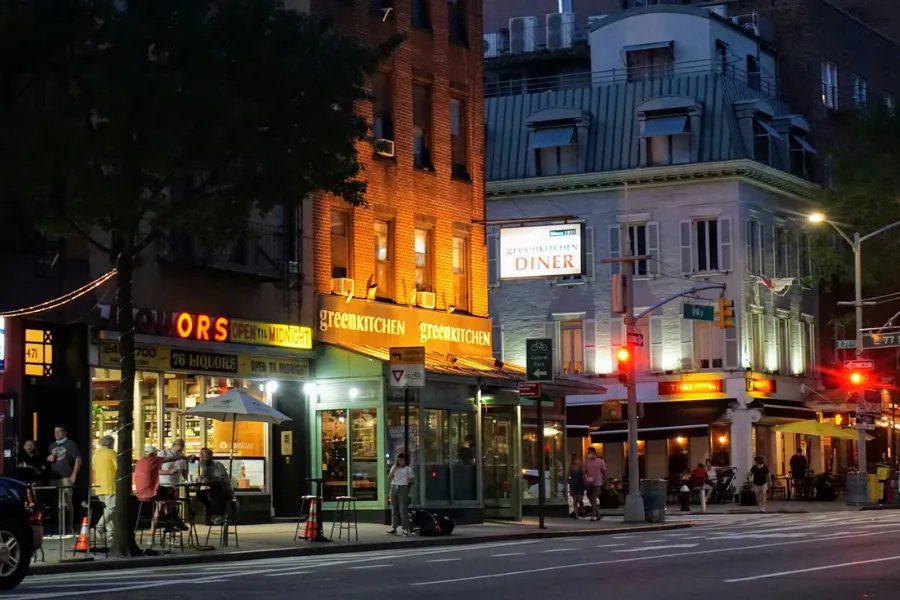

If you’re searching “is the Upper East Side a good place to live” in 2026, you’re probably at one of those decision points where you can feel the stakes. Maybe you’re tired of paying a premium for a neighborhood that doesn’t actually fit your day-to-day. Maybe you’re ready to buy but don’t want to get trapped in the wrong building type. Or maybe you’re selling and you want to understand what today’s buyers are actually responding to, not what people think they want. Buying tips for upper east side condos can really help you navigate this complex market and make an informed decision. It’s essential to understand the unique features and amenities that attract buyers to this prestigious neighborhood. Whether you’re looking for spacious layouts or proximity to Central Park, having a solid strategy in place will ensure you find the right fit for your lifestyle. Exploring the best neighborhoods in Upper East Side will give you a clearer picture of what options are available and how they align with your priorities. Each area boasts its own unique charm, from the cultural attractions along Museum Mile to the vibrant dining scene on Madison Avenue. By narrowing down your search based on your preferences, you can confidently choose a place that truly feels like home.
The Upper East Side is one of Manhattan’s most complete residential neighborhoods. It has depth, variety, and staying power. But it’s also a neighborhood where details matter more than hype. A Fifth Avenue pre-war co-op is not the same world as a Second Avenue condo. Yorkville doesn’t “live” like Carnegie Hill. And a $900K studio buyer and a $25M townhouse buyer aren’t responding to the same signals, even if they’re technically shopping the same neighborhood.
So let’s explore the Upper East Side market the way people really experience it: how it feels, how the inventory breaks down, what you can realistically buy or rent at different tiers, and what to watch for in 2026 if you’re trying to make a smart move. The luxury market is often characterized by unique features and amenities that set them apart from other areas. For those interested in buying coops in New York City, it’s essential to understand the nuances and the competitive landscape. With the right knowledge, you can navigate this vibrant housing market to find something that truly fits your needs and lifestyle. When considering upper east side living pros and cons, it’s crucial to weigh the access to cultural institutions like The Met against the sometimes high price tags of properties. Moreover, the blend of historic charm and modern conveniences can be enticing, but potential residents should also keep in mind the vibrant nightlife and the occasional noise that comes with it. Ultimately, understanding these elements can help you make an informed decision about your new home in this iconic neighborhood.
Market Update Snapshot (2026)
In 2026, the Upper East Side market continues to reward buyers and sellers who understand product type and micro-location. That sounds obvious, but it’s the difference between “we got it done fast and clean” and “why is this listing sitting?”
Here’s what I’m seeing shape real decisions right now:
- Monthly carrying costs are driving more decisions than headline price. Two apartments can be listed at the same number and have completely different all-in monthly reality depending on maintenance/common charges and taxes.
- Well-priced, well-presented apartments still move. The UES has deep inventory, which means buyers have choices. They’re not chasing everything. They’re choosing what feels correctly positioned.
- The co-op vs condo divide remains one of the biggest value gaps in Manhattan. Co-ops can offer more space for the price. Condos can offer a simpler transaction path and broader buyer pool. The “right” answer depends on your priorities and your plan.
- Luxury and ultra-luxury remain asset-specific. At the top end, the neighborhood matters, but the property matters more: exposure, privacy, building reputation, layout, and finish quality decide the result.
If you’re shopping or selling in 2026, the smart approach is not “UES pricing.” It’s “this pocket, this building type, this layout category.” That’s where the truth is.
Where the Upper East Side Actually Changes Block by Block

The Upper East Side generally spans from 59th Street to 96th Street east of Central Park, but it’s more accurate to think of it as several overlapping micro-markets:
Lenox Hill
Lenox Hill often attracts buyers and renters who want a residential feel without feeling too far from Midtown. You’ll see a strong mix of post-war full-service buildings, co-ops, and condos. It’s also one of the areas where “building experience” can vary wildly. Two high-rises can look similar from the outside, but one is impeccably run with predictable costs and the other… isn’t. Building selection matters here.
Carnegie Hill
Carnegie Hill is where the classic Upper East Side reputation shows up most clearly in the housing stock. Pre-war co-ops with traditional layouts, elegant lobbies, and larger room proportions are common. Buyers who care about architecture, quiet elegance, and long-term ownership gravitate here.
Yorkville
Yorkville has become a favorite for buyers who want strong transportation access and more range in pricing and building types. It can be a great place to find value relative to certain pockets closer to the park, especially if you prioritize convenience and building services over a specific address label.
Park-adjacent corridors
Anything close to Central Park tends to operate like its own pricing universe. You’re not just buying an apartment; you’re buying proximity and certain exposure types that consistently command demand. That’s true at the $1.5M level and it’s true at the $30M level.
What It Feels Like to Live on the Upper East Side
This is where the UES quietly wins. It’s not a neighborhood that needs to scream for attention. It’s a neighborhood that works.The day-to-day feels structured. Streets tend to support routines: coffee, errands, fitness, dinner, home. You’re not constantly fighting the neighborhood to live your life. That’s why a lot of people come for “one year” and end up staying much longer than they planned.
The Upper East Side also tends to offer a certain kind of apartment livability. Many pre-war layouts have real separation: living room feels like a living room, bedrooms feel like bedrooms. In a city where “creative layout” sometimes means “how many ways can we pretend this is a two-bedroom,” the UES is often refreshingly straightforward. It’s also a neighborhood where building quality and management can be very strong. That’s not glamorous, but it’s the difference between living in a place you enjoy and living in a place you constantly manage.
The Inventory: What You’ll Actually Be Choosing From

You can’t understand the Upper East Side without understanding how heavily the neighborhood leans toward co-ops. If you’re open to co-ops, the UES becomes one of the deepest shopping experiences in Manhattan. If you refuse co-ops entirely, your inventory narrows fast and your pricing generally jumps.
Pre-war co-ops
This is the signature UES product. Think higher ceilings, thicker walls, classic proportions, and layouts that feel “home-like.” You’ll find everything from compact studios to huge classic-six and classic-seven apartments. The tradeoff is the buying process. Co-op boards can require detailed financial documentation, and the timeline can be more structured. That doesn’t make co-ops “hard.” It makes them precise. If you’re prepared and aligned with the building’s expectations, the process can be smooth. If you’re not, it becomes frustrating quickly.
Post-war co-ops
These often deliver what many people want in Manhattan living: elevator, doorman, package handling, sometimes laundry and amenities. Layouts can be more modern and efficient than some pre-war units. Maintenance structures vary widely, which is why reviewing the building’s financial positioning and upcoming capital plans matters more than people realize.
Condos
Condos exist throughout the neighborhood, but they’re a smaller slice than co-ops. They often command a premium because they generally provide a simpler transaction process and broader buyer appeal.
At the higher end, condos can also offer a more modern luxury experience: newer finishes, better glazing, amenity packages, and fewer restrictions. The premium is real, but so is demand.
New development
New development is selective on the UES, which is part of why new launches can price confidently. When something new hits the market with strong finishes and amenities, buyers compare it not just to other UES buildings, but to top-tier product across Manhattan.
Townhouses
The Upper East Side townhouse market is a world of its own. These properties are asset-specific: block, width, condition, privacy, outdoor space, and architectural integrity drive pricing. Townhouse deals often involve different marketing approaches and a different buyer pool than the co-op/condo market.
What It Costs in 2026: Realistic Ranges From Studios to Trophy Assets

Let’s cover the whole spectrum, because your buyers and sellers are not one person.
Renting: Studios, one-beds, and the “I want a building experience” tier
Rent pricing depends on building type, renovations, and services. A walk-up studio and a full-service doorman studio are not comparable products, even if the square footage is similar.
What renters tend to prioritize in the UES:
- Elevator vs walk-up
- Doorman/package handling
- Laundry in-building or in-unit
- Updated kitchens/baths
- Layout that feels functional (true one-bed vs flex, room proportions)
A renter who cares about daily ease often values a well-run building more than a slightly “better” cross street.
Buying under $1M: entry-level ownership
Yes, you can still buy in the Upper East Side under $1M, most often through studios and one-bedroom co-ops.
A realistic example set might look like:
- A studio co-op around $650K–$850K depending on building and condition
- A one-bedroom co-op closer to $850K–$1.2M depending on size, location, and renovations
In this tier, the monthly is everything. Buyers don’t just shop price. They shop payment.
$1.2M–$3M: the “this feels like a real apartment” bracket
This is where the UES becomes extremely compelling. Buyers gain access to true two-bedrooms in many cases, renovated pre-war units, better light, and stronger building options.
Realistic examples:
- A renovated one-bed in a strong co-op building around $1.3M–$1.9M
- A two-bed co-op with a traditional layout around $1.8M–$2.8M
- Select condos entering the conversation depending on size and exact pocket
This bracket is also where many sellers do well if they’ve positioned correctly. Buyers here are focused, comparison-driven, and willing to act when something feels properly priced and properly presented.
$3M–$10M: luxury UES
Luxury on the Upper East Side is not a monolith. This tier includes classic-six and classic-seven pre-war co-ops, larger renovated residences, and full-service condo inventory. What luxury buyers usually care about here:
- Building reputation and management
- Layout quality (room proportions still matter at $6M)
- Light and exposure
- Finishes that feel intentional, not trendy
- Privacy and quiet inside the apartment (not “quiet neighborhood,” but livability in the home)
Realistic examples:
- A classic-six pre-war co-op around $4M–$8M depending on condition and location
- A condo in a full-service building around $5M–$10M depending on size, views, and amenities
At this level, sellers need a strategy. The right launch price and presentation can create momentum. Overconfidence can create months of silence.
$10M–$30M+: ultra-luxury and trophy assets
This is where the UES is still one of Manhattan’s most important markets. Park-adjacent corridors and trophy townhouses can trade at numbers that make headlines, but the day-to-day reality is that these deals are highly curated. Ultra-luxury buyers tend to be evaluating:
- Privacy and discretion
- Building governance and reputation
- Architectural integrity
- Long-term positioning and uniqueness
- Quality of execution (materials, craftsmanship, detail)
Realistic examples:
- A full-floor or large-format condo in a prime building around $12M–$25M
- A trophy townhouse or park-facing legacy residence that can reach $20M–$30M+ depending on width, condition, and location
At this tier, the agent’s job isn’t “marketing.” It’s advisory: positioning, buyer targeting, and negotiation strategy.
Co-op vs Condo: The Decision That Shapes Your Entire Experience
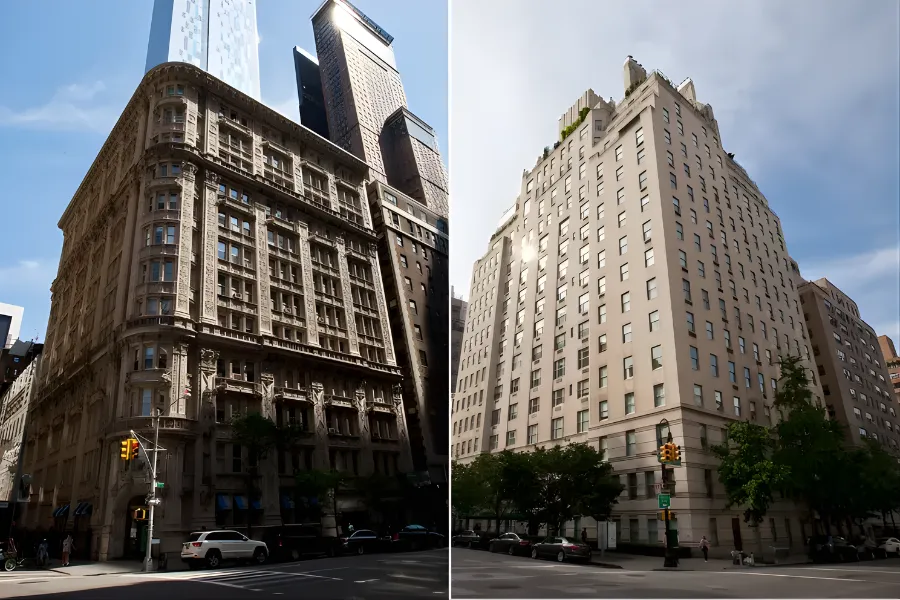
This is one of the most important questions you’ll answer in the UES. Not because one is “better,” but because they are different products.
Co-ops can offer:
- Broader inventory
- More space for the price
- Classic layouts and building character
- A more structured ownership culture
Condos can offer:
- Generally simpler purchase process
- Broader buyer pool in resale
- Often more modern amenity packages
- Different flexibility considerations
The smart approach is to pick the ownership structure that matches your timeline and your personality. If you want the simplest path and are willing to pay for it, condos may be the move. If you want the strongest value and are comfortable with a more structured purchase process, co-ops can be a major advantage.
Lifestyle Details That Matter to Real Buyers
The UES doesn’t need “hidden gem” marketing. What matters is practical.
Transportation
Lexington Avenue lines (4/5/6) and the Second Avenue Q line give the neighborhood strong coverage. Where you live relative to your preferred line changes your day. That’s a real quality-of-life factor and it influences demand.
Central Park access
Park proximity carries value because people actually use it. It’s not a brochure feature. It’s a lifestyle asset.
Building services
In 2026, building services matter more than ever. Packages, deliveries, schedules, work-from-home rhythms. A doorman building isn’t just luxury; it’s convenience. For some buyers and renters, that convenience is a must-have.
Layout and proportions
The UES is often a winner here. Many apartments have room proportions and separation that make living easier. This is one of the biggest reasons people who “never thought they’d be UES people” end up converting after a few tours.
Pros and Cons of Living on the Upper East Side

Pros
- Deep inventory across price tiers
- Strong mix of pre-war and full-service buildings
- Layouts that often feel more livable than newer compact construction
- Park adjacency and strong transit access
- Durable market identity from entry-level to trophy assets
Considerations
- Co-op purchases require preparation and documentation
- Condo inventory can feel limited in certain price bands
- Monthly costs vary widely and must be modeled carefully
- Luxury and ultra-luxury require disciplined pricing and positioning strategies
Seller Insight in 2026: Why Some Listings Fly and Others Sit
If you’re selling on the Upper East Side, here’s the truth: buyers are not just buying “the UES.” They’re buying a category.
- A $750K studio co-op buyer is payment-driven and comparison-driven. They want a clean story: condition, building services, and predictable monthlies.
- A $2.5M buyer is lifestyle-driven and layout-driven. They’re comparing multiple apartments and they’re ruthless about value.
- A $7M buyer is building-driven and execution-driven. They’ll pay for a great asset, but they’ll punish a listing that feels overpriced or poorly positioned.
- A $25M townhouse buyer is uniqueness-driven and privacy-driven. They care about the asset’s long-term story.
So yes, the Upper East Side is a great place to live in 2026 but it’s also a market where strategy is not optional. It’s how you avoid leaving money on the table as a seller and how you avoid wasting time as a buyer. The upper east side lifestyle benefits residents with an array of cultural offerings, fine dining, and proximity to Central Park. This vibrant neighborhood not only enhances quality of life but also represents a sound investment opportunity. As demand continues to rise, understanding the nuanced market dynamics here becomes essential for buyers and sellers alike. In addition to its luxurious amenities, the upper east side lifestyle benefits from an exceptional sense of community, drawing residents who appreciate the blend of sophistication and warmth. The neighborhood’s art galleries, boutique shops, and lively social scene create a unique atmosphere that fosters connections among neighbors. With its unmatched convenience and charm, it’s no wonder that more people are eager to call this iconic area home.
Bottom Line
The Upper East Side remains one of Manhattan’s most complete neighborhoods because it supports almost every stage of life and every stage of ownership: renting a first studio, buying a first co-op, upgrading into a larger layout, stepping into luxury, and holding trophy assets that can define a portfolio.
If you want a neighborhood that can scale with you, the UES is hard to beat and if you’re buying or selling here in 2026, the smartest move is to approach it hyper-locally: pick the micro-area, pick the building type, model the monthlies, and treat the market like what it is several markets living under one name.
FAQs
Yes. Studios and some one-bedroom co-ops can trade under $1M, depending on building type, condition, and monthly costs.
Luxury typically begins around $3M and extends through $10M for premium co-ops and condos. Ultra-luxury assets can exceed $20M–$30M+ depending on property type and location.
Yes. Co-ops make up a large portion of the UES inventory, particularly pre-war buildings. Condos exist throughout and often trade at a premium.
Yorkville often offers a broader mix of post-war and mixed inventory and can present stronger value in certain price bands. Carnegie Hill is known for classic pre-war building stock and traditional layouts.
Yes. There is condominium inventory near the park, though it can be limited relative to demand and may command higher pricing.
Trophy townhouse transactions can reach that level depending on block, width, condition, and architectural integrity. These deals are typically asset-specific and often involve more discreet buyer targeting.
Start with ownership structure (co-op vs condo), monthly budget including carrying costs, and the micro-area that fits your routine. Those three choices determine the rest of the search.