
A million dollars on the Upper East Side sounds like a ceiling. It is actually an entry point, and depending on which block you are targeting and which building type you are open to, it can be a remarkably good one. The buyers who understand this market at the $1 million price point consistently walk away with more space, more character, and more building quality than they expected. The buyers who do not understand it walk away confused about why they saw so little for their budget.
The median home price for Upper East Side real estate is approximately $1.4 million as of early 2026, up 2.9 percent year over year. Price per square foot is up 10 percent. Those headline numbers make a million dollars sound like it buys you into the bottom of the market. What they mask is the dramatic variation within that median, because the UES contains some of the most expensive residential real estate in the country and some of the best-value full-service apartments in Manhattan, often within the same zip code and sometimes within the same block.
This article covers exactly what $1 million buys you on the Upper East Side in 2026, broken down by property type, sub-neighborhood, and building category. It also covers what you do not get at this price point, because knowing the trade-offs going in is what separates buyers who close confidently from those who spend six months second-guessing every offer.
For a broader picture of what is driving the UES market right now, see our Upper East Side Real Estate Market Trends 2026.
The Big Picture: What $1M Means on the UES in 2026
The first thing buyers need to understand about the $1 million price point on the Upper East Side is that it is overwhelmingly a co-op market. Co-ops represent approximately 70 percent of the UES housing stock, and at the $1 million threshold they represent an even higher share of available inventory. Condos at this price point exist on the UES but they are the exception, concentrated in older buildings east of Second Avenue and in Carnegie Hill, not the rule.
That co-op reality comes with a specific financial structure buyers need to factor into their planning. Co-op purchasers save the Mortgage Recording Tax that condo buyers pay, which runs 1.8 to 1.925 percent of the loan amount. On an $800,000 mortgage that is approximately $15,400 saved at closing. Co-op buyers do not pay separate property taxes, which are bundled into the monthly maintenance fee. And co-op boards typically require one to two years of post-closing liquid assets, which means buyers need to demonstrate that the purchase does not exhaust their savings.
At $1 million specifically, the mansion tax applies at one percent of the purchase price, adding $10,000 to closing costs. Buyers who can structure their purchase below $999,999 avoid this entirely. This is not always possible, but it is worth discussing with your attorney and broker before submitting offers, because the pricing dynamics around the mansion tax threshold create real negotiating opportunities in a market where many listings are priced just above it.
With those structural realities as context, here is what the money actually buys across the neighborhood’s different zones and building categories.
What $1M Buys in Core UES Co-ops: Lenox Hill and the Side Streets
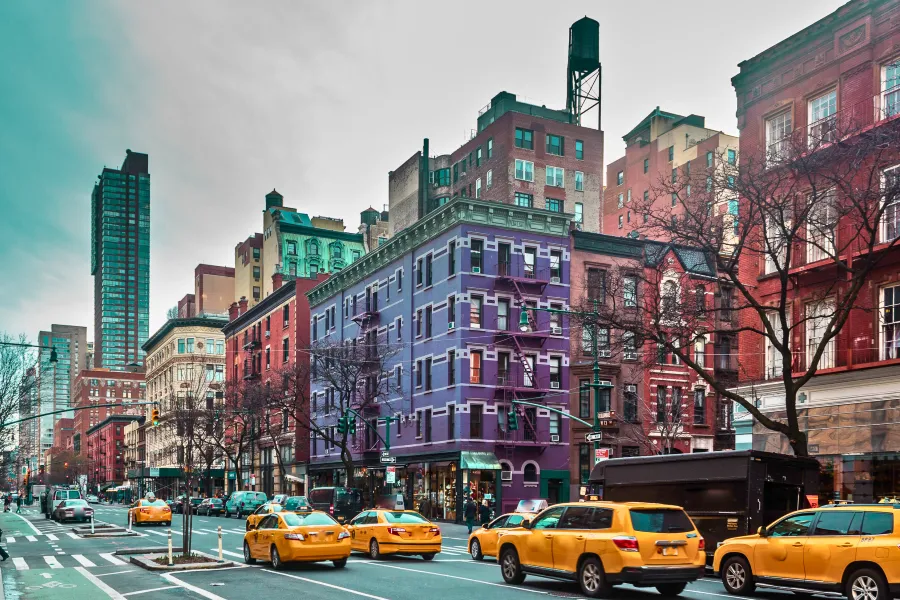
In the core Upper East Side, specifically the blocks between Lexington Avenue and Third Avenue from the 60s through the low 80s, $1 million in a co-op buys a well-proportioned one-bedroom apartment in a full-service prewar building, and in some cases a junior four or flex two-bedroom if you are patient and willing to consider buildings that require some cosmetic updating.
The one-bedroom product at this price point in Lenox Hill is genuinely strong. Prewar buildings on the east 70s and east 80s side streets, the tree-lined limestone and brick blocks between Lexington and Third, routinely produce one-bedroom units with entrance foyers, 9 to 10-foot beamed ceilings, hardwood floors, and proper living rooms in the 550 to 750 square foot range. These are not cramped apartments. They are the kind of rooms that were designed for furniture, not just mattresses, and they hold up over time in a way that newer construction at the same price point in trendier neighborhoods does not.
What to Expect at $800K to $950K
In this sub-range buyers are looking at solid one-bedroom co-ops in well-maintained postwar full-service buildings on the east side blocks between Lexington and Third. Buildings in this range typically offer 24-hour doorman service, laundry on premises, and bike storage. The apartments themselves are functional and often renovated, with updated kitchens and baths, but without the prewar architectural character of the higher end of this tier. Square footage typically runs 550 to 700 square feet.
The Newport East at 370 East 76th Street in Lenox Hill, a condop building, has historically offered product in this range with reasonable common charges and a straightforward approval process. The Eastgate buildings on East 72nd and 73rd Streets are classic prewar mid-rise co-ops in this price zone with the ceiling heights and lobby character that make the UES distinctive.
What to Expect at $950K to $1.1M
Moving up into the $950,000 to $1.1 million range in core Lenox Hill, buyers begin to access prewar one-bedrooms with genuine architectural character, specifically the entrance galleries, beamed ceilings, and properly proportioned rooms that define the best of the UES building stock. In some buildings, particularly those on the quieter side streets east of Lexington, this range can produce a junior four or alcove studio with a separate dining area that converts to a second sleeping space.
The Chatham at 181 East 65th Street is a 32-floor full-service condominium in this range with amenities including a gym and garage, representing the condo option available in core Lenox Hill at this price tier. For co-op buyers at this range, buildings on East 72nd, 73rd, and 74th Streets between Lexington and Third are where the prewar one-bedroom with real character lives.
The Yorkville Value Play: More Space East of Second Avenue
Yorkville, the stretch of the Upper East Side east of Third Avenue from the 70s through the 90s, is where $1 million on the UES becomes genuinely compelling. A dollar spent east of Second Avenue consistently buys 10 to 15 percent more space than the same dollar spent in core Lenox Hill, with the same Upper East Side address and the same transit access. For buyers who understand this and are not anchored to a specific block, Yorkville represents the strongest value case in the neighborhood at the $1 million price point.
One-Bedroom to Flex Two-Bedroom Range
In Yorkville at $1 million, buyers are looking at spacious one-bedrooms in the 750 to 900 square foot range, some with separate dining rooms, and flex two-bedroom layouts in postwar full-service buildings. Carnegie Park at 215 East 96th Street is a 31-story, 287-unit building at the northern end of Yorkville that historically offers condos and condops at accessible prices, with amenities including a full-time doorman, fitness center, pool, roof deck, and garage. The building’s location near the 96th Street Q train station, which connects directly to Midtown and Lower Manhattan, makes the northern Yorkville location significantly more accessible than it was before the Second Avenue Subway opened.
The Whitney building in Yorkville has offered one-bedroom corner co-op units with 10-foot ceilings, parquet floors, doorman, valet, and roof deck below the $1 million mark, making it one of the buildings where buyers at this price point get genuine full-service amenity access alongside real usable space. One Carnegie Hill at 215 East 96th Street has offered two-bedroom condop corner units at or near the $1 million threshold, with oversized windows providing city and river views, representing exactly the kind of product that Yorkville’s relative value makes available at a price point that would produce far less in core Lenox Hill.
The East End Avenue Positioning
For buyers specifically drawn to East River views and Carl Schurz Park access, the blocks closest to East End Avenue in Yorkville produce a specific residential experience that no other UES sub-neighborhood can match. The park runs along the East River waterfront from 84th to 90th Streets and provides a genuine green space amenity that the densely built core neighborhood cannot offer. Buildings on the side streets closest to the park, particularly in the east 80s, offer co-op product in the $900,000 to $1.1 million range that gives residents direct walking access to one of the most enjoyable waterfront corridors in Manhattan.
Carnegie Hill: The Boutique New Development Story

Carnegie Hill, the sub-neighborhood running roughly from 86th to 96th Street, is where the Upper East Side’s most interesting new development story is playing out in 2026. Boutique projects here, many under 50 units, have been selling out before they ever reach public listing platforms, through broker relationships with qualified buyers. A million dollars in Carnegie Hill does not necessarily buy new development, but it buys into a sub-neighborhood whose trajectory is being shaped by new development above it in the pricing stack.
The Kent at 200 East 95th Street, a full-service condominium with amenities including a 24-hour doorman and concierge, stroller valet, indoor swimming pool, resident lounge, outdoor playground, and canine spa, has been one of Carnegie Hill’s stronger performing new developments of recent years, with entry points at accessible price levels relative to comparable new construction elsewhere on the UES. For buyers at the $1 million threshold who specifically want Carnegie Hill and new construction quality, the Kent has historically been the reference point for what this sub-neighborhood delivers.
The broader Carnegie Hill co-op market at $1 million is strong for one-bedroom prewar product in well-maintained buildings on the quieter blocks east of Madison. The neighborhood’s restaurant scene, including Cafe Commerce at 964 Lexington between 70th and 71st and the broader transformation of the Madison Avenue corridor above 86th Street, has given Carnegie Hill a genuinely residential character that makes it feel like a complete neighborhood rather than simply a quieter extension of the more commercial corridor further south.
What $1M Does NOT Buy on the Upper East Side
Honesty about what this price point does not deliver serves buyers better than a pitch. Here is the clear picture.
A million dollars on the Upper East Side does not buy a two-bedroom apartment with genuine separation in the core neighborhood between Fifth and Lexington. That product starts in the $1.3 to $1.5 million range in core Lenox Hill and higher in buildings with prewar character. Buyers who need twobedroom options at $1 million should be looking in Yorkville, Carnegie Hill, or buildings east of Second Avenue, not in the prime blocks west of Lexington.
A million dollars does not buy a condo in most core UES buildings. The condo premium on the Upper East Side is real and measurable. A co-op that trades at $900,000 in a given building would trade as a condo at $1.1 to $1.2 million in the same location. Buyers who specifically need condo ownership, whether for financing flexibility, subletting, or investment purposes, need to adjust their expectations about location or widen their search to Yorkville and Carnegie Hill.
And a million dollars does not buy access to the legendary Park and Fifth Avenue cooperative buildings. The smallest unit at 834 Fifth Avenue is approximately 4,000 square feet. The buildings along the Park Avenue corridor from the 60s through the 80s start well above $1 million for the most modest units. A million dollars on the Upper East Side is a genuinely strong position in the right buildings and the right sub-neighborhoods. It is not a position that places buyers in the trophy building tier.
Co-op vs Condo at $1M on the Upper East Side
The Co-op Path at $1M
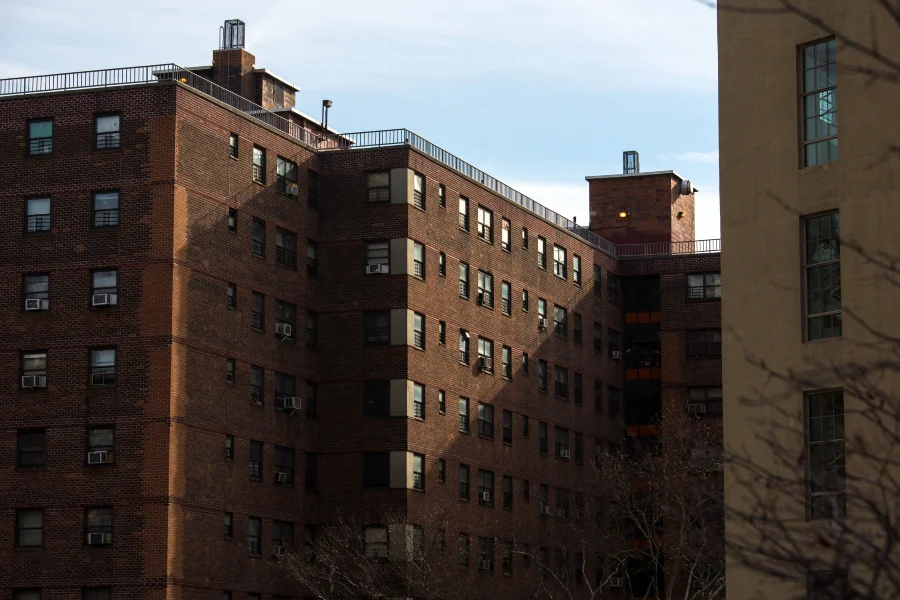
At $1 million in a UES co-op, buyers typically get more space per dollar, more architectural character in prewar buildings, and lower closing costs due to the absence of the Mortgage Recording Tax. The trade-offs are the board approval process, the post-closing liquidity requirements, and the restrictions on subletting and renovation that come with co-op ownership. For buyers who are certain they are buying a primary residence and plan to stay for a meaningful period, the co-op path on the UES at $1 million is consistently the stronger value proposition.
The Condo Path at $1M
At $1 million in a UES condo, buyers are typically looking at older condo buildings east of Second Avenue in Yorkville, condop buildings in Lenox Hill, or new development entry-level product in Carnegie Hill. The condo advantages are flexibility and no board approval. The trade-offs are higher closing costs including the Mortgage Recording Tax and the reality that $1 million in a UES condo buys considerably less space than $1 million in a UES co-op. For buyers who prioritize flexibility or anticipate a shorter hold period, the condo path is defensible. For buyers who are optimizing for space and long-term value, the co-op path wins at this price point.
Seller Perspective: Pricing Your UES Apartment in the $1M Range
For sellers with units in the $900,000 to $1.1 million range on the Upper East Side in 2026, the most important pricing decision involves the mansion tax threshold. Units that can realistically be priced below $999,999 should be, because the $10,000 mansion tax that kicks in at $1 million is a meaningful closing cost for buyers at this price point, and buyers are consistently more willing to negotiate on units priced above the threshold than those priced just below it.
Co-op sellers in this range need to understand that the reduced competition from co-op buyers, a result of the 15 percent year-over-year decline in co-op contracts Manhattan-wide, means pricing needs to be sharp from day one. The sellers who succeed are those who price competitively from the outset rather than testing the market at an aspirational number and chasing reductions. The buyers in this range are doing their research, they know what comparable units have sold for, and they are not paying a premium for a unit that does not justify one.
If you are preparing to sell on the Upper East Side and want a pricing strategy that reflects the current state of the market, reach out at.
Frequently Asked Questions
At $1 million on the Upper East Side in 2026, buyers can typically expect a well-proportioned one-bedroom co-op in a full-service prewar or postwar building in Lenox Hill or the core UES, a spacious one-bedroom or flex two-bedroom co-op in Yorkville east of Second Avenue, or an entry-level condo or condop in Carnegie Hill. The specific building, block, and condition of the unit determine exactly what the money buys. Buyers who are flexible on location within the neighborhood consistently find more product at this price point than those who anchor to a specific sub-neighborhood.
Yes, $1 million is a workable price point reflecting Upper East Side pricing in 2026, particularly for co-op buyers. The UES median home price is approximately $1.4 million, which means $1 million buys into the lower range of the market, but the lower range of the UES market is still genuinely strong residential product. Co-ops in well-maintained full-service buildings with doorman service, good financials, and prewar character are available at and around the $1 million mark across Lenox Hill, Yorkville, and Carnegie Hill. The key is understanding that this price point is overwhelmingly a co-op market and that the board approval process requires preparation and the right financial profile.
When you buy a co-op on the Upper East Side you are purchasing shares of stock in a corporation that owns the building, not real estate outright. You must be approved by the building’s board of directors, meet specific financial requirements, and comply with rules on subletting and renovation. Co-op buyers save the Mortgage Recording Tax at closing, approximately 1.8 to 1.925 percent of the loan amount. When you buy a condo you own the unit outright as real property with more flexibility but higher closing costs. At the $1 million price point on the UES, co-ops offer more space and architectural character per dollar than condos in most cases.
Yorkville, east of Third Avenue from the 70s through the 90s, consistently offers the best value at the $1 million price point with prices running 10 to 15 percent below comparable product in core Lenox Hill. Carnegie Hill offers a more intimate sub-neighborhood character and access to the new development story at entry-level price points. For buyers who specifically want prewar character at this price, the side street blocks in Lenox Hill between Lexington and Third in the east 70s and 80s are where that product concentrates at or near $1 million.
Most co-op buildings on the Upper East Side require a minimum of 20 percent down, which on a $1 million purchase is $200,000. Some buildings require 25 to 30 percent. Buyers should also budget for closing costs including the attorney fee and the mansion tax of one percent on purchases at or above $1 million. Most UES co-op boards require buyers to demonstrate one to two years of post-closing liquid assets. A buyer purchasing at $1 million with 20 percent down should expect to show approximately $400,000 to $500,000 in total liquid assets to satisfy most boards.
Monthly costs for a $1 million co-op on the Upper East Side depend on the specific building’s maintenance fee structure, loan amount, and applicable flip taxes. A monthly mortgage payment on an $800,000 loan at approximately 6.1 percent runs around $4,850. Monthly maintenance fees in UES co-ops typically range from $1,200 to $2,500 depending on building size, staff, and included utilities. The maintenance fee includes the building’s property tax allocation, so co-op owners do not pay a separate property tax bill. Total monthly carrying costs for a $1 million UES co-op typically land in the $6,000 to $7,500 range depending on the building and financing structure.