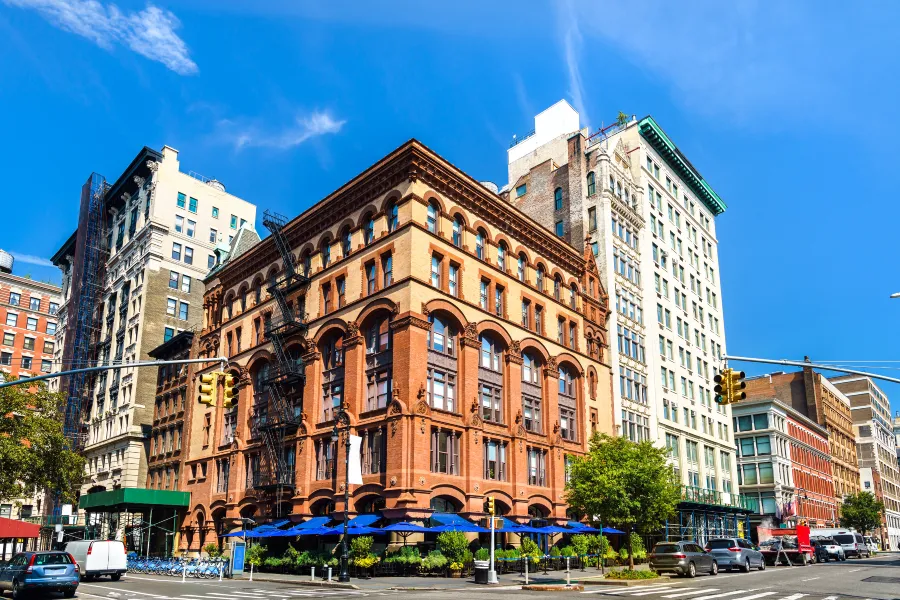

The block between Second Avenue and First Avenue on East 25th Street is about to become one of the most watched addresses in Manhattan real estate due to several notable real estate projects underway. A $1.6 billion academic and research campus is breaking ground there, the largest institutional investment this neighborhood has ever seen, and the buyers who understand what that means for the surrounding blocks are moving now while the pricing still reflects the old Kips Bay rather than the one that is coming.
That is the story of Kips Bay in 2026 in a single block. A neighborhood where the specific street you choose determines whether you are buying ahead of the transformation or after it. Where Third Avenue delivers a completely different daily life than First Avenue. Where the blocks around the I.M. Pei-designed Kips Bay Towers complex feel nothing like the new development corridor two avenues west. And where buyers who understand those distinctions are finding value that the neighborhood’s current pricing does not yet fully reflect.
This guide covers the best blocks in Kips Bay street by street, what each one delivers in terms of buildings, access, and daily life, and where the neighborhood’s most compelling opportunities are concentrated right now.
Kips Bay runs from East 23rd Street to East 34th Street between Lexington Avenue and the East River. That is eleven blocks north to south and roughly six blocks east to west, small enough that many buyers treat it as a single uniform neighborhood. It is not. The character of Kips Bay changes dramatically depending on which avenue you are on and which block you land on. Third Avenue delivers a completely different daily life than First Avenue. The blocks around the Kips Bay Towers complex feel nothing like the new development corridor along Third Avenue and 25th Street. Understanding those distinctions is what separates buyers who find genuine value from those who settle for whatever came up first in their search results.
This guide covers the best blocks in Kips Bay by specific street and sub-zone, what each one delivers in terms of buildings, access, and day-to-day living, and where the neighborhood’s most compelling opportunities are concentrated in 2026.
The Third Avenue Corridor: Where New Development Lives
Third Avenue runs along the western edge of Kips Bay and is where the neighborhood’s new development wave has concentrated most visibly. The blocks between 23rd and 34th Streets along Third Avenue and the immediate side streets represent the most transformed section of the neighborhood and where buyers looking for contemporary product should focus their attention first.
Third Avenue Between 23rd and 30th Streets
This stretch of Third Avenue is the spine of Kips Bay’s new development story. The zoning here allows for mixed-use buildings significantly taller than the surrounding residential blocks, which is precisely what has made it attractive to developers over the past five years. The result is a series of new condominiums with floor-to-ceiling windows and views at mid-height floors that buyers in denser neighborhoods simply cannot access at equivalent prices.
Eastlight at 501 Third Avenue is the most prominent current example. The 143-unit building is designed specifically to maximize light and views at lower floors through corner floor-to-ceiling windows, producing a residential experience that is structurally different from what older Kips Bay buildings offer. The building’s corner positioning at Third Avenue and 30th Street gives most units multiple exposures. Studios, one-bedrooms, and two-bedrooms are available with contemporary finishes and a modern amenity package.
VU at 368 Third Avenue, between 26th and 27th Streets, takes a similar approach with a majority of units designed to capture views in multiple directions. The building’s positioning and height within its zoning envelope means that residents on mid-level floors have sightlines that higher-density blocks eliminate. For buyers evaluating new development in Kips Bay specifically, the Third Avenue corridor between 23rd and 30th is where the most compelling product is concentrated and where the value argument against comparable new construction elsewhere in Manhattan is strongest.
The 25th Street Cross Blocks
The side streets connecting Third Avenue to Second Avenue in the mid-20s represent some of the most interesting blocks in the neighborhood for buyers who want either new development or the characterful older product that has defined Kips Bay for decades.
Hendrix House at 250 East 25th Street, on the corner of Second Avenue and 25th Street, is a 12-story, 60-unit building where every unit was designed with a home office space and more than half include private outdoor space. The building’s amenity package includes an outdoor garden, coworking space, and a fitness center with steam room. Its location on 25th Street puts residents directly adjacent to the block where the SPARC Kips Bay campus is being developed at First Avenue and 25th Street. Deconstruction of the existing buildings began in February 2026 and construction of the new campus is anticipated to start in 2027. Buyers purchasing on or near 25th Street right now are entering ahead of the institutional investment that historically precedes neighborhood appreciation. The $1.6 billion project is projected to generate $42 billion in economic impact over 30 years and create 15,000 jobs when complete.
218 East 25th Street is a different kind of address entirely. The four-story townhouse with soaring ceilings and massive skylights has been used as a sculpture studio and cultural gathering space and exemplifies the architectural character that the neighborhood’s older stock carries on its side streets. For buyers who want the Kips Bay address with something genuinely individual rather than a unit in a tower, the 25th Street side blocks between Third and Second Avenues offer that kind of product at price points that tower units in trendier neighborhoods cannot match.
The Second Avenue Zone: The Neighborhood’s Residential Core
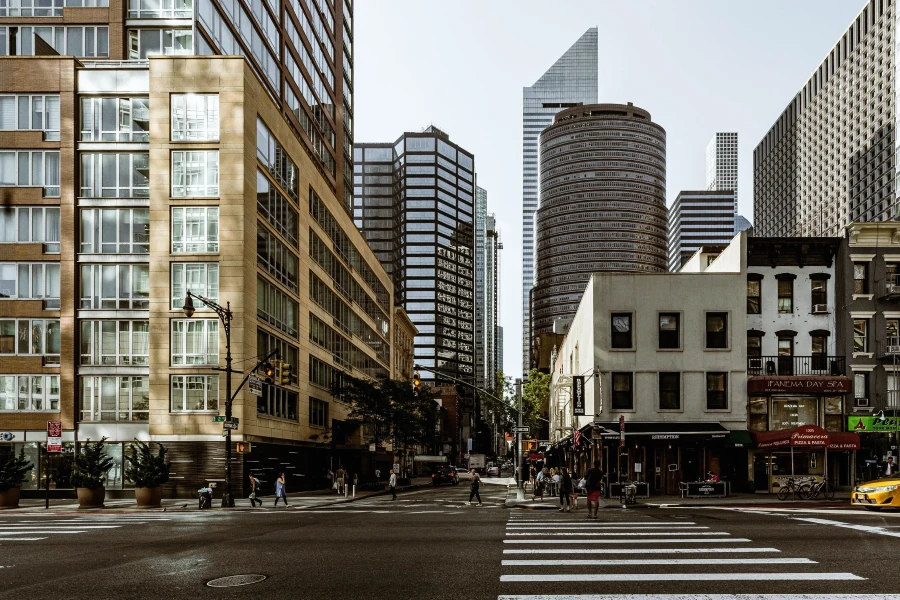
Second Avenue runs through the middle of Kips Bay and is where the neighborhood’s established residential character is most concentrated. The avenue is lined with midcentury brick apartment buildings, postwar co-ops, and the commercial infrastructure that serves daily life, including the Kips Bay Plaza shopping center with its Fairway Market, Trader Joe’s, AMC movie theater, pharmacy, and fitness center.
Second Avenue Between 30th and 33rd Streets
The blocks flanking Kips Bay Towers along Second Avenue represent the neighborhood’s most architecturally significant residential zone. Kips Bay Towers, designed by I.M. Pei and completed in 1963, is a 1,118-unit condominium complex spread across two 21-story towers set within a three-acre private garden between First and Second Avenues, bounded by 30th and 33rd Streets. The garden, with its London Plane trees, Weeping Willows, lawns, basketball court, playground, and seasonal flower beds, is one of the most extraordinary private outdoor spaces attached to any Manhattan residential complex. Pei’s minimalist concrete and glass design, with its thin window spandrels and piloti columns at ground level, reads as quietly distinguished rather than imposing. The building sits near Fairway, Trader Joe’s, and the Kips Bay movie theater at Kips Bay Plaza.
The Kips Bay Towers complex addresses span 343 East 30th Street, 300 East 33rd Street, 330 East 33rd Street, and 333 East 30th Street. For buyers who want a large-unit, garden-surrounded ownership experience with a private outdoor amenity that most Manhattan condominiums simply cannot offer, these addresses deliver something genuinely unusual within the neighborhood and within the borough more broadly.
Second Avenue Between 26th and 29th Streets
The blocks immediately south of Kips Bay Towers along Second Avenue carry the neighborhood’s characteristic postwar brick apartment buildings alongside newer product. Bellevue South Park, located mid-block between First and Second Avenues from 26th to 28th Streets, is the neighborhood’s primary green space and provides a genuine park experience on blocks that might otherwise feel apartment-dense. The park’s mid-block positioning gives it a quieter character than avenue-fronting parks, and the surrounding buildings benefit from proximity to open space that the avenue-fronting units do not have.
609 Second Avenue is one of the newer residential additions to this stretch, with oversized windows and curved upper-level balconies that signal the design ambition of Kips Bay’s new development wave. For buyers evaluating the mid-Second Avenue blocks, the combination of established neighborhood infrastructure, proximity to the park, and the arrival of newer product creates a genuinely compelling everyday living environment.
The Lexington Avenue and Curry Hill Corridor
Lexington Avenue forms the western boundary of Kips Bay and carries one of the neighborhood’s most distinctive and genuinely beloved residential amenities: Curry Hill.
Lexington Avenue Between 26th and 29th Streets
The stretch of Lexington Avenue between 26th and 29th Streets is known informally as Curry Hill for its extraordinary concentration of South Asian restaurants. Dozens of Indian, Pakistani, Bangladeshi, and Sri Lankan restaurants line both sides of Lexington Avenue and spill onto the surrounding side streets, ranging from vegetarian South Indian specialists to rich North Indian curry houses to casual lunch counter operations that have fed the neighborhood for decades. Pongal at 110 Lexington Avenue is one of the most respected vegetarian Indian restaurants in the city, with a menu of South Indian specialties including 12 varieties of chaat and a masala dosa that draws devoted regulars. Bhatti, Chote Nawab, and Haldi are among the establishments that provide sit-down dining with genuine ambiance alongside the many takeout operations.
For buyers who live near the Lexington Avenue corridor, Curry Hill is not a restaurant strip they visit occasionally. It is a daily resource that provides exceptional food at accessible prices within walking distance. The concentration and quality of Indian and South Asian food available in this stretch is simply not replicable at this price-to-quality ratio anywhere else on the East Side.
Penelope at 159 Lexington Avenue at 30th Street has been a neighborhood anchor for brunch and casual American dining for years. The restaurant’s warm interior and reliable all-day menu make it a genuine neighborhood institution rather than a destination restaurant. For buyers evaluating which Kips Bay blocks feel most like a complete neighborhood, proximity to the Lexington Avenue restaurant corridor is a meaningful quality of life factor.
The residential buildings along the Lexington Avenue corridor tend toward the smaller scale prewar and postwar walk-up and elevator buildings that give the immediate Curry Hill area its particular human-scale character. Buyers who want to be close to this specific neighborhood energy without being in a tower should look at the side street blocks between Lexington and Third Avenue in the high 20s.
The First Avenue and Waterfront Zone

First Avenue runs along the eastern side of Kips Bay and is defined by two competing realities. The medical corridor, with NYU Langone Medical Center dominating the blocks between 30th and 34th Streets on the east side of First Avenue, and Bellevue Hospital further south, creates an institutional presence that shapes the character of the avenue. On the other side of that equation is the East River Greenway and the approaching transformation represented by the SPARC Kips Bay campus.
First Avenue Between 25th and 30th Streets
The blocks along First Avenue between 25th and 30th Streets sit at the intersection of Kips Bay’s established institutional presence and its most significant forward-looking development story. Waterside Plaza, a residential and business complex built on a pier above the East River between East 25th and 30th Streets, is one of the neighborhood’s most distinctive addresses. The complex’s position over the water gives it East River views and a relationship to the waterfront that no inland Kips Bay address can replicate.
Riverpark at 450 East 29th Street, the restaurant owned by Tom Colicchio tucked along the East River with floor-to-ceiling windows overlooking the water and an urban farm across the street providing seasonal ingredients, represents exactly the kind of destination dining that the neighborhood’s new development story is attracting. Its seasonal terrace bar reopens in spring 2026 and offers outdoor drinking with East River views that very few Manhattan neighborhoods can deliver. For buyers considering the First Avenue waterfront blocks, proximity to Riverpark and the East River Greenway is a genuine daily life amenity.
The East River Greenway, the waterfront path for walking and cycling that runs along the eastern edge of Kips Bay, provides immediate access to one of the most consistently enjoyable recreational corridors in Manhattan. The path connects south toward Stuyvesant Town and Peter Cooper Village and north toward the 34th Street ferry terminal, where NYC Ferry routes connect Kips Bay to Wall Street, Brooklyn, and Queens.
East 34th Street and the Ferry Landing
The blocks approaching East 34th Street and the FDR Drive carry a specific positioning advantage that buyers who commute to Brooklyn or work at multiple Manhattan locations consistently value: the East 34th Street NYC Ferry terminal, where Astoria, East River, and Soundview ferry routes connect Kips Bay directly to multiple neighborhoods without a subway transfer. A city-owned parking lot at the East 34th Street waterfront is also being converted to a new public open space with fitness equipment and community gathering areas, with completion targeted for spring 2026.
The residential buildings closest to the 34th Street ferry landing, particularly along First and Second Avenues in the low 30s, give residents a commute option that most Manhattan neighborhoods simply do not have at any price point.
The Quiet Side Streets: 28th to 30th Between Second and Third
The mid-block side streets of Kips Bay, particularly 28th, 29th, and 30th Streets between Second and Third Avenues, possess a distinctive residential character that is genuinely distinct from the avenue-fronting product and represents the neighborhood’s most characterful housing stock.
East 29th Street
East 29th Street between Second and Third Avenues is one of the more interesting residential blocks in the neighborhood. The block contains a range of building types from prewar walk-ups to postwar elevator buildings to newer product, and its mid-block positioning gives it the quiet that the avenues cannot provide. The fire station at 234 East 29th Street has been a neighborhood anchor for decades. The building at 203 East 29th Street is a rare clapboard survivor of late 18th or early 19th century Manhattan construction, one of the last wooden houses in the neighborhood and a reminder of what Kips Bay looked like before the urban renewal era. New development is arriving here too: a 20-story residential condominium is under development at 157-161 East 28th Street at the corner of Third Avenue, bringing contemporary product to a block that has long been defined by older building stock.
East 30th Street
East 30th Street between Second and Third Avenues is one of the more desirable side streets in the neighborhood. The 21-foot-wide townhouse at 308 East 30th Street with its landscaped rooftop deck and in-ground lap pool illustrates the kind of singular residential product that the neighborhood’s side streets occasionally produce. The blocks here are quieter than the avenues, well-maintained, and within easy walking distance of both the Kips Bay Towers complex and the Third Avenue new development corridor.
Seller Perspective

Sellers in Kips Bay in 2026 are operating in the strongest market this neighborhood has seen in years, with prices up 29.6 percent year over year and a new development premium story that is actively supporting buyer interest across all price points. The most important thing sellers can do is connect their specific building and block’s positioning to the larger neighborhood story that buyers are actively researching. A unit on 25th Street near the SPARC Kips Bay site carries a forward-looking narrative that a unit on a less transitional block does not. A unit in Kips Bay Towers carries the I.M. Pei garden story that no other building in the neighborhood can claim. Sellers who understand and communicate their building’s specific strengths within the neighborhood’s broader context consistently achieve stronger outcomes than those who rely on the neighborhood headline numbers without connecting them to their specific address. If you are preparing to sell in Kips Bay and want to discuss how to position your unit, reach out.
Frequently Asked Questions
The best blocks in Kips Bay depend on your priorities. For new development with floor-to-ceiling windows and contemporary amenities, the Third Avenue corridor between 23rd and 30th Streets is where the neighborhood’s most compelling new product is concentrated. For the I.M. Pei-designed Kips Bay Towers complex with its three-acre private garden, the blocks around Second Avenue between 30th and 33rd Streets deliver a residential experience that is unique in Manhattan. For proximity to the SPARC Kips Bay campus investment and the neighborhood’s most forward-looking appreciation story, the 25th Street blocks between Second and Third Avenues are where buyers entering ahead of institutional development are focused right now. For daily life amenities and the Curry Hill restaurant corridor, the blocks around Lexington Avenue in the high 20s offer a neighborhood texture that the avenue-fronting towers cannot replicate.
Yes, and the case is stronger in 2026 than at any point in recent memory. Prices are up 29.6 percent year over year while the neighborhood still trades below the Manhattan median per square foot. Seven new condo buildings have opened in five years. The $1.6 billion SPARC Kips Bay campus is breaking ground at First Avenue and 25th Street. New Empire Corp just secured a $37.9 million assemblage for a new 14-story condo tower. The East 34th Street waterfront is being transformed into new public open space. The combination of below-median pricing, active new development, and institutional investment creates exactly the conditions that precede sustained appreciation in established Manhattan neighborhoods.
Kips Bay is known for several distinct things that together define its character. The Kips Bay Towers complex designed by I.M. Pei, with its 1,118 units set within a three-acre private garden, is one of the most architecturally significant mid-century residential complexes in the city. Curry Hill, the concentration of South Asian restaurants along Lexington Avenue between 26th and 29th Streets, provides some of the best Indian food in Manhattan at accessible prices. The medical corridor along First Avenue including NYU Langone Medical Center and Bellevue Hospital gives the neighborhood a specific institutional identity. The East River Greenway and ferry terminal at 34th Street provide waterfront access and commuter options unavailable in most Manhattan neighborhoods. And more recently, Kips Bay is becoming known for its new development wave, seven buildings in five years, that is reshaping the neighborhood’s residential identity.
Kips Bay is primarily served by the 6 train at the 23rd Street, 28th Street, and 33rd Street stations on Park Avenue South. Bus service is extensive, including the M15 and M15 SBS running along First and Second Avenues, the M23 SBS and M34 SBS running crosstown, and multiple other routes. The East 34th Street NYC Ferry terminal provides water transportation to Wall Street, multiple Brooklyn neighborhoods, and Queens via the Astoria, East River, and Soundview routes. The 34th Street-Hudson Yards 7 train station is accessible via a crosstown walk or bus, adding a major express connection to the neighborhood’s transit options.
Kips Bay and Murray Hill share a border at 34th Street but offer meaningfully different residential experiences. Murray Hill’s western blocks carry brownstones and prewar co-ops that define its character west of Lexington Avenue and deliver architectural product that Kips Bay’s newer building stock cannot match. Kips Bay counters with a new development wave that Murray Hill has not seen, seven buildings in five years at a 47.5 percent premium over resale that reflects genuine quality differentiation. Kips Bay also offers the I.M. Pei Towers complex, the SPARC campus investment story, and prices that are generally more accessible than Murray Hill’s premium brownstone blocks. Buyers who specifically want new construction quality in a neighborhood that still trades at relative value compared to the rest of Manhattan will consistently find Kips Bay more compelling than Murray Hill right now.
Kips Bay has several green spaces that serve different functions. Bellevue South Park, located mid-block between First and Second Avenues from 26th to 28th Streets, is the neighborhood’s primary park and provides a quieter green space experience away from avenue traffic. The three-acre private garden within the Kips Bay Towers complex is one of the most extraordinary residential outdoor spaces in Manhattan, though it is accessible only to building residents. The Asser Levy Recreation Center at the FDR Drive between 23rd and 25th Streets includes indoor and outdoor pools. The East River Greenway running along the neighborhood’s eastern edge provides a waterfront recreational corridor connecting south to Stuyvesant Cove Park and north toward midtown. A new public open space is also being developed at the East 34th Street waterfront with completion targeted for spring 2026.