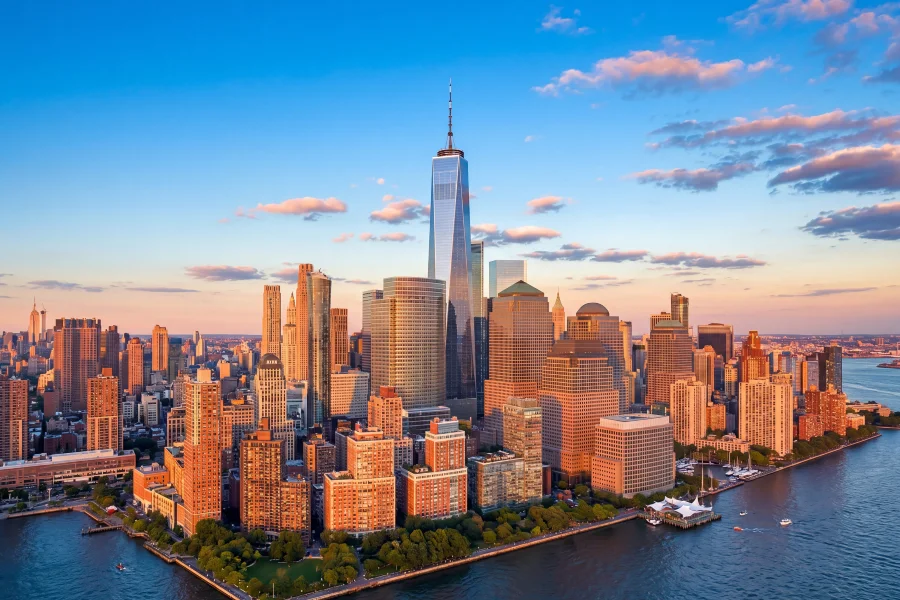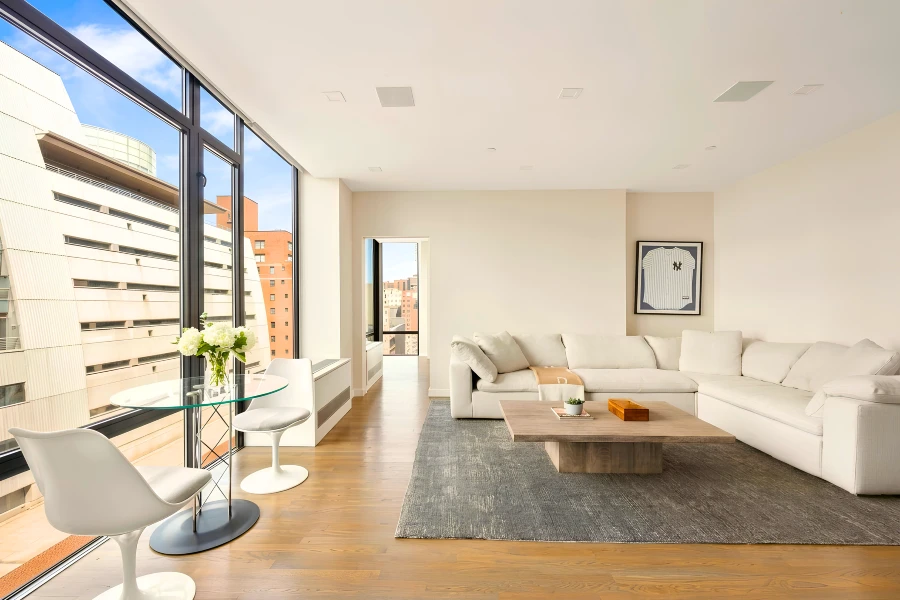

Two million dollars in Manhattan buys very different things depending on which neighborhood you are in. In Tribeca, where the median condo price hovers around $3.6 million, $2 million gets you into the lower end of the market. In the West Village, it barely qualifies as a starter position. In the Financial District, $2 million is the price point where the neighborhood’s most compelling value story comes into full focus.
FiDi ranked number one on StreetEasy’s most searched neighborhoods for 2026, with buyer searches surging 46.7 percent year over year. Median home prices are up 28.1 percent. Days on market dropped from 103 to 85. And yet FiDi still trades at a meaningful discount to comparable product in Tribeca and the West Village. At $2 million, that discount translates into something very specific: a spacious, two-bedroom condominium in a landmark building, with amenities that rival any residential tower in the city, at a price point that would produce a smaller, less distinguished apartment almost anywhere else downtown.
This article covers exactly what $2 million buys in the Financial District in 2026, the available real estate options, which buildings are in play, what the different tiers of product deliver, and the financial considerations every buyer at this price point needs to understand before making an offer.
For context on what is driving the FiDi market right now, see our Financial District Real Estate Market Trends 2026.
The Market Context: Why $2M Is a Strong Position in FiDi Right Now
As of early 2026, condo prices in the Financial District have a median listing price of approximately $1.27 million and an average sale price of around $1.7 million. That means $2 million places buyers well above the market median and into the segment where the neighborhood’s most distinctive product lives.
Studios in FiDi typically range from $550,000 to $900,000. One-bedrooms run from $700,000 to $1.8 million depending on size, views, and building quality. Two-bedrooms start at $1.3 million and extend to $4 million in the premium buildings. Three-bedrooms begin around $2.5 million. At exactly $2 million, buyers are sitting at the upper end of the two-bedroom market in the conversion buildings and at the entry point for the larger two-bedrooms in the new development towers.
That positioning matters because FiDi’s building stock is genuinely varied. The Art Deco landmark conversions, the new construction glass towers, and the historic commercial building conversions each deliver a completely different residential experience. Two million dollars buys differently depending on which category you are prioritizing, and understanding those distinctions before starting a search is what separates buyers who find the right apartment from those who compromise unnecessarily.
One financial note every buyer at this price point needs to have front of mind: the mansion tax at $2 million is 1.25 percent of the purchase price, which equals $25,000 at closing. That is a meaningful step up from the one percent rate that applies below $2 million. Buyers who can negotiate a purchase price at $1,999,999 save $5,000 relative to a buyer at $2 million, because the mansion tax rate drops from 1.25 percent to one percent. Additionally, proposed mansion tax changes moving through the New York State legislature could take effect after June 1, 2026, potentially increasing rates at this price tier. Buyers with flexibility on timing should discuss this with their attorney before committing to a closing date.
What $2M Buys at One Wall Street
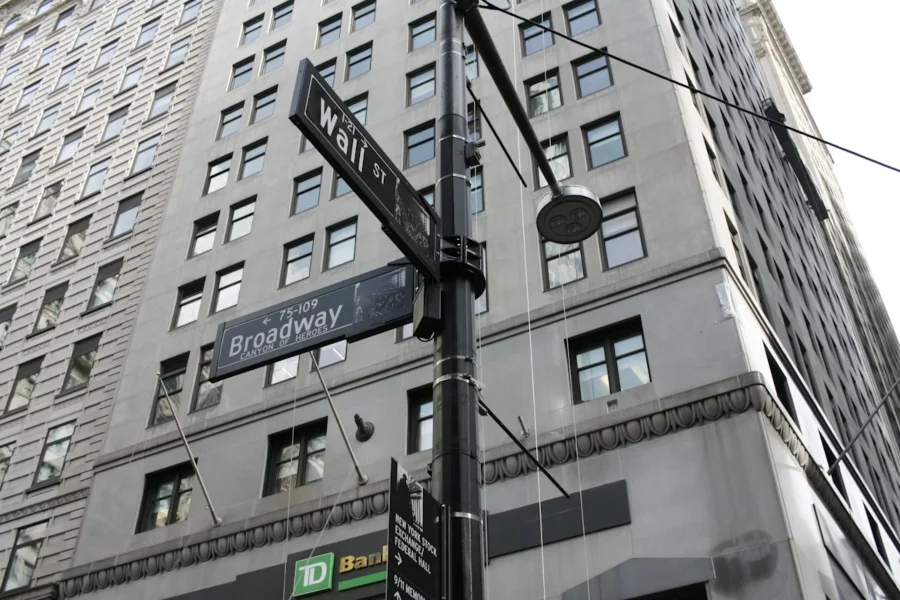
One Wall Street is the Financial District’s most architecturally celebrated residential building and the one that defines what the neighborhood’s upper market looks like. The 1931 Art Deco skyscraper, designed by Ralph Thomas Walker and originally built as the Irving Trust Company headquarters, was converted to 566 luxury condominiums by Macklowe Properties. The building’s 100,000-square-foot amenity suite, called The One Club, includes a 75-foot pool on the 38th floor with harbor views, a private dining restaurant and bar, a gym, a playroom, a canine club, and a private art-filled lounge.
At $2 million in One Wall Street, buyers are accessing the lower end of the two-bedroom range. Two-bedrooms here start at approximately $2.3 million and extend to $4 million depending on floor height, exposure, and unit configuration. That means a buyer at exactly $2 million is looking at larger one-bedrooms in the $1.4 to $2.6 million range, specifically the oversized one-bedrooms and loft units that the building’s unique conversion floor plates produce.
The building’s loft collection, 16 units in a contemporary extension added during conversion with 10 to 11-foot ceilings and floor-to-ceiling windows, falls in this range and represents some of the most architecturally interesting product in the building. The Terrace collection, 46 units with setback-anchored private balconies, also has representation at the $2 million mark. For a buyer who wants One Wall Street specifically and has $2 million to work with, the realistic target is a high-floor, well-positioned one-bedroom or loft unit rather than a two-bedroom, with the understanding that the building’s amenity package and address carry value that the pure bedroom count does not capture.
What $2M Buys at 125 Greenwich Street
125 Greenwich Street, the 88-story Rafael Vinoly-designed tower adjacent to the World Trade Center, is the FiDi building where $2 million most directly accesses the two-bedroom product. The tower’s unusual approach to floor stacking places smaller studios and one-bedrooms on the higher floors, with larger two and three-bedroom residences on the lower floors, meaning that mid-level two-bedroom buyers are not penalized on floor height in the way they would be in a conventional tower.
Two-bedrooms at 125 Greenwich start at approximately $2.8 million and three-bedrooms at $6.1 million, which means $2 million in this building is at the entry point of its one-bedroom range, with studios occupying floors 61 through 78 starting at $1.1 million. The building’s amenity package spans four floors and includes a 50-foot indoor saltwater lap pool surrounded by lounge chairs and floor-to-ceiling windows, a yoga and Pilates studio, a fitness center with luxury Technogym equipment, a nine-seat movie theater, a multi-sport simulator, a children’s play area, private dining, community lounges, and a landscaped terrace with grills and a fire pit. A dedicated concierge service called LIVunLTD handles restaurant reservations, theater tickets, and sports venue access for residents.
For a buyer with $2 million who specifically wants 125 Greenwich, the target is a high-floor one-bedroom with full access to the building’s extraordinary amenity floor. The views from upper floors of this 88-story building, specifically the harbor, Hudson River, and downtown skyline exposures, are among the most compelling in any FiDi residential building.
What $2M Buys at 130 William Street
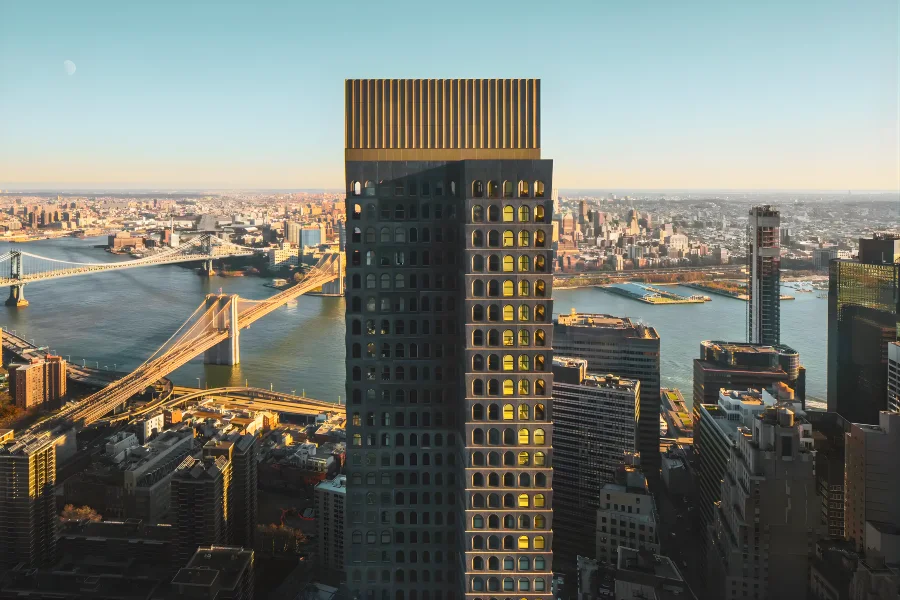
130 William Street, the David Adjaye-designed 66-story condominium known for its dramatic arched windows, is where $2 million most directly accesses genuine two-bedroom product in a FiDi new development tower. The building has been one of FiDi’s stronger-performing new developments, with penthouse sales reaching $7.1 million and above. Sponsor units remain available.
At $2 million in 130 William Street, buyers are accessing mid-level two-bedroom units where Adjaye’s signature arched windows deliver light and visual interest that standard curtain wall towers cannot match. The building’s amenity package includes a fitness center, residents lounge, and the architectural distinctiveness of the building itself, which has established a clear design identity within the FiDi skyline. For buyers who want new development quality, genuine two-bedroom proportions, and architectural distinction all at the $2 million price point, 130 William is the most direct path to that combination in FiDi.
What $2M Buys in FiDi’s Landmark Conversions
Beyond the new development towers, the Financial District has a rich inventory of historic commercial building conversions that produce residential product with ceiling heights, floor plate character, and pre-war detail that new construction simply cannot replicate.
99 John Street
99 John Street, the former Insurance Company of North America Building, is a 28-story 1933 Art Deco skyscraper designed by Shreve, Lamb and Harmon, the same architects who designed the Empire State Building. The building was converted to condominiums and offers two-bedroom units in and around the $2 million range. Renovated eat-in kitchens, in-unit washer/dryers, and generous room proportions define the product here. For buyers who value the architectural character of the Art Deco commercial era and want genuine two-bedroom space at this price point, 99 John Street is one of the conversion buildings where $2 million works most directly.
15 William Street
At 15 William Street, $2 million accesses a specific kind of FiDi flexibility that few buildings offer. The building has units configured as individual two-bedroom residences and as adjacent studio-plus-unit combinations that can be used separately or combined into a custom three-bedroom residence of approximately 2,100 square feet. This flexibility, where a buyer can use the adjacent unit as a guest suite, home office, or income-producing rental while maintaining the combined option, represents a value proposition that is genuinely unique in the FiDi condo market at this price point.
Greenwich Club at 88 Greenwich Street
The Greenwich Club at 88 Greenwich Street, a 37-floor, 458-unit building that preserves original Art Deco details, offers product at and around the $2 million threshold in its larger one-bedroom and studio loft configurations. The building’s 10-foot ceilings, projecting windows, and preserved commercial character from its prior life give it a residential feel that newer glass towers do not produce. For buyers who want the Art Deco FiDi character at the $2 million price point with a lower common charge structure than the new development towers, the Greenwich Club delivers that combination.
The FiDi $2M Advantage Over Comparable Downtown Neighborhoods
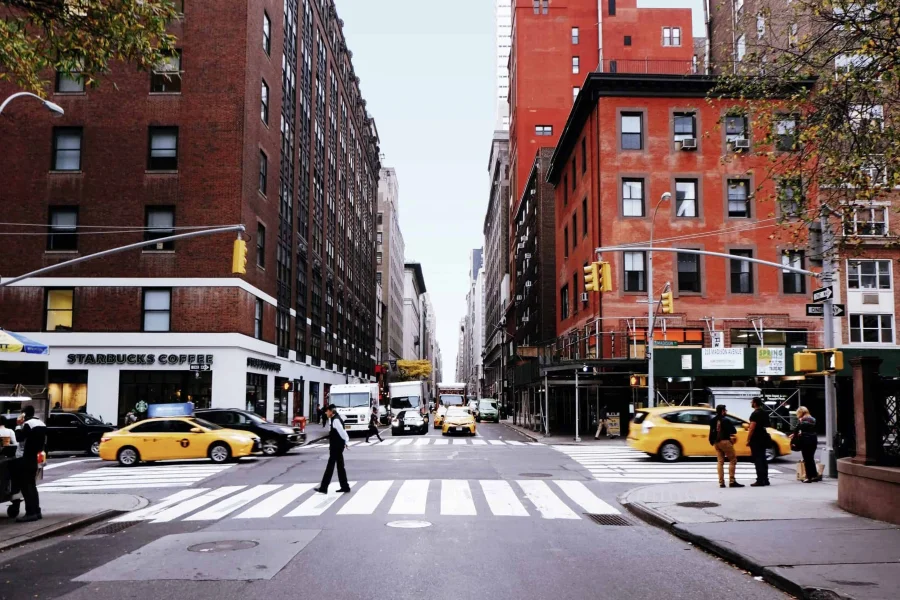
The most important context for evaluating $2 million in FiDi is what the same money buys in the neighborhoods buyers most often compare it to. In Tribeca, where the median condo price is approximately $3.6 million, $2 million produces a one-bedroom or a modest two-bedroom in a non-landmark building without the view premiums or amenity packages that FiDi buildings offer at this price. In the West Village, $2 million produces a similarly constrained product in a neighborhood where the scarcity premium is built into every transaction. In Battery Park City, the ground lease structure adds a layer of complexity and carrying cost that FiDi buyers avoid entirely.
FiDi at $2 million delivers something that none of those alternatives match at this price: genuine two-bedroom space in a landmark building with access to amenity packages, views, and architectural distinction that buyers in trendier downtown neighborhoods would need to spend $3 million or more to replicate. The buyers who understand that comparison are the ones making the strongest moves in this market right now.
Closing Costs at $2M in FiDi: What Buyers Need to Budget
A $2 million purchase in the Financial District triggers specific closing cost considerations that buyers need to plan for before making an offer.
The mansion tax at $2 million is 1.25 percent, totaling $25,000. This is a meaningful increase from the one percent rate that applies to purchases below $2 million. Buyers who can negotiate a price at $1,999,999 are worth exploring that threshold carefully with their broker, because the savings are real and sellers near this price point are often willing to negotiate around it.
The Mortgage Recording Tax on a $1.6 million loan at 80 percent financing would run approximately $30,800. Unlike co-op buyers who avoid this tax entirely, condo buyers in FiDi pay it. This is one of the structural reasons why a two-bedroom condo in FiDi at $2 million carries higher closing costs than a co-op at the same price on the Upper East Side.
New development purchases carry additional considerations. In buildings where the sponsor transfer taxes are negotiable, buyers should push for sponsor-paid transfer taxes as a concession before signing. That negotiation happens before contract, never after. A sponsor-paid transfer tax on a $2 million purchase saves the buyer approximately $36,000. It will not appear in the public record as a price reduction, which is exactly why sponsors prefer it. But the savings are real and the conversation is worth having at every new development purchase at this price point.
Total closing costs for a financed $2 million condo purchase in FiDi, including mansion tax, mortgage recording tax, attorney fees, and building-related costs, typically run between $90,000 and $110,000. Buyers should have that figure budgeted before they walk into a sales gallery or submit an offer.
Seller Perspective: Positioning a $2M FiDi Unit in 2026
For sellers with units priced at or near $2 million in the Financial District, the mansion tax threshold is the most important pricing consideration. A unit listed at $2.05 million triggers a 1.25 percent mansion tax for the buyer. A unit listed at $1.999 million triggers a one percent rate. That $5,000 difference in the buyer’s closing costs is meaningful at this price tier and sellers who price with that threshold in mind will consistently see more buyer interest than those who ignore it.
FiDi’s strong momentum in 2026, with the 28 percent year-over-year price appreciation and the 46.7 percent surge in buyer searches, gives sellers genuine pricing power. But the buyers in this market are sophisticated, they are comparing FiDi product against Tribeca, Battery Park City, and the broader downtown market, and they are doing the math on total cost of ownership. Sellers who present clearly, price intelligently around the tax thresholds, and highlight their building’s specific strengths relative to the FiDi competitive set will move their units. Those who overprice relative to recent comparable sales will sit regardless of the market momentum.
If you are thinking about buying in FiDi or have questions about any other real estate needs in Manhattan, reach out at. Let’s talk through what your budget actually gets you in this market right now.
Frequently Asked Questions
At $2 million in the Financial District in 2026, buyers can access a range of product depending on which building they are targeting. In the new development towers like 130 William Street, $2 million reaches mid-level two-bedroom units with Adjaye’s signature arched windows and full building amenities. In One Wall Street, $2 million accesses the upper range of the one-bedroom and loft collection in the Art Deco landmark with 100,000 square feet of amenities. In the conversion buildings like 99 John Street, $2 million produces genuine two-bedroom units with Art Deco character and in-unit washer/dryers. Across all categories, $2 million in FiDi delivers significantly more space and building quality than the same budget produces in Tribeca or the West Village.
The data makes a strong case. FiDi ranked number one on StreetEasy’s most searched neighborhoods for 2026 with a 46.7 percent surge in buyer searches. Median prices are up 28.1 percent year over year. Days on market dropped from 103 to 85. The neighborhood’s residential infrastructure now includes Whole Foods at One Wall Street, Eataly Downtown, the Tin Building by Jean-Georges, and Printemps, the French luxury department store. Against that backdrop, FiDi still trades at a meaningful discount to Tribeca per square foot, making it one of the strongest value arguments in downtown Manhattan for buyers who are willing to look past the neighborhood’s historical commercial reputation.
The mansion tax on a $2 million residential purchase in New York City is 1.25 percent of the purchase price, totaling $25,000. This rate applies to purchases from $2 million up to $2.999 million. Below $2 million, the rate is one percent. The mansion tax is paid by the buyer at closing and cannot be avoided through any legitimate structure. Buyers who can negotiate a purchase price at $1,999,999 save $5,000 relative to a buyer at exactly $2 million because the rate drops from 1.25 percent to one percent. Note that proposed mansion tax increases are moving through the New York State legislature with a potential effective date after June 1, 2026, which buyers with flexible timing should factor into their closing schedule in consultation with their attorney.
At $2 million, FiDi and Tribeca offer dramatically different residential experiences. In Tribeca, where the median condo price is approximately $3.6 million, $2 million buys a one-bedroom or a modest two-bedroom in a non-premium building without the view or amenity profile that characterizes the neighborhood’s best product. In FiDi at the same price, buyers access genuine two-bedroom units in landmark buildings with 75-foot pools, harbor views, and architectural distinction that Tribeca buildings at this price point cannot match. The trade-off is neighborhood prestige and the specific commercial-to-residential character of FiDi versus Tribeca’s established luxury residential identity. For buyers who prioritize space, building quality, and value per square foot over neighborhood cachet, FiDi at $2 million consistently outperforms Tribeca at the same price.
Closing costs in manhattan in a financed $2 million purchase in the Financial District typically run between $90,000 and $110,000. The largest components are the mansion tax at 1.25 percent totaling $25,000, the Mortgage Recording Tax on an $1.6 million loan at approximately $30,800, attorney fees of approximately $3,000 to $5,000, title insurance of approximately $8,000 to $10,000, and building-related fees including move-in deposits and working capital contributions that vary by building. New development purchases may carry additional transfer taxes that can sometimes be negotiated as a sponsor-paid concession before contract signing.
The active new development buildings in the Financial District with product at or near the $2 million price point include One Wall Street, which has one-bedroom and loft units in the $1.4 to $2.6 million range in the Art Deco landmark conversion; 130 William Street, which has two-bedroom units accessible around the $2 million mark in David Adjaye’s arch-window tower; and 125 Greenwich Street, the 88-story Rafael Vinoly tower, where one-bedroom units start above $1.1 million and two-bedrooms begin around $2.8 million. 77 Greenwich Street, a boutique 89-unit new construction building, also has product in this range and is selling toward sellout.