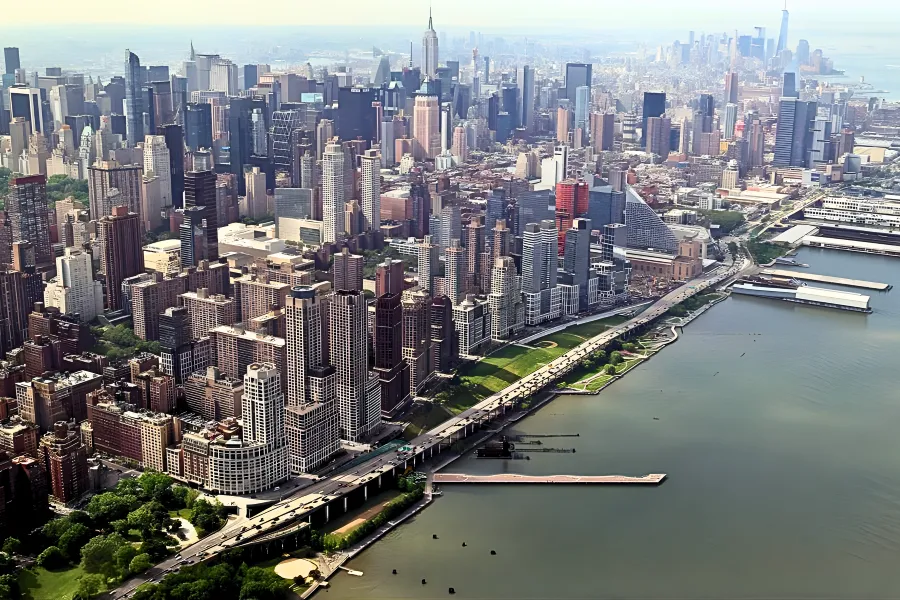

When people ask whether the Financial District is a good place to live in 2026, they’re rarely asking a casual question. They’re asking whether downtown Manhattan can actually support their real life. Not just their work schedule. Not just their Instagram feed. Their routine. Their mornings. Their weekends. Their long-term plan.
The Financial District has gone through a quiet but significant identity shift over the past decade. What used to be thought of primarily as an office district now functions as a true residential pocket with high-rise inventory, waterfront access, converted landmark buildings, and a distinct lifestyle rhythm. But that evolution doesn’t mean it’s universally right for everyone. It means the trade-offs are more specific.
Living in the Financial District in 2026 is about choosing efficiency and vertical living over brownstone charm. It’s about modern buildings, doorman service, and water views over tree-lined residential side streets. It’s about convenience, yes, but also about understanding that different micro-areas within the neighborhood behave differently in pricing, inventory, and resale demand.
If you’re evaluating FiDi seriously, the right question isn’t “Is it good?” The right question is: Is it good for you, given your budget, your tolerance for density, and your long-term ownership horizon?
Let’s break it down properly.
The 2026 Financial District Market Snapshot
In 2026, the Financial District housing market is defined by high-rise condos, luxury rentals, and a meaningful number of condo conversions in landmark office buildings. Compared to neighborhoods further uptown, FiDi has a more concentrated supply of full-service buildings with amenities. Three forces are shaping outcomes right now:
- First, inventory is more vertical than horizontal. You’re choosing between buildings more than streets. Decisions hinge on building quality, monthly costs, and amenity packages.
- Second, condo product dominates buyer activity. While co-ops exist, condos represent the core of ownership demand, especially among relocation buyers and investors who value flexibility.
- Third, price per square foot remains competitive relative to prime Midtown and some Upper East Side corridors. Buyers often get more square footage for the same budget, particularly in newer towers.
This is not a townhouse-driven neighborhood. It is a building-driven market. That distinction matters when evaluating livability and long-term value.
Micro-Location Matters More Than People Realize

The Financial District may look compact on a map, but it has distinct pockets with different residential experiences.
- The core Wall Street corridor offers high-density living in converted office towers and luxury condos. These buildings often feature strong amenity packages, concierge services, and dramatic lobby entrances. Buyers here prioritize convenience and building services.
- The waterfront edges near the East River and Hudson River tend to command premium pricing for views and light exposure. Apartments with open water views behave differently at resale than interior-facing units, even within the same building.
- The Seaport-adjacent area blends historic streets with newer development and offers a slightly more boutique feel. Inventory is thinner, which can make pricing more stable when demand is healthy.
- Border areas toward Battery Park City offer slightly calmer residential energy while remaining walkable to core FiDi amenities. Buyers comparing FiDi to Battery Park City often land here when they want modern inventory without stepping fully into a master-planned environment.
When people say “Financial District,” they often underestimate how much these micro-areas affect pricing and daily experience. Serious buyers compare building-to-building more than block-to-block.
The Pros of Living in Financial District in 2026
One of the strongest advantages of FiDi is efficiency. For professionals working in Lower Manhattan, Midtown via express trains, or Brooklyn, commute logistics are hard to beat. Transit connectivity is dense and direct, which compresses daily friction. Another major strength is building quality. Many FiDi buildings offer:
- Doorman and concierge services
- Fitness centers
- Roof decks and lounges
- Pool and spa amenities in select towers
For buyers coming from rental buildings or relocating from other cities, this vertical amenity ecosystem feels familiar and functional. There’s also a clear lifestyle simplicity. Grocery access, waterfront paths, dining corridors, and gym options are walkable. The area supports a clean daily loop: work, exercise, groceries, home.
From a pricing standpoint, FiDi often delivers stronger square footage relative to budget compared to more traditional uptown neighborhoods. A $2 million purchase in FiDi can produce more interior space than a comparable purchase in certain Upper East Side or Tribeca segments.
Finally, resale liquidity in well-run condo buildings has remained durable. Buyers value the predictability of full-service buildings with established reputations.
The Cons That Serious Buyers Should Understand
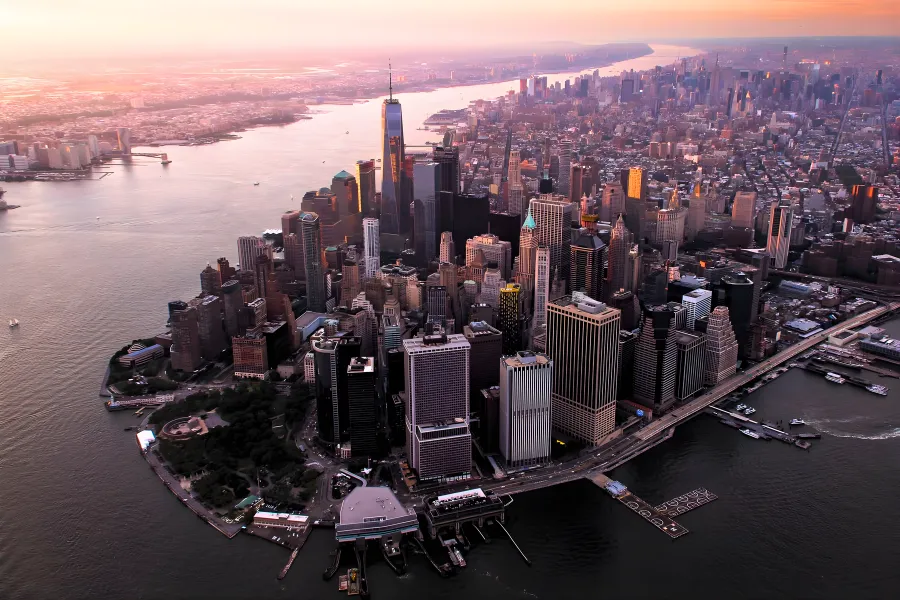
The Financial District does not offer the same street-level residential texture as older brownstone neighborhoods. The architecture skews vertical. Side streets can feel narrower. Buildings are often large. For buyers who prioritize low-rise charm, local cafés on every corner, and classic residential block aesthetics, FiDi can feel more corporate than romantic.
Another factor is building concentration. When many units trade within the same building, comparable pricing is very transparent. That transparency limits sellers’ ability to stretch pricing, which is good for buyers but can cap appreciation spikes.
There’s also a rhythm difference. The neighborhood can feel busier during weekday business hours and quieter in certain pockets at night. Some buyers love the calm; others prefer more constant neighborhood energy. None of these are flaws. They’re trade-offs. The key is knowing which trade-offs matter to you before you commit.
Entry-Level Tier: Studios and One-Bedrooms
Entry-level ownership in FiDi typically attracts:
- First-time Manhattan buyers
- Young professionals transitioning from rentals
- Investors seeking flexibility
Studios and one-bedrooms here often benefit from strong building amenities and efficient layouts. In 2026, many entry-level buyers are extremely monthly-sensitive. Mortgage rates and common charges combine to form the real decision threshold. The best entry-level purchases tend to focus on:
- Rational common charges relative to services
- Strong light and exposure
- Layouts that feel livable beyond the square footage
Seller psychology in this tier often leans optimistic. Many entry-level sellers believe their amenity package justifies top pricing. Buyers who analyze recent comps carefully can negotiate effectively, especially when a unit has lingered.
Mid-Market Tier: $1.2M-$3M
This is where FiDi becomes highly competitive. Buyers here compare:
- FiDi vs Tribeca
- FiDi vs Upper East Side
- Two-bedroom condos across multiple downtown neighborhoods
The decision usually hinges on space versus prestige. Tribeca may offer historic loft appeal but at higher PPSF. FiDi often offers modern towers with better amenities and slightly lower PPSF. Negotiation in this tier depends heavily on inventory cycles. When multiple similar two-bedrooms are available in one building, buyers have leverage. When inventory tightens, strong units move quickly.
Buyers hesitating in this tier often worry about resale differentiation. The answer is rarely “buy the most expensive unit.” It’s usually “buy the unit that balances light, layout, and rational monthly costs.”
Luxury Tier: $3M–$10M
Luxury in the Financial District centers around new development towers and high-floor view units. Here, buyers prioritize:
- Water views
- Privacy
- Ceiling height
- Amenity quality
- Building reputation
Luxury buyers in FiDi are often comparing to Tribeca and Midtown West. The appeal is modernity and efficiency rather than pre-war prestige. Price per square foot becomes critical. A $5M apartment at a disciplined PPSF in a well-run building can outperform a higher PPSF purchase that stretched beyond the micro-market norm. Luxury sellers in 2026 are more disciplined than in prior cycles. Overpricing leads to longer days on market because comparables within the same tower are easy to reference.
Ultra-Luxury Tier: $10M+
Ultra-luxury in FiDi is limited but meaningful in select buildings. These buyers often pay cash or high equity down payments and prioritize discretion. At this level, view protection and building governance matter more than neighborhood reputation. Buyers are purchasing experience and privacy.
Resale liquidity here depends heavily on global capital flows. When the right buyer appears, transactions move efficiently. When global appetite cools, days on market extend. Ultra-luxury purchases are rarely speculative in FiDi. They are lifestyle-driven, long-horizon decisions.
Condo vs Co-op in the Financial District

Unlike the Upper East Side, FiDi is condo-dominant. That shifts buyer psychology.
- Inventory differences: Condos represent the majority of ownership options. Co-ops exist but are less common.
- Pricing differences: Condo premiums are narrower here because condos are the baseline.
- Process differences: Condo boards typically focus on financial review without heavy subjective layers.
- Buyer psychology: Buyers here value flexibility and rental potential. Many choose FiDi precisely because condo rules align with mobile careers.
- Resale implications: The broader buyer pool supports liquidity, particularly among relocation buyers and international purchasers.
The condo structure aligns naturally with FiDi’s identity.
Transportation and Daily Livability
Transit access in the Financial District is one of its strongest assets. Multiple subway lines converge within short walking distances, offering direct connectivity uptown, to Brooklyn, and across Manhattan. Daily livability centers around:
- Walkable grocery options
- Waterfront paths
- Fitness facilities within buildings
- Dense dining corridors
For buyers who want routine efficiency, FiDi delivers consistency. That consistency supports resale appeal because future buyers often prioritize commute simplicity.
Seller Strategy: What Buyers Should Notice

In 2026, FiDi sellers typically fall into two categories: long-term owners who benefited from downtown growth, and shorter-term owners relocating for work or lifestyle changes. Common seller missteps include:
- Anchoring to peak comps from stronger cycles
- Ignoring identical competing inventory within the same building
- Overvaluing cosmetic upgrades
Buyers who monitor days on market and track intra-building competition often find negotiation leverage. Pricing discipline is visible in FiDi because inventory transparency is high. Understanding seller pressure points gives buyers clarity.
Mid-Article Positioning Moment
If you’re narrowing your search to two or three buildings downtown and everything starts feeling similar, that’s usually when you need to step back and compare more structurally. The unit that feels easiest to live in and easiest to resell, while keeping monthlies in a range that remains comfortable even if rates shift, is usually the smarter long-term decision. When that alignment clicks, hesitation tends to disappear.
Final Perspective
Is the Financial District a good place to live in 2026?
For buyers who value modern buildings, efficiency, strong transit access, and amenity-driven living, the answer is often yes. For buyers seeking classic brownstone streets or quieter low-rise blocks, it may not be the ideal fit.
FiDi rewards clarity. It rewards buyers who understand building-level nuance and price per square foot dynamics. It rewards disciplined negotiation and rational monthly budgeting. The best FiDi purchases are rarely flashy decisions. They are structured ones and structured decisions age well.
If you’re comparing specific buildings or evaluating whether downtown aligns with your financial plan and time horizon, that’s where nuance makes the difference.
FAQs
FiDi pricing varies widely by building and view. While luxury towers command strong price per square foot, the neighborhood often offers competitive square footage relative to certain Midtown and Uptown areas. Monthly carrying costs should always be evaluated alongside purchase price.
Well-located condos in established buildings tend to maintain liquidity across market cycles. Investment performance depends on entry price, building quality, and broader Manhattan demand trends. Buying below inflated comps supports long-term stability.
Competition varies by tier. Entry-level and mid-market units in desirable buildings move steadily. Luxury inventory can take longer but requires precise pricing. Monitoring intra-building comps is critical.
They offer different experiences. Tribeca emphasizes loft character and lower density. FiDi emphasizes modern towers and amenity packages. The right choice depends on your priorities around space, prestige, and building services.
Common charges and property taxes vary by building age and service level. Buyers should evaluate total monthly carrying costs rather than focusing solely on purchase price.
The best time to buy depends on personal financial readiness and market positioning. In 2026, disciplined buyers can find opportunities, particularly when sellers misprice relative to current comparables.