
You have made it to the point where you are choosing between two of the most iconic addresses in Manhattan. That is not a small thing. The Upper East Side and the Upper West Side are both extraordinary places to live, both deeply established as residential neighborhoods, and both capable of delivering a quality of daily life that few addresses anywhere in the world can match. The question is not which one is better. The question is which one is right for the way you actually live.
That distinction matters more than most buyers appreciate when they are standing in a sales gallery or scrolling listings at midnight. The real estate markets on both sides of Central Park are strong, the inventory is co-op dominant, and the buildings are some of the finest in New York. But the character of daily life on the East Side and the West Side is genuinely different, and buyers who choose based on price alone, or based on a romanticized idea of one neighborhood over the other, sometimes find themselves in the right apartment in the wrong place.
This article is about helping you make the right call.
What Each Neighborhood Actually Is
The Upper East Side runs from 59th Street to 96th Street between Central Park and the East River. It is one of the largest and most densely residential neighborhoods in Manhattan, with a housing stock dominated by prewar cooperative buildings along Park and Fifth Avenues and a broader range of postwar buildings, newer condominiums, and walkups as you move east toward Lexington, Third, and Second Avenues. The neighborhoods within the UES are distinct enough to matter in a real estate context. The blocks between Fifth and Park in the 60s through mid-80s represent some of the most prestigious residential real estate in the world. Carnegie Hill, running from roughly 86th to 96th Street, has a quieter and more intimate character. Yorkville, on the eastern side of the neighborhood, has seen substantial energy in recent years with new restaurants and bars that have changed the street-level experience considerably.
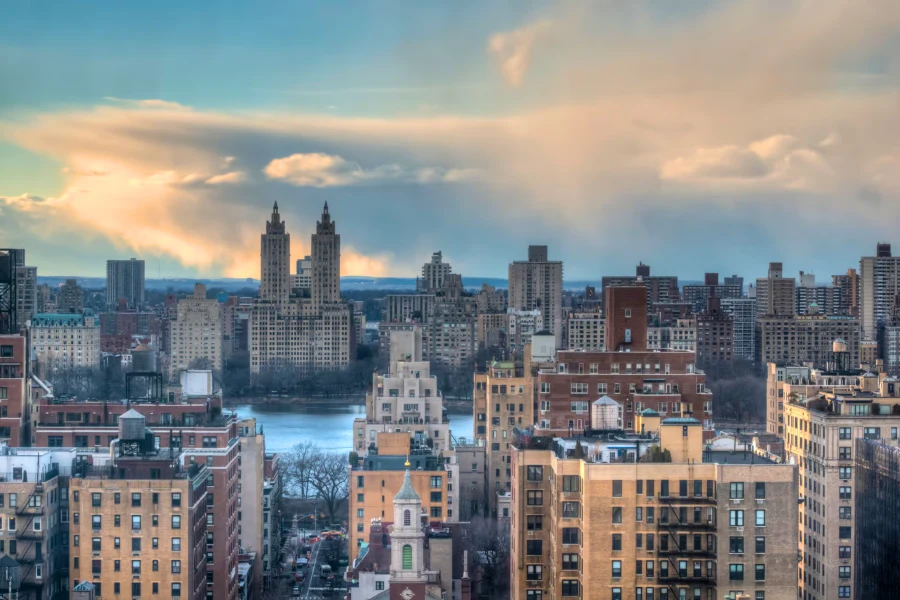
The Upper West Side runs from 59th Street to 110th Street (or 96th street depending on who you’re asking) between Central Park and the Hudson River. It is bounded on its western edge by Riverside Park and the Hudson River rather than the East River, and that physical difference shapes the neighborhood’s character in ways that are felt in daily life. The UWS has Central Park on one side and Riverside Park on the other, giving it a dual waterfront and green space access that no other Manhattan neighborhood can match. Lincoln Center anchors the southern portion of the neighborhood and generates a cultural energy that defines a significant part of the UWS identity. Broadway runs through the center of the neighborhood as its primary commercial spine, and the cross streets between Central Park West and Broadway contain some of the finest prewar apartment buildings in the city.
The Real Estate Character of Each Neighborhood
Both the Upper East Side and Upper West Side are dominated by co-op buildings, and that co-op character shapes the ownership experience on both sides of the park in similar ways. Board approval, financial disclosure requirements, financing limits, and the community-oriented nature of cooperative ownership are realities that buyers on either side will navigate. The differences in the co-op market between the two neighborhoods are ones of degree and specific building culture rather than fundamental structure.
The UES co-op market is the largest and deepest in Manhattan. The concentration of prewar buildings along Park and Fifth Avenues creates an inventory of apartments with floor plans, ceiling heights, and architectural detail that simply cannot be replicated in new construction. These buildings have maintained their values and their character across multiple market cycles, and the selectivity of their boards is directly connected to that stability. Buyers who qualify for the most prestigious UES co-ops are purchasing into buildings that function more like private clubs than residential addresses, with all the exclusivity and long-term value stability that implies.
The UWS co-op market is similarly deep but carries a somewhat different character. The buildings on Central Park West are among the most architecturally celebrated in Manhattan, the Dakota and the Beresford among them, and they command pricing and prestige that reflect that status. Moving east toward Broadway and Amsterdam, the inventory broadens considerably and includes a range of prewar buildings with strong management histories, generous layouts, and board processes that are generally more accessible than the most demanding UES boards. For buyers who want the co-op ownership experience in a neighborhood with slightly more flexibility and a slightly more diverse building landscape, the UWS delivers that.
The condo market on both sides is smaller than the co-op market, but has grown meaningfully with new development activity over the past decade. On the UES, new development condominiums have been concentrated in boutique conversion projects, particularly in Carnegie Hill and Yorkville. On the UWS, new development has been limited by the neighborhood’s established character and landmarked status in several key blocks, which keeps new construction scarce and existing inventory competitive.
Lifestyle and Daily Life
This is where the comparison becomes genuinely meaningful, and where most buyers ultimately find their answer.
The Upper East Side has a residential character that is more formal, more structured, and more oriented toward privacy than the Upper West Side. Madison Avenue is one of the finest luxury retail streets in the world. The Museum Mile stretch along Fifth Avenue puts the Metropolitan Museum of Art, the Guggenheim, the Frick, and the Cooper Hewitt within walking distance. The dining scene on the UES is excellent, with a concentration of white-tablecloth institutions and neighborhood standards that have served generations of residents. The neighborhood’s pace is calibrated and measured. It rewards residents who value that quality and occasionally frustrates those who want more spontaneous energy.
The Upper West Side has a warmer, more varied street-level energy. Broadway between 72nd and 86th Streets is one of Manhattan’s great neighborhood commercial corridors, dense with restaurants, cafes, bookstores, and the kind of sidewalk life that makes a neighborhood feel genuinely alive. Lincoln Center draws a specific cultural audience and generates an evening energy that gives the southern UWS a vitality that few residential neighborhoods in the city can match. Riverside Park, stretching along the Hudson for nearly two miles, is a genuine daily amenity that UWS residents treat as an extension of their homes in a way that is specific to this neighborhood. The UWS character is slightly more relaxed, slightly more eclectic, and slightly more community-oriented than the UES.
Neither character is better. They are different, and the buyer who is honest about how they actually want to live will find one that resonates more clearly than the other.
Transportation
Both neighborhoods are exceptionally well served by Manhattan’s transit infrastructure, though in different ways. The UES is served primarily by the 4, 5, and 6 trains along Lexington Avenue, with the Q train along Second Avenue adding significant coverage following the Second Avenue Subway’s Phase 1 completion. The Lexington Avenue line gives UES residents direct access to Midtown, Grand Central, and downtown Manhattan. The Q train provides a faster and more comfortable downtown option for residents in the eastern portions of the neighborhood.
The UWS is served by the 1, 2, and 3 trains along Broadway and the B and C trains along Central Park West, giving residents multiple north-south options and direct access to Midtown, Penn Station, and downtown. The 1, 2, 3 subway corridor is one of the most reliable and well-covered in the system. For residents who travel regularly to the west side of Midtown, Penn Station, or destinations in the 30s and 40s, the UWS has a transit advantage. For residents whose destinations are concentrated on the east side of Midtown or in the Financial District, the UES’s Lexington Avenue lines are more efficient.
The Investment Case for Each Neighborhood
Both the UES and UWS have delivered consistent long-term value across multiple market cycles, which is what you would expect from two of Manhattan’s most established residential addresses. The specific investment considerations differ somewhat between the two.
The UES co-op market, particularly in the most prestigious buildings along Park and Fifth Avenues, has a track record of pricing resilience that reflects the scarcity and quality of the product. These buildings do not build new ones. The inventory is finite, and the demand is consistent. For buyers who qualify and are purchasing long-term, the UES’s most established buildings represent as reliable a store of residential value as exists in Manhattan real estate.
The UWS has shown strong appreciation momentum in the current market cycle, with condo prices recording substantial year-over-year gains. The neighborhood’s appeal to a broader range of buyers than the UES, combined with its cultural anchors and dual park access, supports consistent demand. The UWS condo market in particular has benefited from buyers who want the Upper West Side address and the ownership flexibility that condo structure provides without the selectivity of the neighborhood’s most demanding co-op boards.
For buyers evaluating the two neighborhoods as investments, the honest answer is that both have delivered and both are likely to continue delivering. The choice between them for investment purposes comes down to your specific product type, price point, building, and holding horizon rather than a neighborhood-level advantage for either side.
Co-op vs. Condo on Each Side
The co-op vs. condo decision plays out differently on the two sides of the park in ways worth understanding before you commit to a neighborhood.
On the UES, the co-op market is so dominant and so deep that buyers who eliminate co-ops from consideration are working with a significantly constrained inventory. The condo market on the UES has grown, but it remains a fraction of the overall supply. For buyers who specifically need condo ownership, whether due to financing structure, anticipated sublet needs, or international purchase considerations, the UES requires more patience and selectivity to find the right product.
On the UWS, the co-op market is similarly dominant, but the neighborhood’s character and its slightly more diverse building landscape mean that buyers with co-op constraints have somewhat more flexibility in finding buildings that fit. The UWS co-op boards are generally strong and selective, particularly in the most prestigious Central Park West and Riverside Drive buildings, but the range of board requirements across the neighborhood is broader than on the UES.
Seller Strategy on Both Sides
Sellers on the Upper East Side are operating in one of the most informed and data-rich buyer markets in Manhattan. Buyers who target the UES arrive with detailed knowledge of comparable sales, building-specific transaction histories, and a clear picture of the competitive set. Accurate pricing from day one is more important here than in most Manhattan neighborhoods, and sellers who reach aspirationally tend to find the market moves on without them.
Sellers on the Upper West Side face a similarly well-informed buyer pool but in a market that has shown stronger recent momentum in certain product types, particularly condos and larger prewar apartments in well-maintained buildings. The spring market on both sides consistently produces the most active buyer pools, and sellers who time their listings for the February through May window with accurate pricing and professional presentation consistently achieve the strongest outcomes.
The Upper East Side and Upper West Side represent two of the finest residential addresses in New York City. They are not interchangeable, and the buyer who understands their own priorities clearly, who is honest about how they live and what they value in daily life, will find one speaks to them more directly than the other. If you are working through this decision and want to talk through how the specific buildings and blocks on either side fit your situation, send a message at TheNewYorkCityBroker.com/contact, and we can work through it together.
FAQs
Both neighborhoods carry premium pricing that reflects their status as Manhattan’s most established residential addresses. On a broad comparison, the most prestigious buildings along Park and Fifth Avenues on the UES and Central Park West on the UWS trade at similar price-per-square-foot levels that reflect their architectural significance and scarcity. Moving east from Park Avenue on the UES or east from Broadway on the UWS, pricing softens in both neighborhoods. At the overall neighborhood level, the differences in median pricing between the two are more a function of the specific product mix in a given period than any structural price advantage for either side.
Neither is categorically better. They are genuinely different in character, and the right choice depends entirely on how you live. The UES has a more formal, curated residential character with the Museum Mile, Madison Avenue luxury retail, and some of the most prestigious co-op buildings in the world. The UWS has a warmer street-level energy, Lincoln Center, Riverside Park, and a dual park access that gives daily life a specific outdoor quality. Buyers who are honest about whether they are drawn to the UES’s polish or the UWS’s warmth consistently find their answer relatively quickly.
The Upper West Side is known for Lincoln Center and its cultural life, Riverside Park along the Hudson River, the architecturally significant buildings along Central Park West, including the Dakota and the Beresford, the commercial energy of the Broadway corridor between 72nd and 86th Streets, and a residential character that is warm, walkable, and deeply community-oriented. It is also known for the Zabar’s food culture on the Broadway corridor that has been a UWS institution for generations.
The Upper East Side is known for Museum Mile along Fifth Avenue, which includes the Metropolitan Museum of Art, the Guggenheim, the Frick, and several other world-class cultural institutions within walking distance. It is known for Madison Avenue luxury retail, for the white-glove prewar cooperative buildings along Park and Fifth Avenues that represent some of the most prestigious residential real estate in the world, and for a residential character that is refined, private, and established. Carnegie Hill and Yorkville add distinct sub-neighborhood characters to the broader UES identity.
Manhattan’s wealthiest residential addresses are concentrated along Fifth Avenue overlooking Central Park, Park Avenue from the 60s through the 80s on the Upper East Side, and Central Park South. These corridors contain some of the highest-value residential real estate in the world, with full-floor co-op apartments and condominiums in landmark buildings that trade at prices reflecting both their architectural significance and their absolute scarcity. The broader Upper East Side and Tribeca also rank among Manhattan’s highest-value residential markets.
Manhattan’s ultra-high-net-worth residential addresses are concentrated in a handful of specific locations. The supertall condominium towers along Billionaires Row on 57th Street, including 220 Central Park South and Central Park Tower, have attracted global ultra-luxury buyers seeking trophy properties with Central Park views. The established prewar cooperative buildings along Fifth Avenue and Park Avenue on the Upper East Side house generations of significant wealth in the form of buildings that cannot be replicated. Tribeca’s full-floor loft residences and townhouses represent a different but equally significant tier of ultra-luxury Manhattan ownership.
This depends entirely on what you mean by nicest and what you value in daily life. By residential prestige and the quality of the architectural stock, the stretch of Fifth Avenue and Park Avenue from the 60s through the 80s on the Upper East Side is as celebrated as any residential address in the world. By lifestyle quality, park access, and daily livability, the Upper West Side, with its dual park frontage and cultural anchors, ranks among Manhattan’s finest residential addresses. By architectural character and street-level energy, neighborhoods like the West Village and Tribeca consistently draw strong appreciation from residents and buyers alike. Manhattan’s finest neighborhoods are a matter of priorities rather than an objective ranking.