
A million dollars is the entry point for serious Upper East Side real estate. It is not the top of the market, not the middle of the market, and not anything close to the price of an average Park Avenue apartment. But a well-deployed million dollars on the Upper East Side in 2026 buys something genuinely excellent if you understand what that budget can access and which ownership structure delivers the most value for your specific goals.
The co-op versus condo answer at this price point is not generic. It depends on how you plan to use the apartment, what your financial profile looks like, whether you plan to sublet, and frankly what you find more compelling as a living space. A million dollars buys fundamentally different things in each ownership structure on the UES, and the choice between them is real. The dynamics of financial district real estate trends can significantly influence your decision. Understanding current market shifts and price points in this area is crucial for making an informed choice. Additionally, being aware of future developments in the financial district can provide further insights into potential investments.
This article gives you the specific picture of what $1 million actually gets you on the Upper East Side in both co-op and condo formats in 2026. As you explore other neighborhoods, you may be surprised by the real estate prices in financial district compared to more residential areas. Many investors are keen on the potential growth in this bustling part of the city. Understanding these market fluctuations can help in making informed decisions as you consider different options.
For the full UES market context, see our Upper East Side Real Estate Market Trends 2026.
What $1M Buys in a UES Co-op
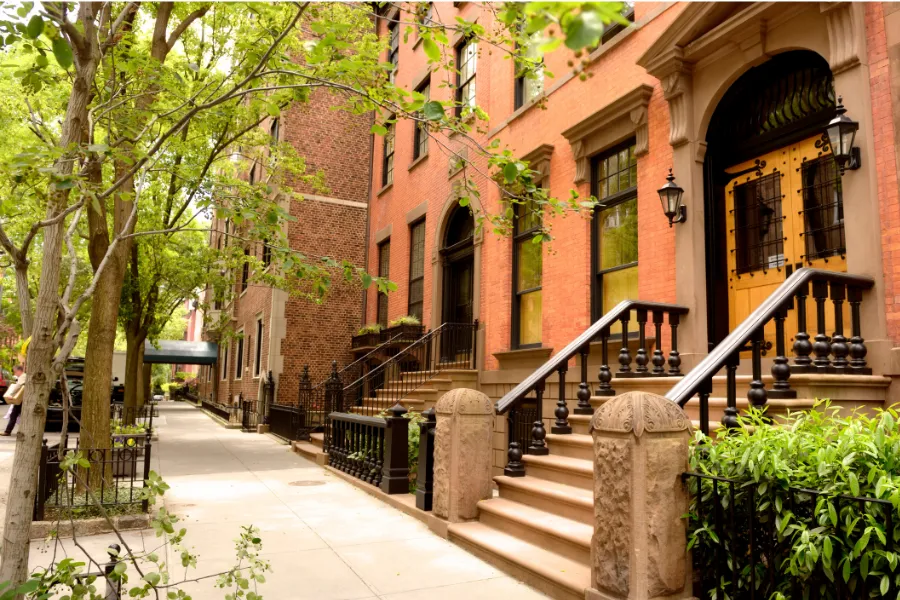
On the Upper East Side, $1 million is a meaningful co-op budget. It does not get you into a full-floor prewar apartment on Park Avenue or a direct-view Central Park unit on Fifth Avenue. But it gets you considerably more than most buyers expect when they start their search.
At $1 million in the UES co-op market, here is what is realistically available.
One-Bedroom Co-ops in Postwar Full-Service Buildings
The most common outcome at this price point in the co-op market is a one-bedroom apartment in a well-maintained postwar full-service building between Lexington and Third Avenues. These buildings, constructed primarily in the 1950s through 1970s, offer 24-hour doormen, live-in supers, laundry facilities, and in many cases fitness centers and bike storage. The apartments in this tier typically run 700 to 950 square feet, with decent proportions, hardwood floors, and layouts that reflect the more generous construction standards of the postwar era.
At around $1 million, buyers can access buildings with monthly maintenance running $1,200 to $1,800 per month for a one-bedroom, which includes property taxes and building operating costs. In Q4 2025, the average Manhattan co-op maintenance ran approximately $2,938 per month, so a UES postwar one-bedroom at $1,200 to $1,800 per month is at the more efficient end of the market. These buildings are typically well-run, financially conservative, and stable communities with long-term resident bases.
Two-Bedroom Co-ops in Yorkville
Move east of Third Avenue into Yorkville or slightly north into Carnegie Hill, and $1 million begins to access two-bedroom co-ops in full-service buildings. These are the deals that experienced UES buyers who have done their homework have been finding for several years: genuine two-bedroom apartments with separate living and dining areas, two full bathrooms, and often 1,100 to 1,400 square feet in buildings with doormen and full services. The trade-off is that these buildings are east of the prime UES blocks, may have higher maintenance fees relative to size if the underlying building has carried an older mortgage, and will require a board approval process that these eastern blocks’ boards conduct with varying degrees of rigor.
The Yorkville two-bedroom co-op at $1 million represents arguably the strongest value play on the Upper East Side at this price point for buyers who intend to occupy as a primary residence for five or more years and are not dependent on subletting flexibility.
UES Co-op Buying Requirements at $1 Million
Almost every co-op building on the Upper East Side at this price point requires a minimum of 20 percent down, and many prefer 25 to 30 percent. On a $1 million purchase, 20 percent down is $200,000 and 25 percent is $250,000. Most boards also require post-closing liquidity of 12 to 24 months of combined mortgage and maintenance. On a $800,000 mortgage at 6.4 percent with $1,500 per month maintenance, the board wants to see $35,000 to $70,000 or more in liquid assets remaining after closing. The total capital required to close a $1 million UES co-op with 20 percent down and post-closing liquidity is typically $250,000 to $320,000 in available resources.
What $1M Buys in a UES Condo

In the UES condo market, $1 million is a more constrained budget than it is in the co-op market. The median UES condo price is well above $1 million, and a $1 million budget puts buyers at the lower end of the condo inventory.
Studios and Smaller One-Bedrooms in Newer Buildings
At $1 million in the UES condo market, buyers are primarily looking at studios and smaller one-bedroom units in newer or recently renovated buildings. Along the Q train corridor on Third Avenue and the newer development buildings in Yorkville, $1 million accesses studio and one-bedroom condos with contemporary finishes, in-unit washer/dryers, and modern building amenity packages.
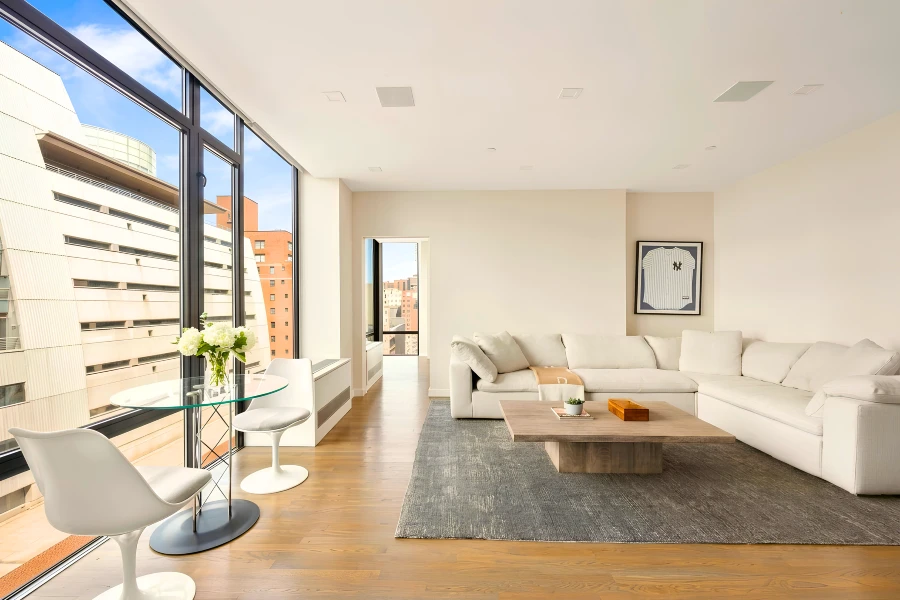
Buildings where $1 million buys a one-bedroom condo on the UES in 2026 include postwar and more recent conversion buildings along Third and Second Avenues. These units tend to be more compact than comparable co-ops at the same price, typically 550 to 750 square feet for a one-bedroom, but they deliver the contemporary finishes and ownership flexibility that co-ops at equivalent prices cannot.
The 400 East 84th Street Opportunity
The conversion of 400 East 84th Street, a major rental-to-condo conversion with units priced from approximately $1.1 million for one-bedrooms, illustrates the type of product available at the lower end of UES condo pricing. These conversions offer contemporary finishes, flexible ownership terms, and building amenities that prewar co-ops cannot match, at price points accessible to buyers with a million-dollar budget who can stretch slightly above that threshold.
UES Condo Buying Requirements at $1 Million
Condo purchases require no board approval, which means the buyer’s financial profile only needs to satisfy the lender rather than a building committee as well. Down payments as low as 10 to 20 percent are available on condo purchases for well-qualified buyers. However, closing costs are meaningfully higher than co-op purchases at the same price. On a $1 million condo with 80 percent financing, the mortgage recording tax alone adds approximately $15,000 to $19,000 that a co-op buyer at the same price does not pay. Total buyer closing costs on a $1 million condo with financing typically run $40,000 to $60,000 versus $20,000 to $35,000 for a comparable co-op purchase.
The Side-by-Side Comparison at $1 Million

For buyers with exactly $1 million to spend on the Upper East Side in 2026, here is how the two options actually compare.
The co-op gets you more space. A one-bedroom at 800 to 950 square feet in a full-service postwar building or, with careful searching, a two-bedroom in Yorkville. The co-op has lower monthly carrying costs per square foot when maintenance is compared to condo common charges plus property taxes. The co-op has lower closing costs. The co-op requires more capital in hand at closing due to down payment minimums and post-closing liquidity requirements. The co-op limits your subletting options. The co-op requires board approval.
The condo gets you a smaller unit for the same dollar amount, typically 550 to 750 square feet. The condo delivers contemporary finishes and modern building amenities. The condo has no board approval. The condo has flexible subletting. The condo has higher closing costs. The condo has broader resale appeal.
For primary-residence buyers who plan to live in the apartment and do not anticipate subletting, the UES co-op at $1 million delivers more apartment per dollar. For buyers who want flexibility, who may need to rent the apartment at some point, or whose financial profile makes the co-op board process uncertain, the condo provides a cleaner purchase experience at a tradeoff in size and initial monthly efficiency.
Buildings and Specific Product to Target
For co-op buyers at $1 million on the UES, the best approach is to focus on the postwar elevator buildings along Lexington, Third, and Second Avenues in the 70s, 80s, and into Yorkville. Buildings in Carnegie Hill in the $900,000 to $1.1 million range often represent the strongest value, particularly for buyers who want park proximity at a price point below the core UES. Buildings near the Q train stops at 86th and 96th Streets on Second Avenue are worth prioritizing for transit convenience.
For condo buyers at $1 million, the Yorkville new development market and the Third Avenue corridor offer the best product at this budget. The Strathmore at 400 East 84th Street, newer buildings along East 80th through 96th Streets on the Second and Third Avenue corridors, and the occasional sponsor unit in established UES buildings are where $1 million accesses legitimate condo product on the Upper East Side.
Seller Perspective
For sellers of UES co-ops in the $900,000 to $1.1 million range in 2026, the market is active but selective. Buyers at this price point are doing careful due diligence on building financials, maintenance stability, and subletting policies. Buildings with strong reserve funds, well-maintained common areas, and boards with reasonable timelines consistently achieve better outcomes than those where the due diligence reveals concerns. Price competitively from day one.
For sellers of UES condos in the $1 million range, the buyer pool is active and includes both primary-residence buyers and investors. The condo’s flexibility and lower board friction make it easier to market to a broader buyer universe. Recent comparable closed sales are the most important pricing tool in this segment.
Thinking through whether a co-op or condo makes more sense for your million-dollar budget on the Upper East Side? Reach out at TheNewYorkCityBroker.com/contact-me and let’s find the right property for your specific goals. Upper East Side real estate trends can provide valuable insights into the current market conditions. Understanding these trends will help you make informed decisions about your investment. Prices and availability can vary significantly, so staying updated is crucial for potential buyers. New condos on the upper east side are attracting a lot of attention from buyers looking for modern amenities and prime locations. Many prospective homeowners are excited about the potential for appreciation in this prestigious neighborhood. Investing in these properties could be a smart decision given the rising demand and limited supply.
Frequently Asked Questions
At $1 million on the Upper East Side in 2026, co-op buyers can access one-bedroom apartments of 700 to 950 square feet in full-service postwar buildings between Lexington and Third Avenues, or two-bedroom apartments of 1,100 to 1,400 square feet in Yorkville with careful searching. Condo buyers at the same price point access studios and smaller one-bedrooms of 550 to 750 square feet in newer buildings along the Third and Second Avenue corridors. The co-op option delivers more space per dollar at this price point. The condo option delivers more flexibility and contemporary finishes at a smaller footprint.
Yes, $1 million is a viable budget on the Upper East Side in 2026 that accesses real product in established full-service buildings. The UES median home price is approximately $1.4 million, but the market below the median includes meaningful inventory. Co-op buyers at $1 million have the broadest range of options, including one-bedrooms in postwar full-service buildings and two-bedrooms in Yorkville. Condo buyers at $1 million are at the lower end of the condo inventory and will primarily find studio and smaller one-bedroom product. The total capital required to close at $1 million varies meaningfully between co-ops, where down payment and post-closing liquidity requirements are higher, and condos, where closing costs are higher.
The average Manhattan co-op sale price in Q4 2025 was approximately $825,000, though the Upper East Side skews above this average due to the neighborhood’s premium positioning. UES co-op pricing varies significantly by location within the neighborhood. Postwar co-ops in Yorkville and the eastern UES typically run $700,000 to $1.3 million for one-bedrooms and $1.1 million to $2 million for two-bedrooms depending on size and building quality. Prewar co-ops in the core UES between Fifth and Lexington Avenues run meaningfully higher, with one-bedrooms typically starting above $1.2 million and two-bedrooms above $1.8 million in buildings with the strongest architectural character and most desirable addresses.
At equivalent size and building quality on the Upper East Side, co-ops typically trade at a 20 to 30 percent discount to comparable condos. In Q4 2025, the Manhattan-wide median condo sale price was approximately $1.66 million versus approximately $825,000 for co-ops, though this comparison incorporates size and location differences as well as structural differences. On the UES specifically, a comparable one-bedroom apartment in a full-service building might be available as a co-op in the $900,000 to $1.2 million range and as a condo in the $1.4 million to $2 million range, with the co-op discount reflecting the board approval friction, subletting restrictions, and narrower buyer pool that come with co-op ownership. The closing cost difference runs approximately $20,000 to $40,000 more for condo buyers at equivalent price points due to the mortgage recording tax.
The total capital required to purchase a $1 million UES co-op typically runs $250,000 to $320,000, comprising the down payment of 20 to 25 percent ($200,000 to $250,000), closing costs of $20,000 to $35,000, and demonstrated post-closing liquid assets of $30,000 to $50,000 or more required by most boards. Some UES co-op boards require 30 to 50 percent down payments, particularly in the most prestigious buildings along Park and Fifth Avenues, which would increase the down payment requirement to $300,000 to $500,000 on a $1 million purchase. Buyers should work with their attorney and broker to confirm the specific financial requirements of each building they are considering before making an offer.