
In February 2026, a seven-bedroom duplex penthouse at 1122 Madison Avenue went under contract at $89.5 million, a number that now stands as the most expensive condo contract ever recorded on the Upper East Side. The building had sold 18 of its 26 residences off floor plans before construction was complete, generating over $360 million in contracts. At The 74, a newer boutique development, a duplex penthouse of 5,300 square feet across two levels with 1,600 square feet of private terrace closed this year, confirming that the UES eastern corridor is producing penthouse-tier pricing that would have been unthinkable in the neighborhood a decade ago.
At the other end of the spectrum, the Upper East Side’s penthouse market also includes duplexes and top-floor co-ops in the $3 million to $8 million range, boutique building crown residences in landmarked buildings, and converted prewar penthouse combinations that offer the kind of space and character that no new construction can replicate at any price. Understanding which tier of the UES penthouse market you are actually evaluating, and what each delivers, is the work of this article.
For full UES market context, see our Upper East Side Real Estate Market Trends 2026.
What “Penthouse” Means on the Upper East Side
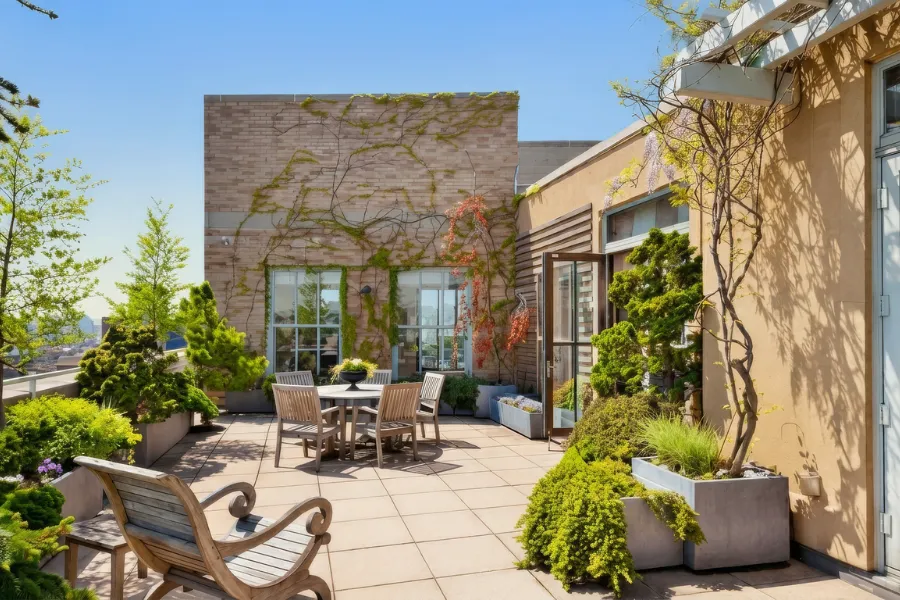
The word penthouse is used loosely across the Manhattan market, and the Upper East Side is no exception. Buyers should understand three distinct categories.
The first is the purpose-built penthouse in a new development tower, where the top one to three floors are specifically designed as penthouse residences with larger floor plates, higher ceilings, private outdoor terraces, and premium finishes beyond what the building’s standard floors offer. The 1122 Madison Avenue penthouse and the 180 East 88th Street triplex penthouse at $33 million fall into this category, as does the Sutton Tower at 430 East 58th Street with its crown residence asking $65 million.
The second is the co-op or converted condo penthouse in a prewar or postwar building where the top-floor unit has been enhanced over time, often through combination with adjacent units or through buildout of private roof terraces. These penthouses are typically the product of individual owners who invested significantly in creating a distinctive top-floor residence in a building that was not originally designed with penthouse specifications. Park Avenue, Fifth Avenue, and Madison Avenue buildings contain numerous examples of these residences, often available only off-market.
The third is the designation applied to any top-floor apartment in a building, regardless of size or features. A top-floor one-bedroom in a smaller UES building may be marketed as a penthouse without any of the distinctive features that the word implies. Buyers should look past the penthouse designation and evaluate the actual residence on its merits.
The New Development Penthouse Tier
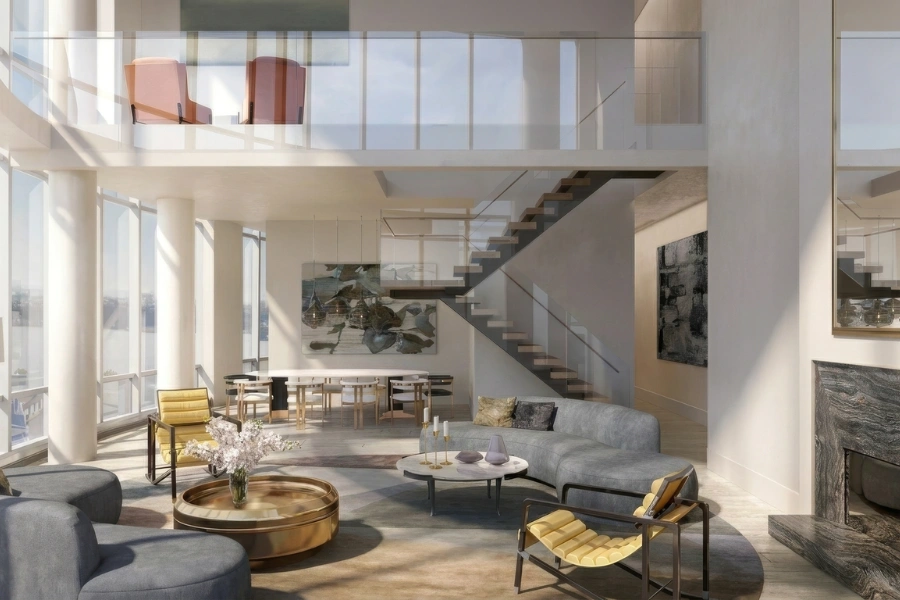
The UES new development penthouse market in 2026 has produced some of the most significant residential contracts in Manhattan’s recent history. 1122 Madison Avenue, designed by Studio Sofield and developed by Legion Investment Group, set a neighborhood record with its $89.5 million penthouse contract. The building’s nearly complete sellout from floor plans demonstrates that buyer demand for the combination of Madison Avenue address, Central Park proximity, and boutique scale with penthouse amenities has never been stronger.
180 East 88th Street, the DDG-designed Kolumba brick tower in Yorkville, offers its triplex penthouse at $33 million with 5,508 square feet across three levels, five bedrooms, two living rooms, a sculptural staircase, and over 3,500 square feet of total outdoor space including a private roof terrace that looks out over Central Park and the Manhattan skyline. For buyers who want the new development penthouse experience at a scale below the ultra-luxury tier, this building and its crown residence represent a genuinely exceptional product.
The 74, one of the newer boutique developments in Yorkville, closed a duplex penthouse with 5,300 square feet interior plus 1,600 square feet of private terrace in 2026, providing another data point confirming the strength of the neighborhood’s high end.
The Strathmore at 400 East 84th Street, Related Companies’ conversion of a 1994 rental tower, offers penthouse-level residences with corner bay windows and open skyline and river views that would be difficult to replicate under current zoning. The building’s amenities include a 50-foot indoor lap pool, squash court, fitness center with movement studio, and private dining room.
For buyers in the $8 million to $25 million range who want a new development penthouse on the Upper East Side with contemporary finishes and full-service amenity depth, the Yorkville new development corridor is producing more compelling product at more accessible price points than the Park and Fifth Avenue core. New condos on Upper East Side are attracting attention from affluent buyers looking for luxury in a prime location. Many of these new projects feature state-of-the-art amenities and designer interiors that cater to a sophisticated lifestyle. As the market evolves, more options are becoming available, making it an exciting time for potential homeowners in this desirable area.
The Prewar Co-op Penthouse Tier
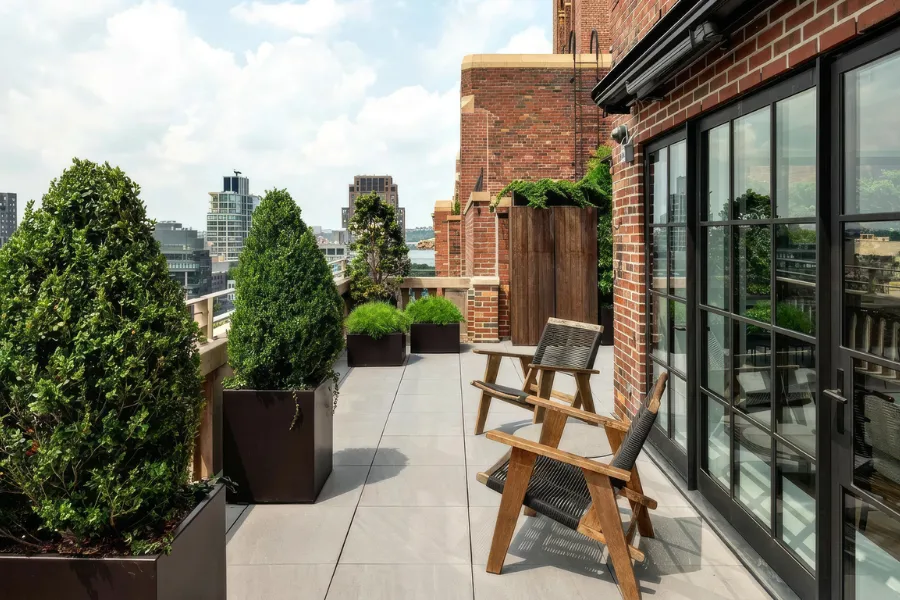
The prewar co-op penthouse is a fundamentally different product from the new development tower crown, and it attracts a fundamentally different buyer.
These residences are found primarily in the white-glove buildings along Fifth Avenue, Park Avenue, and Madison Avenue. They are typically the result of decades of investment by successive owners who have enlarged the original top-floor apartments, created private roof terraces where permitted, combined adjacent units to achieve grand scale, and installed the custom finishes and millwork that these apartments are known for. The rooms are proportioned in ways that new construction cannot replicate, with ceiling heights, window placement, and room sequences reflecting the design standards of the Gilded Age and Jazz Age architects who created the buildings.
A prewar Park Avenue penthouse combination in a Candela or Cross and Cross building, with a private terrace, Central Park views, and seven to ten rooms of grand proportions, typically trades in the $10 million to $30 million range depending on condition, floor, and specific building. These residences almost never appear in public listings, transacting instead through direct broker networks and off-market processes.
The investment case for the prewar UES penthouse co-op is built on architectural scarcity. No new building produces apartments with these specifications. The inventory is finite and declining as buildings combine units or undertake other permanent alterations. When one of these residences comes to market, the buyer pool is narrow but highly motivated and has the financial capacity to act decisively.
The Boutique Building Penthouse
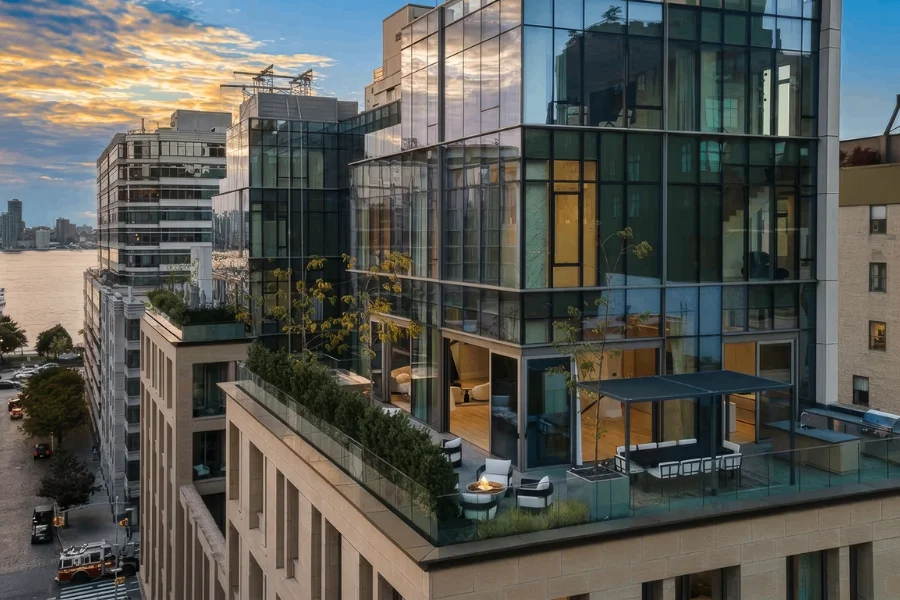
Between the ultra-luxury new development tower and the full-floor prewar co-op lies a tier of boutique building penthouses that represent some of the most interesting opportunities in the UES penthouse market. Buildings like The Bellemont at 1165 Madison Avenue, which sold out almost immediately after launch including a landmark penthouse transaction, exemplify the boutique condominium penthouse product, where the limited number of residences and the building’s architectural language create something genuinely rare at a price point below the Park Avenue trophy tier.
For buyers in the $5 million to $15 million range who want a penthouse with outdoor space, architectural distinction, and the character of a boutique building rather than a high-rise tower, the UES offers several options across this tier. The key differentiator in evaluating these residences is the quality and quantity of outdoor space, the exposure and permanence of views, and the building’s management culture and reserve fund health.
What Buyers Need to Evaluate Before Purchasing
Outdoor Space: Terraces, Setbacks, and Roof Rights
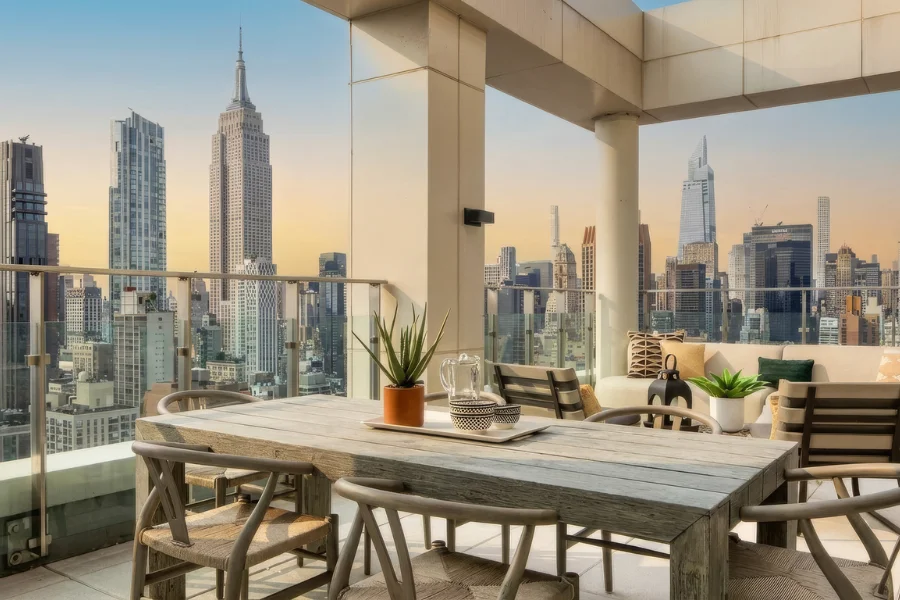
Penthouses are defined in large part by their outdoor space, and outdoor space on the UES varies enormously. A private terrace created through setback zoning on an existing building and a private rooftop accessed through a mechanical penthouse conversion are two very different ownership situations with different maintenance responsibilities, different weather exposure profiles, and different implications for the unit’s long-term value. Buyers should understand exactly what their outdoor space consists of, who is responsible for its maintenance, and whether the building permits the types of outdoor use they are planning.
View Permanence
The Upper East Side’s zoning is complex, and views that appear permanent in a sales gallery rendering are not always legally protected. Before paying a significant premium for a Central Park view, an East River view, or a city skyline view from a UES penthouse, buyers should have their attorney review the development rights on the parcels that currently provide the view corridor. A parcel currently occupied by a low-rise building may have air rights that allow a significantly taller building to rise, eliminating views that were a primary driver of the purchase price.
Building Financials
For co-op penthouse purchases specifically, the building’s financial health is critical. A prewar building with a fully funded reserve and a track record of conservative financial management is a fundamentally safer investment than a building running thin reserves in a building with significant capital improvement needs. Review the audited financials, the reserve fund level, and the board meeting minutes for the past two years before making any offer.
The Renovation History
Prewar penthouse combinations frequently have complex renovation histories involving multiple contractors, building department filings, and modification of original building systems. A thorough review of the building department permits, certificate of occupancy amendments, and the current structural and mechanical condition is essential due diligence before purchasing any penthouse that has been substantially altered.
Seller Perspective
For sellers of UES penthouses in 2026, the market at the high end is strong but selective. The $89.5 million 1122 Madison contract and the top-of-market transactions that have defined the year confirm genuine buyer interest for exceptional product. But even at this level, properties that are priced above what the current buyer pool supports sit, and the most successful sellers are those who price accurately against the most recent comparable transactions rather than aspirationally against the outlier deals.
For boutique building penthouses in the $5 million to $15 million range, well-positioned marketing that connects the building’s architectural character and the outdoor space’s specific quality to the right buyer will produce results in the current market. Sellers who rely on the neighborhood’s general prestige without specifically articulating the residence’s differentiating features will find buyers more hesitant than expected. Kips Bay luxury real estate trends have shown a shift towards emphasizing unique amenities and design elements that appeal to discerning buyers. Additionally, as the market evolves, staying informed about local developments and consumer preferences is crucial for successfully navigating sales. Understanding these trends can help sellers not only price their properties competitively but also market them effectively to attract the right audience. Luxury penthouses in financial district often command higher prices due to their prime locations and stunning views. These homes are designed to blend sophistication with comfort, appealing to affluent buyers seeking both elegance and convenience. Furthermore, the amenities available in these units typically reflect the lifestyle aspirations of potential residents, making them highly sought after in the urban market.
Ready to explore the UES penthouse market from either side of the transaction? Reach out at TheNewYorkCityBroker.com/contact-me and let’s work through the right approach for your situation.
Frequently Asked Questions
Upper East Side penthouse prices span an enormous range in 2026. At the entry level, top-floor units in smaller postwar buildings designated as penthouses can be found from approximately $2 million to $5 million. Boutique building crown residences with terraces and notable finishes typically run $5 million to $20 million. Full-floor prewar co-op penthouse combinations in the Park and Fifth Avenue buildings range from approximately $10 million to $30 million or more depending on size and condition. New development penthouses in tower buildings like 180 East 88th Street are priced at $33 million for the triplex crown, while the most prestigious boutique developments like 1122 Madison Avenue produced a record $89.5 million contract in February 2026. The Sutton Tower at 430 East 58th Street has its crown penthouse asking $65 million.
The buildings producing the most significant penthouse activity on the Upper East Side in 2026 include 1122 Madison Avenue by Studio Sofield and Legion Investment Group, which set a neighborhood record with an $89.5 million penthouse contract and nearly sold out all 26 residences off floor plans; 180 East 88th Street by DDG with its triplex penthouse asking $33 million and a private roof terrace over 2,100 square feet; The Strathmore at 400 East 84th Street with Related Companies’ conversion offering penthouse-level residences with corner bay windows and river views; and The 74 in Yorkville which closed a duplex penthouse of 5,300 square feet plus 1,600 square feet of private terrace in 2026. Among the prewar tier, the white-glove buildings along Park and Fifth Avenues from the 60s through the 80s produce the most architecturally significant penthouse co-op inventory.
Upper East Side penthouses typically offer exceptional views, though the specific view depends on building location, floor height, and orientation. The most valuable UES penthouses are those with Central Park views from Fifth Avenue and Park Avenue addresses, which are among the most coveted residential views in the world. East River views from Yorkville towers and Sutton Place buildings provide dramatic waterfront panoramas. Midtown skyline views from south-facing upper floors give many UES penthouses a visual scale that lower floors cannot access. View permanence is a critical evaluation factor because while Central Park views are legally protected by the park’s perpetual open space, views toward lower-rise buildings may be subject to future development that eliminates the current sightline.
Key due diligence items before purchasing any Manhattan penthouse include verifying the legal description and ownership of all outdoor space and confirming responsibility for its maintenance, reviewing the development rights and zoning for parcels that provide current view corridors to assess view permanence, obtaining a thorough inspection of all mechanical systems and building department filings related to any terrace, rooftop, or structural modifications, reviewing building financials including reserve fund levels and pending capital assessments, evaluating the building’s house rules for outdoor entertaining, renovation, and equipment restrictions, and confirming the ownership structure affects marketing and subletting in the way you expect. For co-op penthouses, the board approval process and the building’s governance culture are especially important given the significant capital investment.
Manhattan penthouses, particularly those on the Upper East Side with architectural distinction, significant outdoor space, and views with permanence, have historically demonstrated strong long-term value retention. The scarcity of genuinely distinguished penthouse product limits supply while consistent demand from domestic and international buyers sustains pricing. The ultra-luxury tier has shown that patience from sellers is rewarded, with the $89.5 million 1122 Madison Avenue contract confirming demand for exceptional product. Buyers should factor high carrying costs including property taxes and maintenance fees into their investment analysis, understand that ultra-luxury penthouses can have longer marketing periods and require pricing discipline, and evaluate the specific combination of view, outdoor space, building quality, and price that determines any individual penthouse’s investment merit.