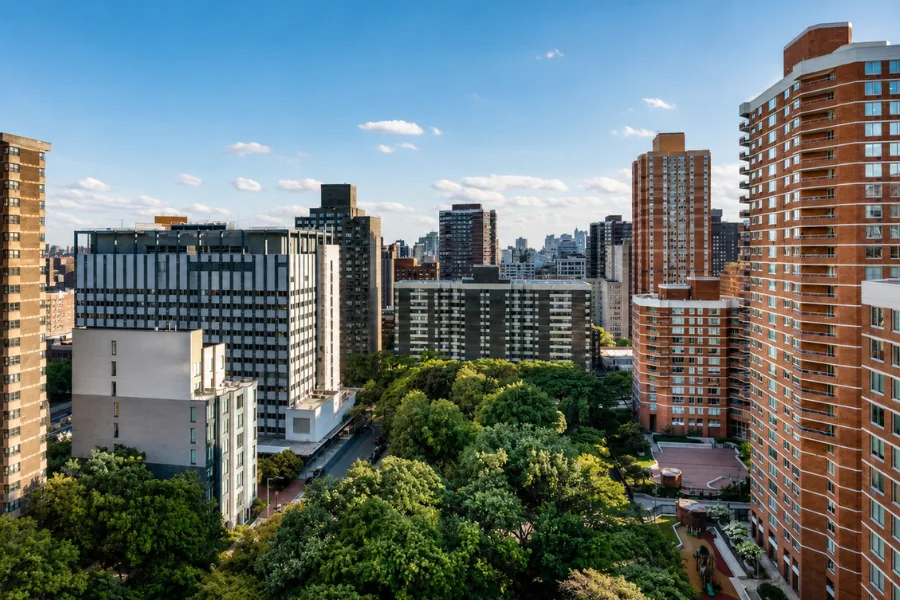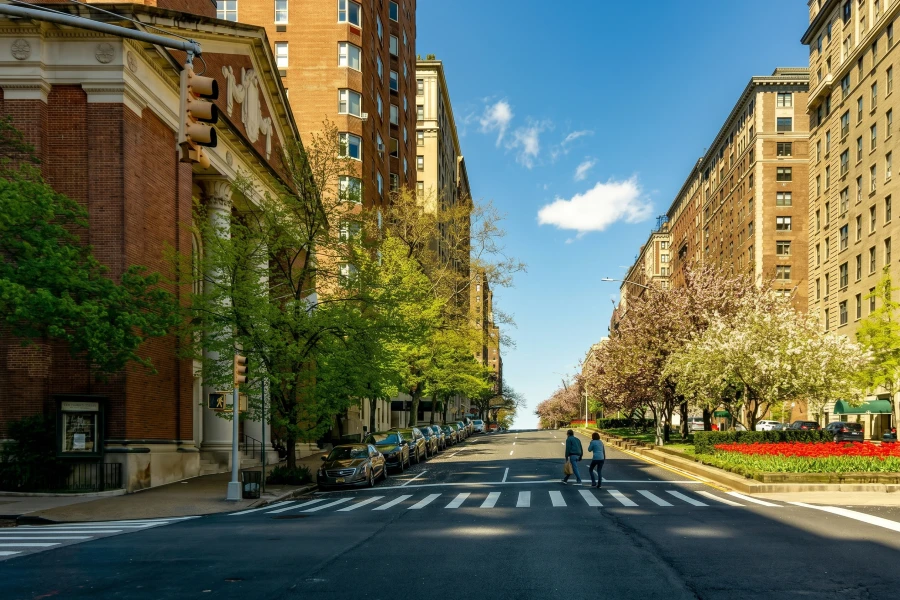

At 740 Park Avenue, board policy has historically required buyers to pay entirely in cash, no mortgage at all. It’s one of the strictest financing rules on the Upper East Side, and it’s a useful starting point, because it shows how much a co-op’s own rules, not just your bank’s, shape what you can actually buy. Buying a co-op on the Upper East Side means navigating pricing, building selection, financing, and a building-specific approval process all at once, and each one works a little differently than it would for a condo.
The Upper East Side’s median sale price reached $1.4 million in early 2026, up 2.9 percent year over year, while price per square foot climbed roughly 10 percent over the same period to about $1,320. Co-op pricing specifically has moved differently than condo pricing: median co-op price sat around $825,000 in the most recent reporting period, compared to roughly $1.66 million for condos, a gap that reflects both smaller typical co-op unit sizes and the fact that a co-op purchase is shares in a corporation, not deeded real property. That price-per-square-foot figure matters more than the median on its own, since a shift in how many studios versus two-bedrooms sold in a given period can move the median without any real change in underlying value.
Carnegie Hill, Lenox Hill, and Yorkville Price Differently
The Upper East Side isn’t one market, and where you shop changes both the price and the type of co-op you’ll find. Carnegie Hill, roughly 86th to 96th Street between Fifth and Lexington, sits at the higher end, with median co-op pricing around $2 million and a concentration of prewar trophy buildings, including several discussed below. Lenox Hill, roughly 60th to 77th Street, sits closer to the neighborhood’s overall median and offers the widest mix of inventory, from prewar walk-ups to full-service buildings. Yorkville, generally 79th Street through the East 90s east of Third Avenue, runs meaningfully lower, with median sale prices closer to $890,000, giving it more room for buyers working with a smaller budget while still being part of the same broader neighborhood. None of these sub-markets is better than another. They simply serve different budgets and priorities, and knowing which one you’re actually shopping in keeps your expectations aligned with what’s realistically available.
Start With the Building, Not the Listing
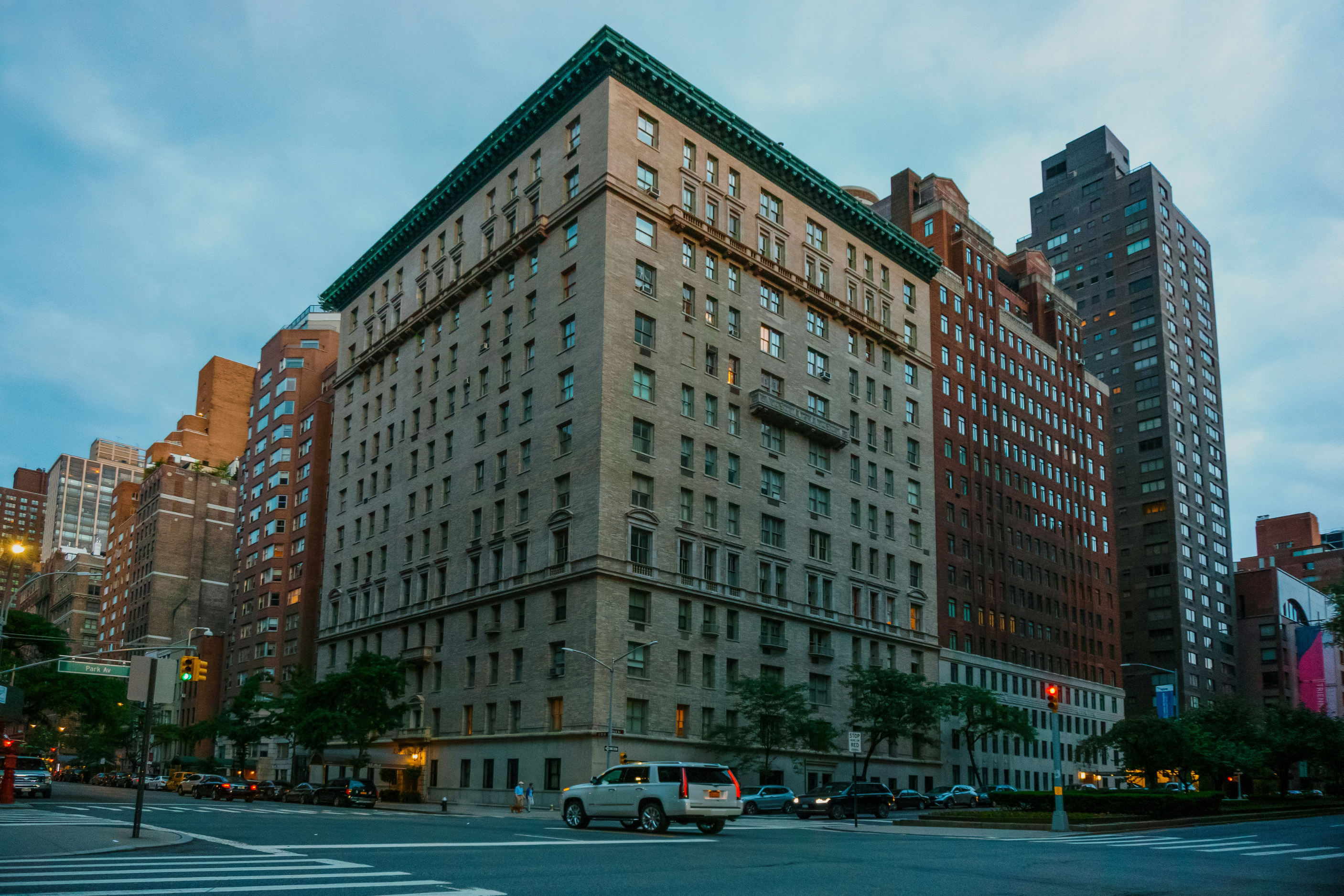
A share in a co-op corporation comes with a proprietary lease, the document that gives you the right to occupy your specific unit. Every co-op’s board sets its own rules inside that structure: how much financing it allows, what it charges when you eventually sell, and how it reviews new buyers. That means two apartments at similar prices in similar buildings can come with very different rules attached.
Financing limits vary widely by building. Some Carnegie Hill cooperatives, including 1120 Park Avenue and 1185 Park Avenue, allow financing up to 50 percent of the purchase price, meaning a buyer needs at least half in cash. Others, like 740 Park Avenue, don’t allow financing at all. Museum Mile buildings like 1050 Fifth Avenue also commonly cap financing around 50 percent. None of these policies make one building better than another. They just mean your available cash needs to match the building you’re targeting before you fall for a specific listing.
Flip taxes, a fee some co-ops charge when a unit resells, also vary by building and typically run 1 to 3 percent of the sale price. As sourced examples: 1050 Fifth Avenue has charged 1 percent, both 1120 Park Avenue and 1185 Park Avenue have charged 2 percent, and 740 Park Avenue has charged 3 percent. It’s a real cost worth confirming with the specific building before you buy or sell, since it isn’t standardized across the neighborhood.
Most co-op buildings also require board approval for any renovation beyond cosmetic work, and buyers planning changes after closing should factor that into their timeline. Alteration agreements typically require submitted plans, a licensed contractor, proof of insurance, and sometimes a refundable deposit held against damage to common areas. A board that approves your purchase quickly can still take several additional weeks to approve a renovation plan, so buyers with specific plans for the apartment are better off asking about the building’s alteration policy before closing rather than after.
What Boards Are Actually Looking For
Co-op boards review buyers because a co-op runs on shared finances. If one shareholder can’t pay their monthly maintenance, the building still has to cover its mortgage, staff, insurance, and reserve contributions, and that shortfall gets absorbed by everyone else. That’s the entire logic behind board review. It isn’t a personality test. It’s the building protecting a financial structure where your ability to pay affects your neighbors directly.
Down payment expectations commonly start around 20 percent, with some buildings requiring 30 percent or more, though this varies enough by building that it’s worth confirming rather than assuming. Debt-to-income requirements are often stricter than what a lender alone would require, commonly cited in the 25 to 35 percent range. Many boards also want post-closing liquidity, cash left over after your down payment clears, often cited as enough to cover one to two years of combined mortgage and maintenance payments, though some buildings ask for more.
Here’s what that can look like in real numbers. If your mortgage runs $4,500 a month and your maintenance is $2,000, a board asking for one to two years of liquidity wants to see roughly $78,000 to $156,000 sitting in accessible accounts after your down payment is already spent. That’s separate from the money you’re using to buy the apartment. It’s proof you can keep paying if your income changed tomorrow.
Buyers using non-traditional income, self-employment or gifted funds, for example, often face more follow-up questions during review, not because either is disqualifying, but because it takes more paperwork to document clearly. Having that paperwork ready before you submit tends to keep things moving.
Financing a Co-op on the Upper East Side Works Differently Than a Condo Mortgage

Co-ops use a share loan instead of a standard mortgage, since you’re financing shares in a corporation rather than real property. It’s a distinction worth understanding practically: the loan is secured by your shares and your proprietary lease rather than a deed, which is part of why fewer lenders offer this product and why the ones who do tend to specialize in co-op lending specifically. Confirming your lender has direct co-op experience matters before you’re deep into a deal, since a lender unfamiliar with a building’s financials can slow down your own approval even after the board has signed off. Before you make an offer, ask whether the lender has recently financed units in the building and whether it has reviewed that building’s financial statements. That extra check can uncover financing limits early, before they become a problem after you’ve already spent money on attorneys, inspections, and application materials.
One upside of this structure: co-ops skip the mortgage recording tax that condo buyers pay on their loan amount, since there’s no mortgage being recorded against real property in the same way. That’s a meaningful part of why co-op closing costs generally run lower than condo closing costs at a comparable price point.
If you’re financing part of the purchase, your lender will also need a recognition agreement from the co-op corporation, a document confirming that if you default on your share loan, the lender’s rights come before the corporation’s in certain circumstances. Most co-ops use a standard form for this, but it adds another document to track alongside your board package and closing paperwork.
The Board Package and Timeline
A typical board package includes a REBNY financial statement, two to three years of tax returns, bank and brokerage statements, employment verification, and reference letters. A complete package submitted the first time consistently moves faster than one filled in over several rounds of requests.
Closing timelines vary by building. At 1120 Park Avenue, for example, published building guidance describes a roughly six to ten week window from contract through board approval to closing. Other buildings can run longer, sometimes two to four months total, particularly if a board’s meeting schedule doesn’t line up conveniently with your contract date.
What Actually Happens in the Interview

The interview is usually the last step before a vote, and it typically involves sitting down with several members of the board, sometimes alongside the managing agent, for a conversation that runs somewhere between twenty minutes and an hour. It’s not designed to trip you up. Boards use it to confirm what’s already in your paperwork and get a sense of how you’d fit into the building day to day.
Expect questions about who will actually live in the apartment, whether you plan to use it as a primary residence or part time, whether you have pets, and whether you’re planning any renovations soon after closing. Boards also commonly ask about your general finances and your reasons for wanting that specific building, not to pry, but because a board that approves the wrong buyer is the one absorbing the consequences later.
Buyers who are self-employed, relying on a co-signer, or purchasing from outside the country sometimes face a slightly longer version of this process. Many boards expect to see US tax returns, US employment history, and US-based credit references as part of a complete file, and a buyer whose financial history sits outside the US may need extra time to assemble documentation that tells the same story a domestic buyer’s paperwork tells automatically. This is a documentation issue, not a rule against any particular buyer, and it’s worth planning for early rather than discovering it midway through review.
Walking in prepared, having already discussed your answers with your broker or attorney, and being ready to talk plainly about your finances and your plans for the apartment is what separates a smooth conversation from one that drags on with follow-up requests.
What This Costs at Closing
Buyer closing costs on a co-op typically run 1 to 2 percent of the purchase price, since co-ops avoid the mortgage recording tax and title insurance that condo buyers pay. On new development condos, buyer closing costs commonly run 4 to 6 percent instead. Attorney fees for a co-op purchase often run $2,000 to $4,000, somewhat higher than a typical condo closing because of the additional corporate document review involved.
The mansion tax applies on top of that for any purchase at $1 million or more: 1 percent from $1 million to $1.999 million, 1.25 percent from $2 million to $2.999 million, 1.5 percent from $3 million to $4.999 million, climbing in steps to 3.9 percent at $25 million and above. These brackets apply to the full price, not just the amount over the threshold, which is why so many offers land just under a round number. For a fuller comparison of co-op and condo costs side by side, Upper East Side Co-ops vs Condos: Which Is the Better Investment? covers the rest of that math.
If You’re Selling Into This Market

Pricing a co-op for sale starts with closed comps in your own building and line, not a neighborhood-wide average. Two apartments in the same building can sell for meaningfully different prices based on floor, layout, renovation status, and whether the unit faces the street or a courtyard, so building-specific comps matter more here than almost anywhere else in the pricing process.
Your building’s financial health also directly affects what buyers are willing to pay. A building with strong reserves and no pending assessments supports a stronger price and a smoother path through a buyer’s board approval, so having that documentation, along with your flip tax terms and board application materials, organized and ready for a buyer’s attorney signals a transaction that’s going to move smoothly. If there’s a known capital project or assessment coming, pricing around it upfront tends to work out better than absorbing a lower offer later once it surfaces in diligence.
Qualifying a buyer’s finances before accepting their offer matters just as much as the number itself. A higher offer from someone unlikely to clear your board is worth less than a lower offer from someone who will, and sellers who skip this step sometimes find out the hard way, weeks into a deal, that they’re back to square one. Timing your listing also matters at the margins: activity tends to pick up in late winter through spring and slow down over the December holidays.
Buying a Co-op on the Upper East Side: How to Get Approved Faster
Buyers who move fastest through this whole process, not just the board portion, tend to get fully preapproved before touring, confirm a specific building’s financing rules and flip tax before falling for a listing, and assemble their paperwork against a checklist rather than scrambling once an offer is accepted. If any part of your financial picture has a wrinkle, a recent job change or a stretch of higher debt, addressing it directly and briefly rather than hoping it goes unnoticed tends to produce a smoother review.
If you’re weighing a co-op purchase on the Upper East Side and want to know which buildings fit your financing and timeline, that conversation, along with anything else you need on the buying or selling side in New York City, is exactly what [email protected] is for.
Frequently Asked Questions
Most co-op boards look for a minimum of 20 percent down, though many buildings expect more, sometimes up to 50 percent depending on the building’s own financing policy. Buildings like 1120 Park Avenue and 1185 Park Avenue cap financing at 50 percent, meaning at least half the purchase price needs to come from cash. Others, including 740 Park Avenue, don’t allow financing at all. It varies enough building to building that confirming a specific board’s requirements before making an offer is worth the extra step, since the down payment that works at one address may not clear the bar at another just a few blocks away.
Timelines vary significantly by building, so there’s no single answer that applies neighborhood-wide. Some buildings describe a contract-to-closing window of roughly six to ten weeks including board approval, while others run closer to two to four months depending on the board’s meeting schedule and how quickly your package is completed. A complete application submitted on the first try, rather than one that requires several rounds of follow-up requests, is the single biggest factor within a buyer’s control for keeping this timeline on the shorter end.
A flip tax is a resale fee some co-op buildings charge when a unit sells, commonly running 1 to 3 percent of the sale price, and it’s separate from any government transfer tax. The exact rate and who pays it, buyer or seller, is set individually by each building’s governing documents rather than by any citywide standard. As examples, 1050 Fifth Avenue has charged 1 percent, both 1120 Park Avenue and 1185 Park Avenue have charged 2 percent, and 740 Park Avenue has charged 3 percent, which is why confirming the specific building’s policy before you buy or sell matters.
Yes, co-op boards can decline an application without stating why, and there’s generally no formal appeal process available to a rejected buyer. This broad discretion is part of why building-specific preparation, understanding a board’s typical financial expectations before you submit, matters as much as the overall strength of your finances on paper. A strong file at one building can still be turned down at another with stricter or simply different standards.
The right choice depends mainly on your financing flexibility and how you plan to use the apartment, not on one option being better than the other. Co-ops generally cost less per square foot, at roughly $825,000 median compared to about $1.66 million for condos, and often come with larger, more traditional layouts, but they require board approval and typically limit financing and subletting. Condos cost more but close faster, skip board review entirely, and give owners more flexibility to rent the unit out later if their plans change.
Co-op buyer closing costs typically run 1 to 2 percent of the purchase price, since co-ops skip the mortgage recording tax and title insurance that condo buyers pay. New development condos commonly run 4 to 6 percent instead, reflecting both the mortgage recording tax and title insurance requirements condos carry. On top of either figure, the mansion tax adds further cost on purchases at $1 million or above, starting at 1 percent and climbing in brackets up to 3.9 percent at $25 million and above.