

At the same $890,000 price, a resale condo with 20% down may require roughly $195,800 to $213,600 for the down payment plus a 2% to 4% preliminary closing-cost range. A sponsor condo with more buyer-paid charges may require roughly $213,600 to $231,400. A co-op in a building with a verified 50% financing cap would require $445,000 of purchase-price equity before closing costs and any post-closing liquidity requirement.
That comparison is a scenario, not a claim that every Kips Bay co-op demands 50% down or every condo costs 4% to 6% to close. The building and contract control. The original draft also mislabeled Kips Bay Towers and Hillrose28 as co-ops. Both are condominiums, as are Eastlight, VU, and Hendrix House. A useful co-op-versus-condo comparison needs genuine examples on both sides.
The neighborhood median also depends on source and period. One Q2 2026 closed-sale dataset reported a $715,000 Kips Bay median across 57 transactions. Another reported $895,000 for March 2026, while a July active-listing snapshot showed $862,500. Those are not interchangeable. This article uses $890,000 as a round comparison price, not as the single current neighborhood median.
What You Are Actually Buying
A condo buyer receives deeded real property plus an interest in the common elements. A co-op buyer receives shares in the corporation that owns or leases the building and rights under a proprietary lease. That legal difference drives the loan structure, title work, board process, monthly costs, subletting, and future transfer.
A typical resale condo does not use the co-op board’s broad discretionary approval and interview process. The buyer may still submit a purchase application and obtain a right-of-first-refusal waiver if the declaration or bylaws require one. The lender also reviews the condominium project, so borrower approval alone is not enough.
A co-op transfer commonly requires board approval under the governing documents. The applicant may submit financial statements, tax returns, bank and brokerage statements, employment materials, references, and lender documents, then attend an interview. Standards and timelines are building-specific and remain subject to Fair Housing law.
For current neighborhood direction before comparing individual buildings, review Kips Bay real-estate market trends.
The Condo Side: Use Actual Condo Examples

Eastlight at 501 Third Avenue is a 144-residence condominium. VU at 368 Third Avenue is a 100-residence condominium. Hillrose28 at 181 East 28th Street is a 43-residence condominium. Kips Bay Towers is a 1,118-unit condominium complex, not a co-op. These buildings differ sharply in age, price, services, taxes, and monthly charges, but they belong on the condo side of the comparison.
Hendrix House is also a condominium. The New York Attorney General filing lists 59 residential units, while some marketing materials describe 60. That discrepancy should be attributed rather than silently resolved. A November 2025 availability snapshot showed no studio inventory and one-bedrooms around $1.52 million to $1.58 million.
Dated 2026 asking snapshots showed VU one-bedrooms around $1.35 million to $1.395 million. A specific Hillrose28 two-bedroom sold for $2.85 million in February 2026. These examples are not proof that every Kips Bay condo is expensive. They show why a buyer should compare unit type, condition, monthly cost, and active status instead of calling one blended median the condo market.
The Co-op Side: Use Real Co-op Inventory

Genuine co-op examples near the comparison price include 240 East 30th Street #2D, marketed at $839,000 in July 2026, and New York Towers at 305 East 24th Street #4X, marketed at $860,000 in September 2026. Both were asking prices, not recorded sales, and their current availability must be refreshed.
The Byron at 165 East 32nd Street had a one-bedroom asking around $995,000 in a 2026 snapshot. Crystal House at 200 East 24th Street #1105 was marketed at $599,000 with $1,851 monthly maintenance in August 2026. At 160 East 27th Street, #8F was marketed at $695,000. These co-ops show a broad range of apartment size, maintenance, condition, and board rules.
Do not import financing, sublet, guarantor, pied-à-terre, or flip-tax terms from one listing and call them a neighborhood standard. Portal policy fields and broker remarks are starting points. The proprietary lease, bylaws, offering plan, amendments, resale package, and managing agent’s current instructions control.
If you want a building-by-building comparison of which side your cash clears, contact Brett before you start touring.
The Cash Requirement Side by Side

At $890,000 with 20% down, a condo buyer puts down $178,000 and borrows $712,000. For a resale condo, a preliminary 2% to 4% closing-cost estimate is $17,800 to $35,600. Down payment plus estimated costs is therefore $195,800 to $213,600. The exact estimate comes from the contract, lender, title company, attorney, and building fee schedule.
For a sponsor or new-development condo, 4% to 6% or more may be a useful planning range when the contract shifts seller transfer taxes, sponsor counsel, working capital, and other charges to the purchaser. At $890,000, 4% to 6% is $35,600 to $53,400, producing $213,600 to $231,400 with the down payment. Do not add shifted taxes again if the percentage already includes them.
A co-op’s down payment is building-specific. If, and only if, the building confirms a 50% financing cap, the $890,000 buyer needs at least $445,000 of purchase-price equity. A 1% to 2% preliminary co-op closing-cost range adds $8,900 to $17,800. Equity plus estimated costs is $453,900 to $462,800 before any post-closing liquidity.
The alleged $30,000 co-op closing-cost saving is only a midpoint illustration. Comparing 4% to 6% condo costs with 1% to 2% co-op costs produces a range of $17,800 to $44,500. Comparing a resale condo at 2% to 4% with a resale co-op at 1% to 2% produces a much smaller and overlapping difference. State the scenarios before stating the saving.
Mortgage Recording Tax and Title Work

A financed condo uses a mortgage recorded against real property. On a qualifying $712,000 individual residential condo mortgage, the illustrative borrower share of mortgage recording tax at 1.925% is $13,706. The combined statutory amount at 2.175% is $15,486, including an illustrative $1,780 lender component. Credits, exemptions, lender type, and transaction structure can change the result.
A co-op buyer generally uses a share loan secured by the shares and proprietary-lease rights, not a mortgage recorded against deeded apartment real property. Co-op buyers therefore generally avoid condo mortgage recording tax and standard owner’s title insurance, but can pay lender counsel, UCC, lien search, recognition-agreement, managing-agent, and building fees.
Co-op financing is specialized, but do not claim that only a small number of banks offer it. The practical question is whether the lender finances the exact building and can satisfy its recognition-agreement, project, insurance, financial, and closing requirements.
Board Review, Liquidity, and DTI

Some co-op boards use 12 to 24 months of post-closing mortgage and maintenance as a planning benchmark. Others require more, less, or a different formula. Retirement accounts, business interests, real-estate equity, restricted stock, and other assets may be discounted or excluded. Confirm the written requirements before offering.
There is no universal New York co-op debt-to-income rule of 25% to 35%. Boards may use conservative ratios and may count mortgage, maintenance, assessments, and other recurring debt differently from the lender. The managing agent’s current package and counsel’s review matter more than a neighborhood rule of thumb.
Board review can add time and uncertainty, but avoid saying rejection is personal or guaranteed to arrive without explanation. The board operates under governing documents and applicable law. Sellers and buyers should focus on complete applications, documented financial fit, lawful criteria, and realistic timing.
Monthly Charges and Future Flexibility

A condo owner generally pays common charges plus a separate unit property-tax bill. A co-op shareholder pays maintenance that generally funds building taxes, operating expenses, and any underlying mortgage debt service. The quoted numbers are not directly comparable. Add the condo’s taxes before judging which apartment costs less each month.
Condos generally provide greater rental and resale flexibility, but they are not restriction-free. Co-ops commonly have tighter sublet and transfer rules, but some are flexible. Read the governing documents for the exact apartment rather than assuming the legal structure answers every use question.
A co-op may charge a private transfer fee commonly called a flip tax. A 1% to 3% sale-price formula is a frequent planning reference, but buildings can use per-share, flat, profit-based, or other formulas, and the responsible party varies. At 2% of $890,000, the illustrative fee is $17,800. It is not a neighborhood tax and should not be assumed without current documents.
The $1 Million Tax Threshold

At $890,000, neither structure triggers New York State’s 1% mansion tax. At exactly $1 million, the buyer generally owes $10,000, calculated on the full qualifying residential consideration. A purchase at $999,999 remains below the threshold. The one-dollar price increase creates $10,001 of additional price plus tax before other effects.
A separate New York State supplemental tax applies to qualifying New York City residential purchases at $2 million or more. Combined with the 1% mansion tax, the buyer-side rates become 1.25% from $2 million to under $3 million, 1.5% from $3 million to under $5 million, 2.25% from $5 million to under $10 million, 3.25% from $10 million to under $15 million, 3.5% from $15 million to under $20 million, 3.75% from $20 million to under $25 million, and 3.9% at $25 million or more.
Near $1 million, a seller should know the threshold and online search caps but should not assume every buyer filters at exactly $1 million. Price from comparable sales and likely negotiation, then show the buyer the exact tax effect.
Which Structure Fits Which Buyer?
A condo may fit a buyer who wants a lower down payment, a more predictable approval process, or greater leasing flexibility. A co-op may fit a buyer who has more cash, can satisfy the board’s documentation and liquidity standards, and values the apartment, building, and price enough to accept the ownership rules. Those are transaction factors, not buyer stereotypes.
Variable income, recent job changes, citizenship, family status, or intended occupancy should never be used as shorthand for who belongs in a building. Lenders and boards must apply lawful, documented standards. The buyer should compare requirements, not protected characteristics or assumptions about lifestyle.
The right purchase is the one whose cash, monthly cost, legal structure, and future-use rules fit with room to spare. A lower asking price is not affordability if the down payment and liquidity are out of reach. A lower down payment is not value if the monthly cost and closing expenses undermine the plan.
If You’re Selling a Kips Bay Co-op or Condo

Price against your own building, line, condition, and current competition rather than an undated neighborhood median. A newer condo and a postwar co-op can appeal to overlapping buyers, but the approval, cash, monthly-cost, and use rules differ. Explain those differences accurately instead of declaring one structure better.
Compare offers on complete terms: price, proof of funds, financing, down payment, contingencies, lender experience, timing, and the buyer’s ability to meet the building’s documented requirements. A higher offer is not automatically best, and a lower offer is not automatically safer. Use lawful, transaction-relevant evidence.
Prepare the current financial statements, assessment information, flip-tax or transfer-fee terms, board or condo application, right-of-first-refusal procedure, sublet rules, financing limits, maintenance or common-charge history, and managing-agent contacts before listing. Early preparation reduces avoidable diligence delays and prevents the seller from discovering the building’s own rules during negotiation. It also gives buyers, attorneys, and lenders cleaner answers much sooner.
Kips Bay Co-ops vs Condos: Decide From the Building Out
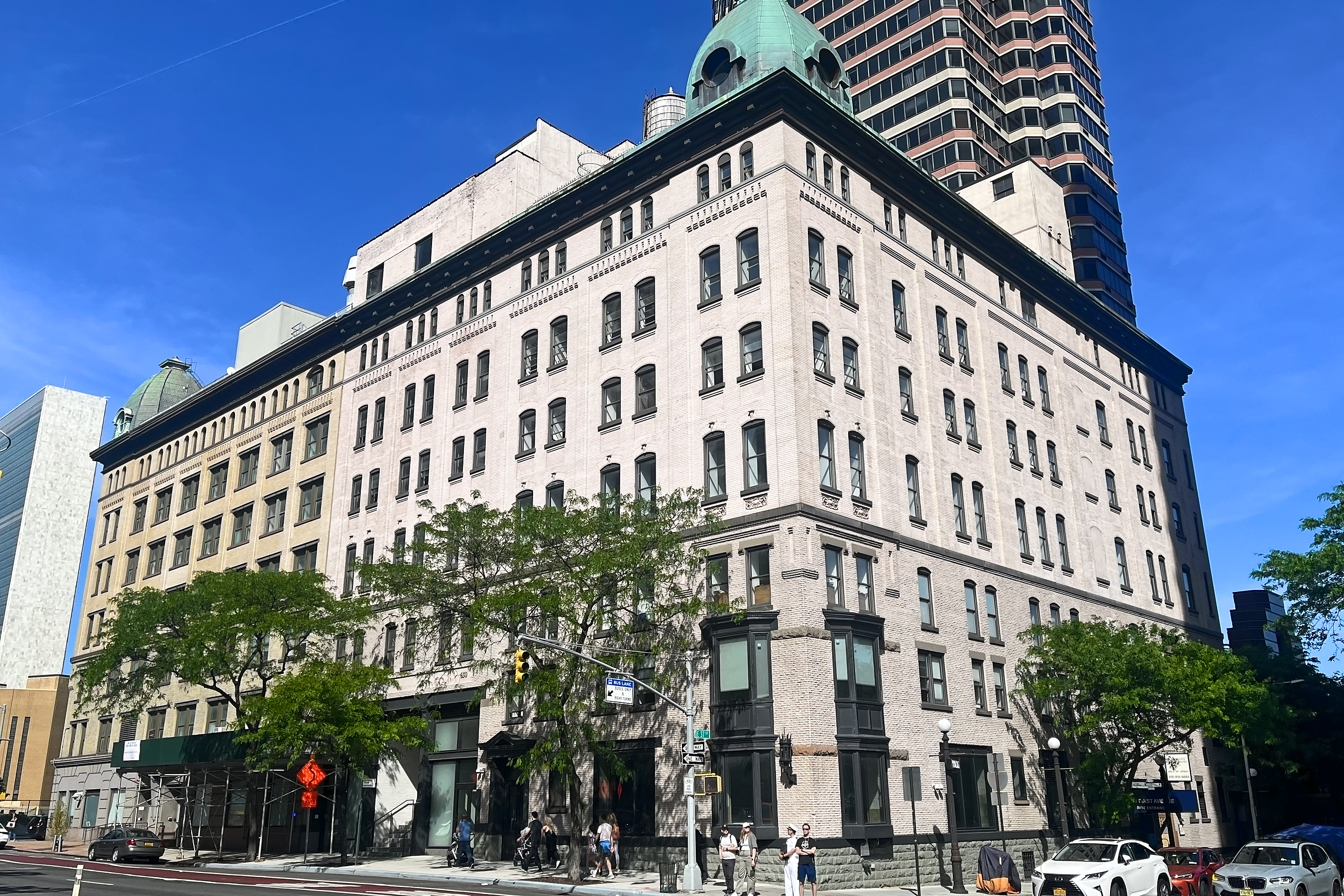
Kips Bay offers both structures, but the original examples blurred them. Eastlight, VU, Hendrix House, Hillrose28, and Kips Bay Towers are condos. Genuine co-op options include buildings such as 240 East 30th Street, New York Towers, The Byron, 160 East 27th Street, and Crystal House.
Choose the structure after calculating down payment, itemized closing costs, monthly carrying costs, board or lender reserves, and future-use restrictions. Then compare actual apartments. That sequence is faster and safer than touring both markets under the assumption that the same price requires the same buyer.
If you’re weighing a Kips Bay purchase or another New York City property, contact Brett for a building-level cash and ownership comparison.
Frequently Asked Questions
Kips Bay has meaningful inventory in both structures, but do not use the original draft’s building list to prove the split. Eastlight, VU, Hendrix House, Hillrose28, and Kips Bay Towers are all condominiums. Genuine co-op examples include 240 East 30th Street, New York Towers at 305 East 24th Street, The Byron at 165 East 32nd Street, 160 East 27th Street, and Crystal House at 200 East 24th Street. The active mix changes as listings enter contract or leave the market. Compare current inventory by legal property type, price, monthly cost, and bedroom count rather than assuming one undated neighborhood median describes both markets.
A co-op often has lower buyer closing costs, but it may require a much larger down payment and post-closing liquidity. At an $890,000 comparison price, a resale condo with 20% down plus a 2% to 4% preliminary cost range requires about $195,800 to $213,600. A sponsor condo using a 4% to 6% range requires about $213,600 to $231,400. A co-op with a verified 50% financing cap requires $445,000 of equity plus approximately $8,900 to $17,800 of preliminary costs, before liquidity. These are scenarios, not universal building rules. The contract, lender, attorney, and managing agent control.
It depends on the building’s financing cap and liquidity test. A co-op allowing 80% financing needs far less equity than one capped at 50%, and some buildings may require even more cash. At $890,000, a 50% cap means $445,000 of purchase-price equity. Add itemized closing costs and whatever assets the board requires to remain after closing. Some boards use 12 to 24 months of mortgage and maintenance as a planning benchmark, while others use a different formula. Confirm which assets count, whether retirement funds are discounted, and how the board calculates debt-to-income before making an offer.
A typical resale condo does not use a co-op board’s broad discretionary purchaser-approval and interview process. The buyer may still submit a purchase application, financial or identification documents, insurance materials, fees, and lender information. If the declaration or bylaws include a right of first refusal, the board may need to waive it before closing or exercise it on the contract terms. The governing documents control, and sponsor sales can use different procedures. Condo buyers also face lender project review. So “no co-op-style approval” is fair, but “no building process” is not.
Some do, but there is no Kips Bay-wide flip tax. The fee is a private building transfer charge governed by the proprietary lease, bylaws, offering plan, and amendments. A 1% to 3% sale-price formula is common as a planning reference, but buildings may charge per share, use a flat fee, calculate on profit, or charge nothing. The seller often pays, but the contract and building documents determine the payer. At 2% of an $890,000 sale, the illustration is $17,800. Confirm the current formula, exemptions, and responsible party through the managing agent before pricing or offering.
Buy the structure whose full financial and legal requirements fit comfortably. A condo may offer a lower down payment, greater leasing flexibility, and no co-op-style discretionary board approval, but can have higher buyer closing costs and project-level lender review. A co-op may offer more space or a lower price, but can require more cash, board approval, post-closing liquidity, and tighter use rules. Compare actual units on down payment, closing cash, monthly costs, reserves, assessments, subletting, financing, and expected hold period. The better choice is not determined by a buyer stereotype or a neighborhood label.