A $2 million Upper East Side budget can buy a substantial co-op, a smaller or less centrally located condo, or a more spacious apartment farther east. The price is only the first filter. In a building that permits no more than 50% financing, the same $2 million purchase requires at least $1 million down before closing costs and any post-closing liquidity the board expects.
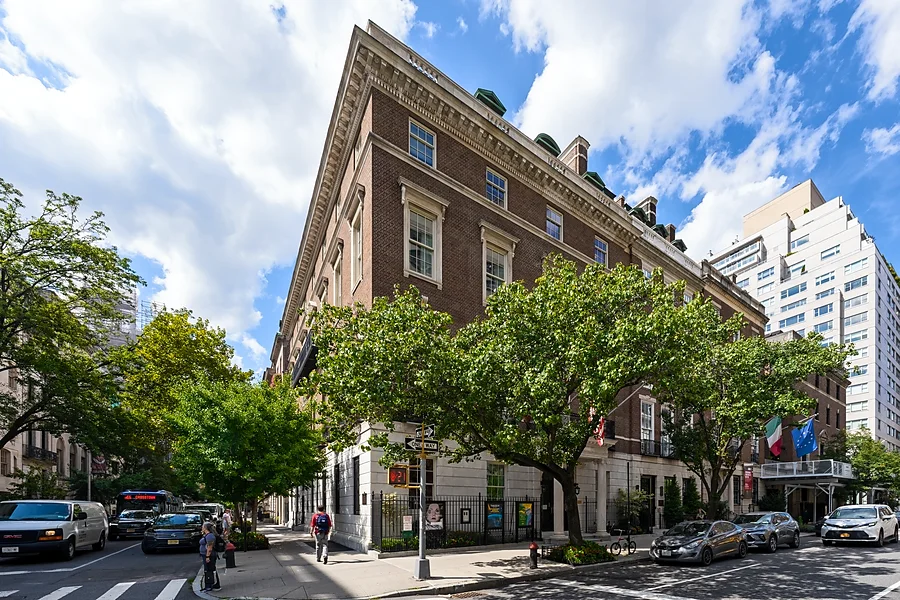
That is why the answer changes from building to building. Public 2026 information for 1120 Park Avenue states a maximum of 50% financing. At 740 Park Avenue, current public building and listing information says financing is not permitted. Neither building should be treated as proof that a $2 million apartment is currently available there. They illustrate how private co-op rules can change the cash requirement even when the contract price is identical.
The wider market data needs the same discipline. The familiar $825,000 co-op and $1.661 million condo medians came from a Manhattan-wide Q4 2025 report, not an Upper East Side-only dataset. A Q2 2026 UES report covering all apartment types recorded a $1.25 million median and $1,376 average price per square foot, while a narrower East Side resale-condo table reported $1,578 average price per square foot. Use those figures as context, not a unit valuation.
Where $2 Million Lands Across the Upper East Side
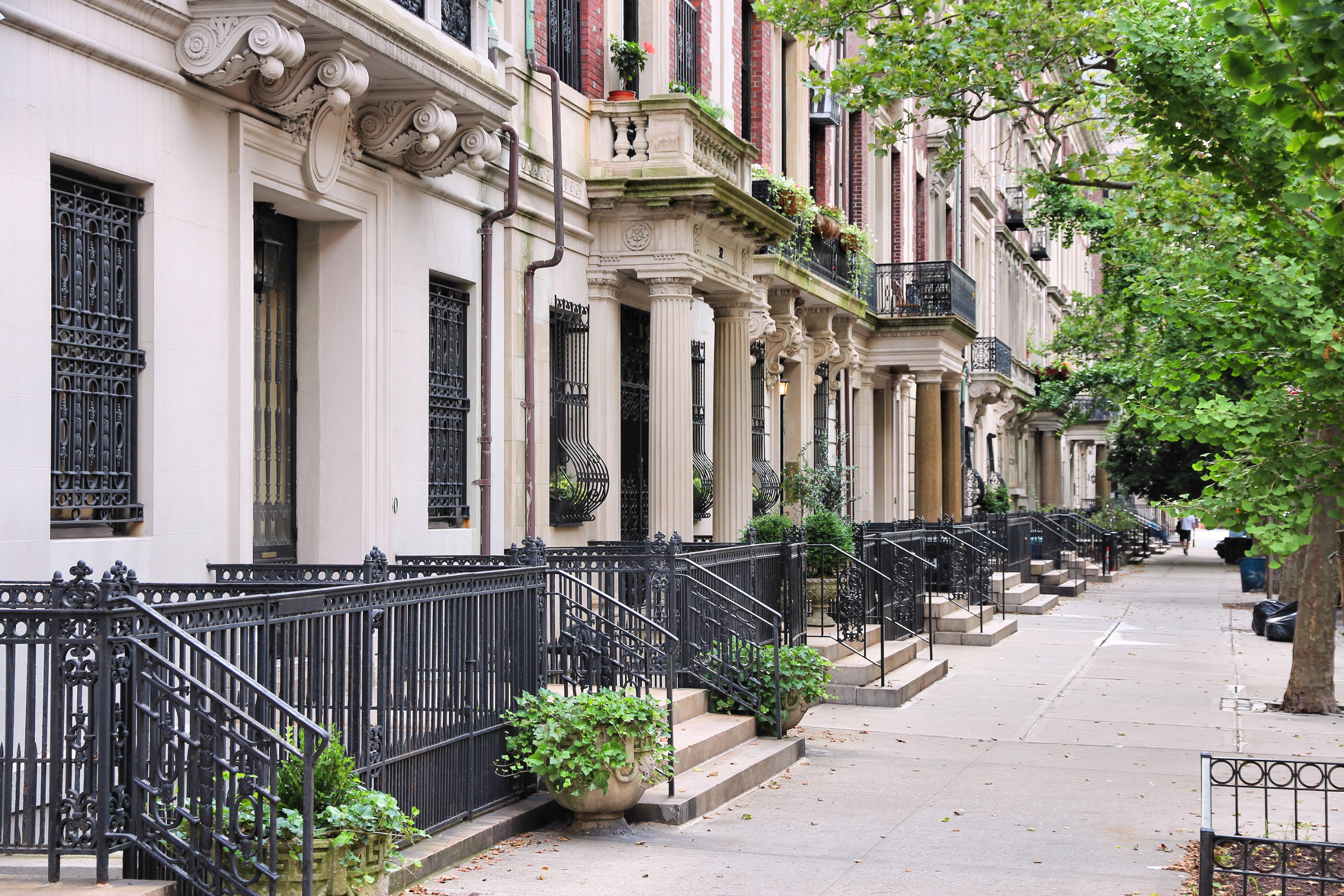
Carnegie Hill co-op pricing was roughly $1.9 million to $2 million in cited 2025 and early-2026 market snapshots. At $2 million, that places a buyer near the center of that product band rather than automatically at the top. The likely trade is a prewar layout and more space, paired with building-specific financing, liquidity, subletting, and board requirements.
Yorkville’s 2026 median and listing indicators generally fell around $900,000 to $1.1 million, depending on whether the source measured closed sales or asking prices. At $2 million, the buyer can reach a higher tier of space or condition than the typical neighborhood transaction. Do not convert that statement into a promise of a particular bedroom count without active and closed unit evidence.
Lenox Hill is too varied for a single stable comparison. Mixed-property medians can sit near the broader UES sold median in one period, while same-cohort condo data runs much higher. A $2 million buyer should compare the exact property type and building rather than assume Lenox Hill is simply the neighborhood middle.
For the lower budget band and the trade-offs it creates, see what $1 million buys on the Upper East Side.
Co-op or Condo Changes the Cash Requirement
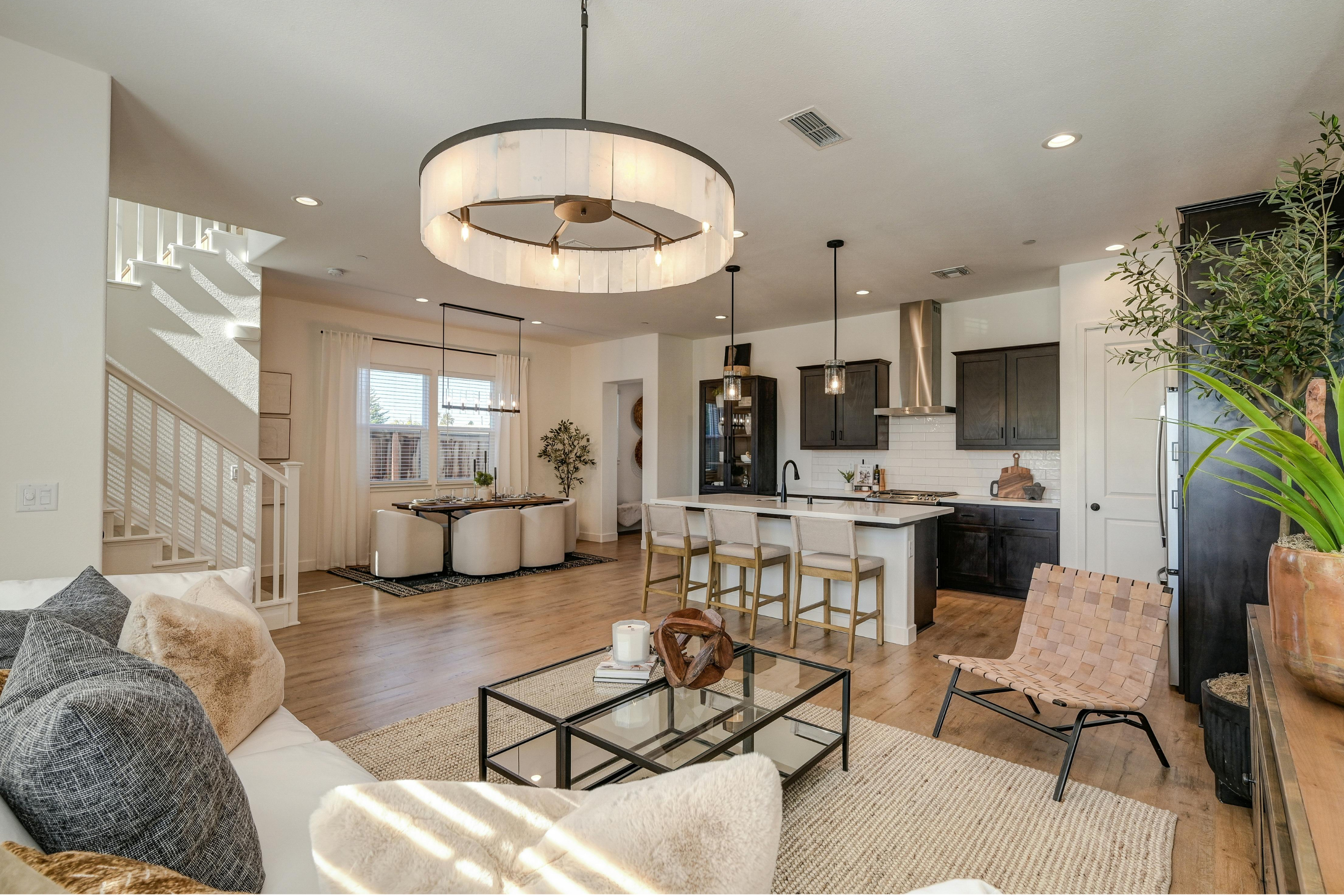
At $2 million, a co-op may deliver more interior space, a formal layout, or a more established building than a similarly priced condo. In exchange, the buyer may face a building financing cap, discretionary board approval, sublet restrictions, a private transfer fee, and a post-closing liquidity test. None of those rules is universal. The current proprietary lease, offering plan, amendments, application, and managing-agent guidance control.
A condo generally offers deeded ownership, greater rental and resale flexibility, and no co-op-style discretionary board approval. The buyer may still submit an application and obtain a right-of-first-refusal waiver if the declaration or bylaws require it. The lender also reviews the condominium project, so a buyer’s personal qualification does not make every unit financeable.
The condo cash requirement can be lower because 20% down is $400,000 rather than the $1 million required by a 50% co-op cap. But do not say there is no liquidity or reserve requirement. Lenders can require borrower reserves, and the condominium may impose application, move-in, working-capital, or other charges.
What Current Building Rules Actually Show
Use building examples to understand the range of rules, not as a list of active $2 million options. At 740 Park Avenue, public 2026 building and listing information reports no mortgage financing and a 3% purchaser-paid transfer fee. That means the building is relevant to the all-cash discussion, but public 2026 inventory reviewed was far above $2 million.
At 1120 Park Avenue, current public building information reports financing up to 50% and a 2% transfer fee based on gross consideration. At 1185 Park Avenue, public 2026 information also reports up to 50% financing and a 2% gross-sales-price fee for qualifying transactions. A buyer approved by one building is not automatically qualified for the other.
At 1050 Fifth Avenue, public building information says financing may be permitted up to 50% of value, but it is not a right and the board may approve less. Some 2026 listings reported a 1% purchaser-paid transfer fee, while the management page directs parties to the transfer-fee amendment without confirming the rate or payer. The responsible wording is simple: verify the current fee before relying on it.
A six-to-ten-week co-op schedule is a planning estimate, not a promise by 1120 Park or another building. Application completeness, board timing, lender work, title or lien issues, summer schedules, and closing coordination can extend the process. Current management instructions matter more than an old listing description.
If you want to know which Upper East Side buildings fit both the price and the available cash, contact Brett before you start touring.
The Cash Behind a $2 Million Co-op

Assume a $2 million co-op in a building that permits no more than 50% financing. The maximum loan is $1 million, so the minimum down payment is $1 million. That calculation is exact. The rest is a planning model that must state what each range includes.
Resale co-op buyer costs are sometimes estimated at roughly 1% to 2% before mansion and supplemental taxes. At $2 million, that produces $20,000 to $40,000 of non-tax closing costs under this model. The buyer also pays $20,000 of New York State mansion tax and $5,000 of New York State supplemental tax on a qualifying New York City residential purchase, for $25,000 combined.
Now add the board’s liquidity test. A $1 million, 30-year mortgage at a hypothetical 6.5% rate has principal and interest of approximately $6,321 per month. If maintenance is $3,000, the modeled monthly carrying cost is $9,321. Twelve months is approximately $111,848 and 24 months is approximately $223,696. Many co-ops use 12 to 24 months as a planning benchmark, but stricter buildings may require more and each board defines qualifying assets differently.
Under those explicit assumptions, estimated cash needed is approximately $1.157 million to $1.289 million: $1 million down, $20,000 to $40,000 of non-tax closing costs, $25,000 of buyer transfer taxes, and $111,848 to $223,696 remaining after closing. Do not double-count the $25,000 if a quoted closing-cost percentage already includes it.
The Condo Comparison at the Same Price
Assume a $2 million condo with 20% down. The down payment is $400,000 and the mortgage is $1.6 million. A 4% to 6% all-in planning range equals $80,000 to $120,000, producing $480,000 to $520,000 of down payment plus estimated costs. The final figure depends on whether the range includes the $25,000 buyer transfer taxes, title, lender fees, and mortgage recording tax.
For a qualifying $1.6 million individual residential condo mortgage, the illustrative borrower mortgage-recording-tax share at 1.925% is $30,800. The combined statutory rate is 2.175%, or $34,800, including a separate illustrative lender component. A CEMA credit, exemption, property classification, or lender structure can change the actual statement.
New development can cost more than resale because the sponsor contract may shift NYC and New York State seller transfer taxes, sponsor counsel, working capital, and other charges to the purchaser. The advertised price is not enough. Compare itemized cash to close, monthly cost, condition, sponsor concessions, and the timing of delivery.
The $2 Million Tax Threshold

The tax schedule is layered. New York State’s mansion tax is 1% at $1 million or more. A separate New York State supplemental tax applies to qualifying New York City residential conveyances at $2 million or more. Combined, the buyer-side rates are 1% from $1 million to under $2 million; 1.25% from $2 million to under $3 million; 1.5% from $3 million to under $5 million; 2.25% from $5 million to under $10 million; 3.25% from $10 million to under $15 million; 3.5% from $15 million to under $20 million; 3.75% from $20 million to under $25 million; and 3.9% at $25 million or more.
At $1,999,999, the tax is $19,999.99. At exactly $2 million, it is $25,000. A one-dollar price increase therefore creates a $5,000.01 tax increase in a straightforward all-residential transaction. That cliff matters, but the seller gives up price dollar for dollar. Model the buyer’s total cash and the seller’s net rather than treating the threshold as an automatic instruction to price below it.
The 0.25% additional New York State base transfer tax at $3 million or more is separate from the buyer-side table above and is generally a seller-side component unless contractually shifted. Do not fold it into the mansion-tax schedule without identifying who pays it.
How Much Space Does $2 Million Buy?

A single Upper East Side price-per-square-foot number creates false precision. Q2 2026 East Side resale-condo average price per square foot was $1,578, up 6% year over year. At that arithmetic, $2 million corresponds to roughly 1,267 square feet, but the result is not a promise. Floor, views, condition, outdoor space, services, monthly charges, and building quality can move the actual number sharply.
A co-op may offer more rooms or usable space for the money because its ownership rules, financing limits, maintenance, and buyer pool differ. A newer condo may offer fewer square feet but newer systems, amenities, and more flexible ownership. Prewar room count also does not translate perfectly into modern net square footage.
The best answer comes from actual units. Compare closed sales and active listings in the buildings that accept the buyer’s financing, ownership structure, intended use, and board profile. A $2 million budget that cannot clear the building’s cash requirement is not a usable budget for that apartment.
What to Verify Before Touring

For a co-op, confirm the maximum financing, minimum down payment, debt-to-income method, post-closing liquidity requirement, qualifying assets, flip-tax formula and payer, pied-à-terre policy, guarantor policy, trust or entity rules, subletting, and application timing. These are private, building-specific standards, not citywide laws.
Many boards use a debt-to-income or housing-ratio guideline around 25% to 30%, with stricter and more flexible exceptions. A typical package may request two years, and sometimes three years, of complete tax returns plus two to three months of bank and brokerage statements. Self-employed or variable-income buyers may need business returns, K-1s, CPA letters, or more history.
Retirement accounts may support net worth but are not automatically counted at full value for liquidity. Some boards exclude them, count vested amounts, or apply a discount because early access may carry tax and penalty consequences. Confirm the building’s method before relying on those assets.
For either property type, review financial statements, budget, reserves, insurance, assessments, litigation, underlying mortgage where relevant, building systems, planned capital work, and recent monthly-charge changes. The apartment can be excellent while the financial fit is wrong, and the reverse can also be true.
If You’re Selling Near $2 Million
Price from the building and line, then examine the $2 million threshold. At $1.999 million the buyer-side mansion tax is $19,990. At $2.02 million, the combined mansion and supplemental tax is $25,250. The tax difference is $5,260, while the price difference is $21,000. The buyer’s total reduction is $26,260 before financing effects. That is the real math, not a $25,000 tax saving.
Qualify offers against the building’s rules. In a 50%-financing co-op, proof of funds must cover the $1 million down payment, transaction costs, and the board’s required liquidity after closing. A higher offer that barely clears the written standard may carry more execution risk than a slightly lower offer with a stronger balance sheet. That is a comparison, not a rule that the lower offer always wins.
Prepare the financial statements, governing documents, transfer-fee information, application requirements, assessment history, and management contacts before listing. State whether a flip tax is buyer-paid or seller-paid only after checking the current documents. A 1%, 2%, or 3% fee on $2 million equals $20,000, $40,000, or $60,000, but profit-based and per-share formulas require different calculations.
What $2 Million Buys on the Upper East Side: The Short Answer
It can buy a substantial co-op in a building whose financial rules the buyer can satisfy, a condo with a smaller footprint or different location, or a larger apartment in Yorkville than the same price reaches farther west. The strongest opportunity is not determined by a neighborhood median. It is the unit that fits the buyer’s cash, financing, monthly budget, ownership plans, and tolerance for building rules.
Work backward from cash available after closing. Then filter buildings by financing cap and liquidity before touring. That order prevents a buyer from treating a lender’s preapproval as permission to buy in a co-op whose private rules require a much stronger balance sheet.
If you’re weighing a $2 million Upper East Side purchase or another New York City property, contact Brett for a building-level budget and cash analysis.
Frequently Asked Questions
It can buy a substantial co-op, a smaller or less centrally located condo, or more space in Yorkville than in Carnegie Hill or Lenox Hill. The exact result depends on building rules, condition, monthly costs, and current inventory. Carnegie Hill co-op indicators were around $1.9 million to $2 million in cited 2025 and early-2026 snapshots. Yorkville indicators generally ran around $900,000 to $1.1 million, depending on source and whether the figure measured sales or asks. Do not use the Manhattan-wide $825,000 co-op and $1.661 million condo medians as Upper East Side medians. Start with actual active and closed units in buildings the buyer can finance.
A 50%-financing cap requires at least $1 million down before closing costs and post-closing liquidity. Under one explicit model, add $20,000 to $40,000 of non-tax closing costs, $25,000 of mansion and supplemental taxes, and approximately $111,848 to $223,696 of post-closing liquidity based on a $1 million mortgage at 6.5% plus $3,000 maintenance. The estimated cash needed is then about $1.157 million to $1.289 million. That model is not universal. It changes if the cost percentage already includes taxes, maintenance differs, the board requires more or less liquidity, or the buyer pays a transfer fee.
It triggers New York State’s supplemental tax on qualifying New York City residential purchases. At $1,999,999, the 1% mansion tax is $19,999.99. At exactly $2 million, the combined 1.25% mansion and supplemental tax is $25,000. The one-dollar increase creates a $5,000.01 tax increase because the applicable rate applies to the full taxable consideration. That does not mean every seller should price below $2 million. Compare the buyer’s complete cash burden with the seller’s net proceeds, comparable sales, likely negotiation, and financing effects before choosing a strategy.
Yes, if the building and lender both permit the proposed loan. Public 2026 information reports up to 50% financing at 1120 Park Avenue and 1185 Park Avenue, while 740 Park Avenue does not permit mortgage financing. At 1050 Fifth Avenue, public building information says financing may be permitted up to 50%, but the board can approve less. These examples are not citywide rules and do not establish current $2 million inventory in those buildings. Confirm the current proprietary lease, offering plan, amendments, application, and managing-agent guidance before offering. A bank’s willingness to lend does not override a co-op’s private financing cap.
Neither is automatically better value. A co-op may offer more rooms or usable space, but can require a larger down payment, board approval, post-closing liquidity, and tighter leasing or ownership rules. A condo may require less cash down and provide more flexibility, but a financed purchase adds title and mortgage-recording costs, and the buyer still faces lender and project underwriting. Compare the actual apartment, monthly carrying costs, transaction costs, reserves, assessments, ownership rules, expected hold period, and resale competition. The right answer is the structure whose benefits the buyer will use and whose financial requirements the buyer can clear comfortably.
Verify the building’s maximum financing, minimum down payment, debt-to-income method, post-closing liquidity, qualifying assets, transfer fee, subletting, pied-à-terre policy, guarantors, trusts or entities, and application timing. Ask whether tax returns, bank statements, business documents, and reference letters have specific lookback periods. Retirement assets may not count at full value toward liquidity. Then review the building’s financial statements, budget, reserves, insurance, assessments, litigation, underlying mortgage, and planned capital work. Getting these answers before touring prevents a buyer from falling for an apartment that conflicts with the building’s written financial or ownership rules.