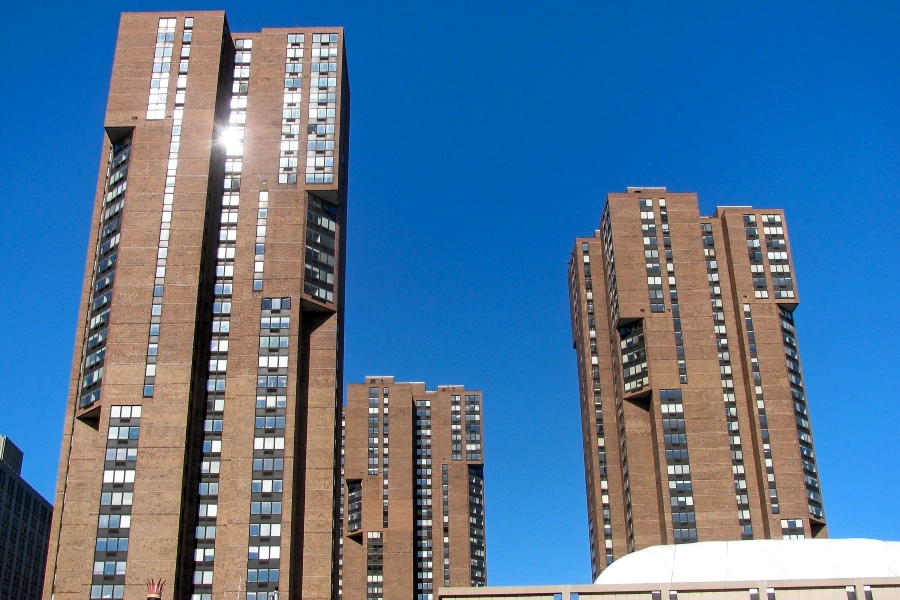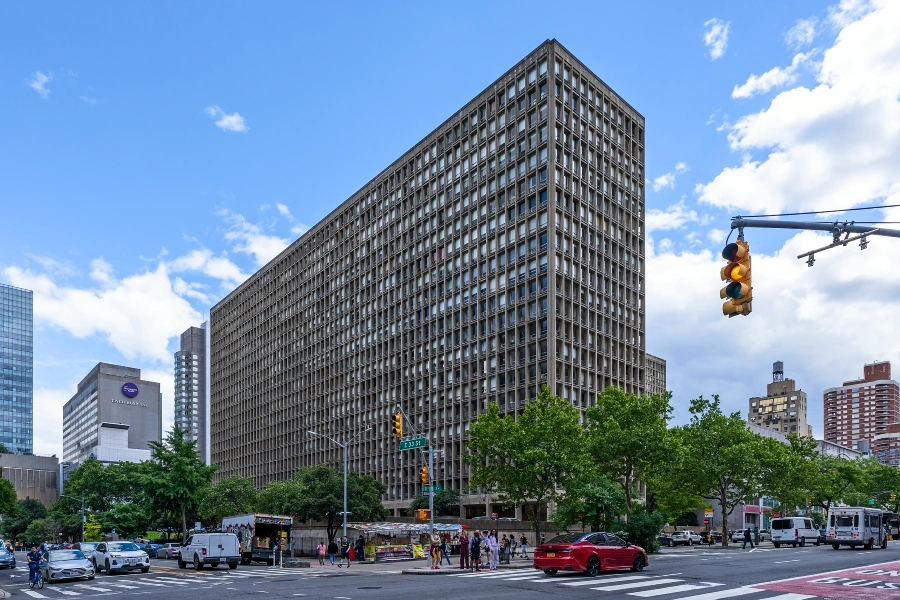

This Kips Bay Towers buyer guide begins with the key fact: Kips Bay Towers is a condominium, not a co-op. The North Tower addresses are 300 and 330 East 33rd Street. The South Tower addresses are 333 and 343 East 30th Street.
The ownership form matters because a buyer receives a condominium interest, not shares in a cooperative corporation, but the building’s declaration and bylaws still control many practical decisions.
For a buyer’s neighborhood context, see Brett Ari Fischer’s live Buying an Apartment in Kips Bay: 2026 Guide. Use that article for market framing, not as a substitute for the unit’s current tax bill, common charge statement, financial package, or contract.
Kips Bay Towers Buyer Guide: Verify Condo Ownership
The Legal Identity
The strongest public evidence is unusually direct. The official Kips Bay Towers site identifies the property as The Kips Bay Towers Condominium. The NYC Department of City Planning’s parking approval names the applicant as The Condominium Board of the Kips Bay Towers Condominium, Inc.
A NYC Finance account for a unit at 330 East 33rd Street classifies the account as R4, meaning a condominium residential unit in an elevator building.
That is different from a co-op purchase. A co-op buyer generally buys shares and receives a proprietary lease. A condo buyer generally receives a deeded unit and an appurtenant common interest. The declaration and floor plans are recorded under the condominium framework. The board must keep the declaration, bylaws, floor plans, and rules available for inspection to interested persons.
Those documents define the unit, common elements, common interest percentage, use restrictions, leasing rules, and board powers.
Condominium status does not mean every resale is frictionless. The bylaws may govern sale, leasing, ownership, and occupancy. The documents may require a purchaser application, building forms, a waiver of a right of first refusal, or other administrative steps.
Condo status alone does not establish how a particular sale or lease is reviewed; these procedures can still affect timing and cost. Ask for the current package before treating condo ownership as unrestricted.
Two Towers, Four Street Addresses
The official residence page groups 300 and 330 East 33rd Street in the North Tower and 333 and 343 East 30th Street in the South Tower. This is the cleanest answer to the common address confusion.
A listing at 300 or 330 East 33rd is part of the same condominium complex as a listing at either South Tower address, but buyers should still confirm the exact tower, unit tax lot, common interest allocation, and applicable building rules.
The complex occupies the large superblock bounded generally by East 30th Street, East 33rd Street, First Avenue, and Second Avenue. The NYC Planning record describes two high rise residential towers, landscaped open space, retail frontage, and parking facilities. The official site describes a private three acre garden and building services.
The public record therefore supports a two tower condominium with substantial shared land and facilities, rather than two unrelated apartment buildings.
Sources do not use identical physical descriptions. The condominium site describes 1,118 units. A separate public buildings page describes 20 floors in each tower. The 2018 NYC Planning environmental filing describes 1,118 residential units and 21 story towers. The related Planning Commission resolution states 1,120 residential units and says the towers were completed between 1961 and 1963.
The condominium architecture page uses a 1960 to 1965 construction period.
The safest buyer guide language is therefore “two tower condominium complex” and the four official street addresses. The conflicting counts do not change the legal conclusion that the property operates as a condominium. They do show why a buyer should rely on the recorded declaration, certified floor plans, current tax records, and certificate of occupancy for unit specific facts.
Costs Beyond the Purchase Price

What Condo Ownership Changes
The cost of ownership has three separate layers. First is the price paid for the unit. Second is the cash needed to close, including the down payment, lender charges, title and legal costs, recording charges, and taxes.
Third is the recurring carrying cost, including common charges, unit property taxes, insurance, utilities, parking or storage charges, and assessments if one is legally due.
A listing’s asking price does not answer any of those questions by itself. A low price can be offset by a high monthly charge, a large tax bill, a pending capital project, or a renovation that cannot be financed within the buyer’s cash plan.
A higher price can still be the better purchase if the unit has a stronger layout, better light, lower repair needs, and a monthly structure that future buyers can understand.
A condominium buyer should ask for the current common charge statement, the latest unit tax bill, the budget, recent financial statements, reserve information, insurance details, and assessment notices. The seller should also identify unpaid charges, pending adjustments, and any work affecting the unit.
The board’s records and the declaration matter more than a stale portal estimate or a broker’s rounded monthly figure.
A Hypothetical Budget, Not Building Charges
The following example is math only, not a current Kips Bay Towers quote. Assume a buyer signs a contract at $900,000, puts down 20 percent, and finances the balance. The down payment would be $180,000 and the assumed loan would be $720,000.
Assume, solely for this illustration, a $25,000 placeholder for legal, title, lender, mortgage-recording tax, prepaid, and other closing items. This is arbitrary, not an all-in estimate. Cash planned for the down payment plus that assumed closing reserve would be $205,000 before contract adjustments.
Now assume, only for the example, monthly common charges of $1,500 and annual property tax of $18,000. The assumed monthly common charge would be $1,500 and the assumed tax equivalent would be $1,500 per month, for a combined non mortgage carrying amount of $3,000.
Add the actual mortgage payment, insurance, utilities, and any parking or storage cost only after the lender and building provide verified figures.
None of those assumed monthly or closing figures describes Kips Bay Towers today. They are a stress test showing how to compare a contract price with cash to close and recurring obligations. A buyer should replace every assumption with the current statement for the specific unit.
The $900,000 price also sits below the New York mansion tax threshold, but the contract amount, tax law, exemptions, and transaction structure should be confirmed by counsel rather than inferred from a listing.
Taxes and Financing

Tax Bills and Abatements
NYC Department of Finance treats larger condominiums as Class 2 property. The city generally values larger condos through an income approach using comparable rental properties, then allocates the building value among units. A unit’s tax bill can therefore reflect an allocation factor, the property’s assessed and transitional assessed values, exemptions, abatements, and the adopted tax rate.
The tax amount from one unit cannot be transplanted to another unit without checking the tax lot and current bill.
The NYC co-op and condo tax abatement has development and unit eligibility rules. An individual owner does not apply directly: the board or authorized agent files for the development. Unit eligibility depends on primary residence, ownership, deed filing, and timing conditions, including the January 5 ownership cutoff for the upcoming tax year.
The city page also states that a property receiving certain other benefits cannot simultaneously receive the co-op and condo abatement, subject to the stated exceptions.
That general rule does not prove Kips Bay Towers currently receives the abatement. It also does not prove that a buyer will qualify. A buyer should inspect the unit’s current property tax bill and ask the managing agent whether the development has an active abatement, whether the unit is enrolled, and whether a purchase date affects the next tax year.
Transfer Taxes and Financed Purchases
New York State imposes real estate transfer tax on qualifying conveyances, and the additional mansion tax applies to qualifying residential conveyances at $1 million or more. NYC residential transfers can trigger a supplemental tax starting at $2 million and an additional base tax starting at $3 million.
The contract must allocate the charges correctly, and the buyer’s attorney should calculate the amount from the actual consideration rather than a rounded asking price.
A financed condo purchase can also involve mortgage recording tax. The tax depends on the principal debt secured and the applicable state and NYC rates. The official tax forms distinguish an individual residential condominium unit from other property categories.
A lender or attorney should calculate the actual mortgage recording tax from the final loan documents, not from a generic percentage copied from a blog.
The tax treatment differs from a co-op transaction because a condo unit is recorded as real property. That does not make every condo closing cheap. Title insurance, recording, lender charges, attorney fees, move related charges, building processing fees, and contract specific adjustments can still be material.
Sponsor and resale contracts may allocate costs differently, so the buyer should request a transaction specific closing estimate.
Project Review Is Separate From Borrower Approval
A buyer can qualify personally and still face a project review issue. Fannie Mae’s published condominium standards identify declarations, budgets, financial statements, reserve studies, construction and engineering reports, insurance, legal documents, and condominium questionnaires as possible review materials. The lender also evaluates the project’s physical condition, insurance, assessment structure, and eligibility under its own program.
This makes assessments especially important. A special assessment is not just a monthly budget issue. It can affect cash needed at closing, seller-buyer allocations, association reserves, and lender review. Unpaid charges can also raise a lien issue; obtain the board statement and have counsel check the declaration.
Fannie Mae’s guidance warns that underfunded reserves and critical repairs can create financial hardship and affect mortgage eligibility. That is a general underwriting principle, not evidence that Kips Bay Towers has a current problem.
Ask the lender to review the specific project early. Ask management for the latest budget, reserve study or capital plan if available, insurance information, board minutes or assessment notices that can be disclosed, and a statement of the unit’s charges. The buyer should not waive a financing or document review based only on the word “condo.”
Resale and Building Rules

Leasing and Future Buyer Appeal
Condo ownership can widen the potential resale pool because the buyer is purchasing a deeded interest rather than cooperative shares. But the resale advantage is not automatic. Future buyers will compare the unit with other Kips Bay Towers units and with newer condominiums, while also looking at monthly costs, taxes, assessments, layout, condition, light, views, outdoor access, and building operations.
The declaration and bylaws can shape the resale experience. They may regulate leasing, use, alterations, transfers, owner conduct, pets, move procedures, and the board’s administrative role. The New York statute allows bylaws to address alienation, conveyance, sale, leasing, purchase, ownership, and occupancy. The statute does not tell us which of those controls Kips Bay Towers currently uses.
Do not state that subletting is unrestricted, that a purchaser cannot be rejected, that a right of first refusal does or does not exist, or that a buyer can close on a fixed schedule without reading the current documents. Obtain the board’s resale package and ask the managing agent to identify every required form, fee, approval, waiver, and deadline.
A strong resale file is easy to explain: documented title and alteration history, current monthly charges, verified tax treatment, clear assessment disclosures, and a layout that compares well within the complex. A unit with a lower asking price but uncertain charges or unresolved work can be harder to finance and harder to sell later.
Capital Work and Common Elements
The complex’s age makes building diligence central to a purchase. City planning records identify two towers, landscaped areas, retail, and parking. They do not establish today’s systems condition, capital-work schedule, or assessment balance. Obtain current engineering, reserve, budget, and management records instead of inferring current condition from historical descriptions.
The buyer should ask what work is complete, what work is planned, which costs were paid from reserves, and whether any loan or assessment remains. Review permits and violations through the NYC Department of Buildings’ BIS and DOB NOW tools. A permit record can show work history, but it does not replace an engineer’s inspection or the board’s financial disclosures.
The same diligence applies to the garden, parking, retail areas, elevators, facade, roof, windows, heating, domestic hot water, and life safety systems. Confirm whether an amenity is a common element, a limited common element, a separately operated facility, or a third party service. Do not treat marketing language as a legal description of ownership or access.
Buyer Strategy

Start with the exact unit tax lot, not the complex’s name. Request the declaration, bylaws, rules, current common charge statement, tax bill, assessment history, budget, insurance information, and alteration records before contract signing.
Have the lender review the project early and ask counsel to identify any right of first refusal, purchaser application, lease restriction, move rule, parking right, storage right, or fee that could affect the transaction.
Compare at least three internal references: recent closed sales in the same tower, active competition in the complex, and a genuinely comparable condominium outside the complex. Adjust for floor, exposure, line, condition, combined units, outdoor space, tax, common charges, and assessment exposure. A unit that is inexpensive per square foot may still be expensive to carry or renovate.
Preserve liquidity after closing. Keep a separate reserve for repairs and ordinary ownership surprises instead of using every dollar for the down payment. Treat any proposed assessment or capital project as a negotiation and underwriting issue, not as a footnote. For a Kips Bay Towers buying plan, contact TheNewYorkCityBroker.com/contact-me.
Frequently Asked Questions
Kips Bay Towers is a condominium. The official property site uses the name The Kips Bay Towers Condominium, NYC Planning filings identify the Condominium Board, and a NYC Finance account for a 330 East 33rd Street unit uses the R4 condo classification.
A buyer should still read the current declaration and bylaws because legal condo status does not eliminate leasing, transfer, application, or building administration rules. The classification answers the ownership question, but it does not answer whether a particular unit can be sublet, altered, financed, or occupied as a pied a terre.
The North Tower includes 300 and 330 East 33rd Street. The South Tower includes 333 and 343 East 30th Street. The addresses belong to one condominium complex, but a buyer should confirm the exact tower, unit tax lot, common interest allocation, and documents applying to the apartment.
A listing that says only “Kips Bay Towers” is not enough for title, tax, or lender diligence. The unit number and tax lot should match across the deed, tax record, declaration, floor plan, and title report before a buyer relies on any description.
This guide does not quote current Kips Bay Towers charges, taxes, or assessments because no authoritative current building wide schedule was verified. Amounts can differ by unit and change over time. Request the specific unit’s current common charge statement, tax bill, assessment notice, budget, and payoff letter.
Treat portal estimates and old listings as leads, not as numbers for an offer. The hypothetical example in this guide is a budgeting method only and should never be mistaken for a reported Kips Bay Towers charge or assessment.
Possibly, subject to the borrower’s qualifications, the unit, the loan program, title, appraisal, insurance, and project review. A lender may request the declaration, budget, financial statements, reserves, insurance, litigation information, assessment history, and a condominium questionnaire. Obtain a project specific lender review early.
Condo status helps identify the ownership form, but it does not guarantee approval or a particular down payment. There is no universal Kips Bay Towers down payment figure: the lender, borrower, appraisal, loan product, and project review determine the terms.
Do not assume that. New York condominium law allows bylaws to regulate sales, leasing, ownership, and occupancy. Kips Bay Towers’ current declaration, bylaws, rules, amendments, and management procedures control the practical answer. Ask whether a purchaser application, right of first refusal waiver, lease package, minimum lease term, fees, or board notice applies.
Confirm every restriction in writing before buying for investment or pied a terre use. A broker description or a general statement about condo flexibility cannot override a recorded declaration, an effective amendment, or a current building rule.
Verify the unit’s legal designation and tax lot, title, common interest percentage, current common charges, taxes, assessments, reserves, insurance, capital projects, alteration permits, violations, and building application requirements. Have the lender review the project and have counsel review the declaration, bylaws, offering-plan amendments, title, and closing-cost allocation.
Compare the unit with recent closed sales after adjusting for condition, line, floor, layout, and total carrying cost. Check the property’s permit and violation history as a separate diligence step, then ask counsel to reconcile any discrepancy before the contract becomes binding. For Kips Bay Towers or another NYC purchase, contact TheNewYorkCityBroker.com/contact-me.