

Selling a Kips Bay co-op with high maintenance takes more than a price cut: high maintenance can make it harder to sell, but the number on a listing is only the beginning of the story.
A buyer wants to know what the monthly charge pays for, whether it is likely to rise, how it compares with nearby alternatives, and whether the building can support financing.
In this hypothetical comparison, a seller should treat maintenance as part of the apartment’s value, not as a footnote. A $900,000 apartment with $3,000 monthly maintenance may compete poorly with a $1,000,000 apartment carrying $1,900, even before taxes, financing, assessments, or board requirements enter the comparison.
For the board package and building diligence side of the transaction, see Brett Ari Fischer’s Kips Bay co-op board approval guide. It is a companion, not a substitute for the building’s documents or legal advice.
The first task is to explain the charge accurately. In a cooperative, a buyer purchases shares in a corporation and receives a proprietary lease. The shareholder pays maintenance based largely on the shares allocated to the apartment. The fee is not simply a service charge for the unit.
Selling a Kips Bay Co-op With High Maintenance: Explain the Bill
The Building’s Carrying-Cost Story
A maintenance bill usually combines several kinds of expense. It may include staff, insurance, heat, water, common-area utilities, repairs, management, amenities, and ordinary operating costs. It may also include the apartment’s allocated share of real estate taxes, underlying mortgage interest, mortgage principal, and reserve funding.
The distinction matters because these components behave differently. A payroll increase may be gradual. Insurance can change after a difficult renewal. A mortgage can mature or reset. A tax benefit can expire. A reserve contribution can rise when the board prepares for major work. Calling all of these items maintenance hides the reasons a buyer may be concerned.
Ask the managing agent for the current budget, the latest financial statements, the maintenance history, and a written statement of any assessment. The seller should also request the apartment’s share count, the current tax benefit, and the building’s underlying mortgage information. These documents turn a vague objection into an answer supported by records.
A high monthly charge is not automatically evidence of poor management. A full-service building with substantial staff, a garage, extensive common areas, or a large reserve program can cost more to operate. Conversely, a lower charge can be misleading if the building has thin reserves, deferred work, or an assessment about to begin.
The Underlying Mortgage
The corporation owns or leases the building and generally borrows through an underlying or blanket mortgage. The individual shareholder is not ordinarily the personal borrower on that debt, but the shareholder’s maintenance helps fund the corporation’s debt service. A buyer therefore needs to understand the building’s mortgage even when the buyer plans to pay cash for the shares.
Review the principal balance, interest rate, maturity date, amortization schedule, and any balloon or refinancing risk. A loan with a near maturity date can matter more than its current rate. Buyers and lenders may worry about a refinance at a higher rate, a large principal payment, or a lender condition that requires additional cash.
Mortgage information also affects the buyer’s share loan. A lender underwriting a cooperative may review the corporation’s finances, reserves, insurance, proprietary lease, recognition agreement, and blanket mortgage. The lender’s project standards are separate from the buyer’s personal credit decision. A financially qualified buyer can still encounter a project-level financing problem.
Do not describe an underlying mortgage as a debt attached personally to the seller. The seller’s own share loan is a separate payoff item. The building mortgage is a corporate obligation reflected through maintenance and the value of the cooperative interest.
Monthly Costs Can Change

Taxes and Abatements
A co-op’s real estate taxes are paid at the corporation level and allocated through the building’s budget. The monthly bill may also reflect an abatement or exemption. The seller should identify the exact program, the benefit amount, the expiration or phase-out schedule, and the conditions that could affect the buyer’s eligibility.
New York City’s Cooperative and Condominium Property Tax Abatement is generally handled by the board or managing agent for the development. Individual owners do not simply apply on their own. Primary residence rules, ownership structure, filing deadlines, tax class, prevailing-wage requirements, and other building conditions can affect eligibility.
A co-op may instead have, or previously have had, J-51 or 421-a benefits. Those programs are not interchangeable with the ordinary co-op and condo abatement. A building receiving certain tax benefits may be ineligible for the separate co-op and condo abatement. The offering plan, current tax records, and managing-agent statement should control the explanation.
For a seller, the practical question is not just, “What is maintenance today?” It is, “What will a buyer reasonably expect to pay after the benefit changes?” If a benefit is scheduled to end, show the estimated effect in dollars per month and identify whether the estimate is guaranteed or only a projection.
Keep Assessments Separate
Regular maintenance and a special assessment should never be blended casually. An assessment may fund facade work, elevators, boilers, roofs, windows, Local Law work, insurance costs, or another capital project. It may be temporary, recurring, billed in installments, or payable in a lump sum.
The seller should disclose the current amount, remaining balance, payment dates, and contract allocation. Ask whether the board has approved additional work, whether a project is under discussion, and whether board minutes mention a potential assessment. A buyer’s attorney will usually ask these questions during diligence, so early disclosure reduces surprises.
A paid assessment can sometimes support value if it resolves a known capital need, but the seller should not assume that a buyer will give full credit. The buyer may still discount for disruption, uncertain costs, or the building’s financial condition. The best presentation is factual: state what the assessment funds, what has been paid, and what remains.
Selling Into a Co-op Approval Process

Board and Lender Review
A cooperative resale generally requires board approval under the proprietary lease and bylaws. The board may review the buyer’s tax returns, bank and investment statements, employment, liabilities, credit, references, personal statement, and interview. Buildings differ, so a seller should obtain the current application and financial standards before accepting an offer.
Some boards impose debt-to-income, housing-cost, and post-closing-liquidity tests, but no New York statute supplies a universal ratio. Obtain the current building application and financial requirements. Do not screen a buyer against a generic ratio in place of actual board rules.
Financing can add another layer. Co-op share loans are secured by the buyer’s shares and proprietary lease rights. The lender may require a recognition agreement and evidence that the project satisfies its underwriting rules. Financing limits, lender approval, the building’s insurance, reserve position, and mortgage maturity can narrow the buyer pool.
The seller can reduce risk by asking for a lender familiar with co-op share loans and by giving the buyer a complete building package promptly. A buyer who qualifies personally but cannot finance the building can delay or lose the transaction. The seller should avoid promising that any particular lender will approve the project.
A Historical Kips Bay Co-op Example
A historical Kips Bay example is 305 East 24th Owners Corp., the cooperative at 305 East 24th Street. A reported federal decision says the conversion offering plan was accepted for filing in 1983. This confirms historical plan activity, not current operating costs.
The historical legal record discusses the cooperative conversion and related garage and commercial leases. Review original documents if those arrangements matter to a specific purchase.
That record is useful because it shows why a seller should review the offering plan and amendments, not because it proves anything about the building’s current maintenance. The building’s present financial condition, maintenance, assessments, tax benefits, and financing terms require current records from the managing agent. Do not call this example a high-maintenance building without current evidence.
The Attorney General’s offering-plan database is a starting point for searching by address or building name. Its database information and any posted documents are not a substitute for current financial statements. An offering plan is a historical disclosure document. It does not certify a current resale price, current monthly charge, or investment quality.
Pricing and Seller Net
Comparable Alternatives
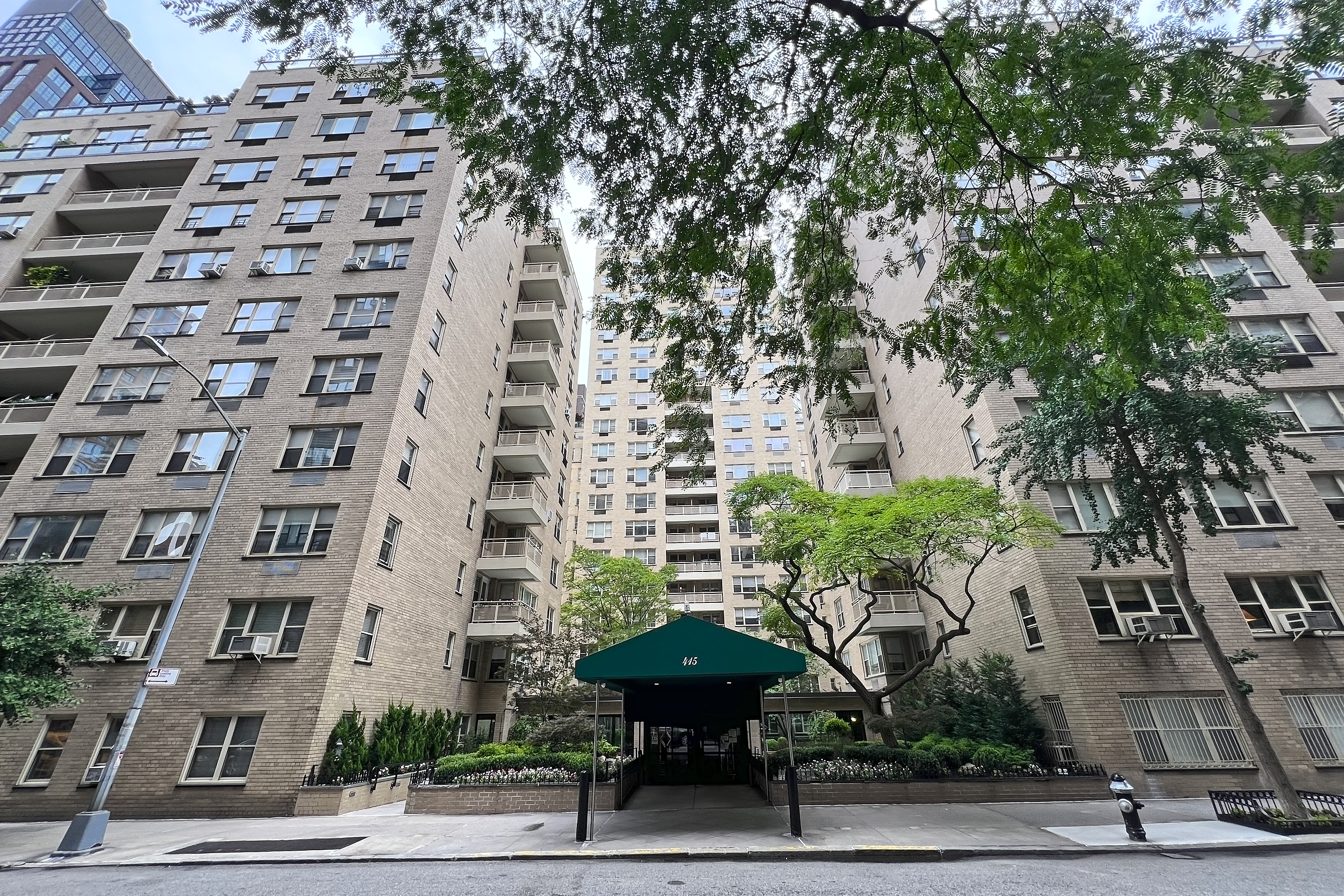
Kips Bay has a mix of postwar cooperatives, newer condominiums, converted buildings, and sponsor inventory. A seller should not use a new-development condo as a direct comp for an older co-op simply because both are in the same neighborhood. Ownership structure, financing, taxes, amenities, condition, views, floor, layout, and maintenance can produce very different buyer economics.
Start with closed sales in the same building. Compare line, floor, exposure, outdoor space, renovation, room count, share count, and time of sale. Then examine genuinely similar buildings nearby. Official city rolling-sales data can help establish recorded prices, but it may not explain concessions, condition, board restrictions, or unusual transfers.
Maintenance belongs in the comparison. Suppose Apartment A is priced at $900,000 with $3,000 monthly maintenance. Apartment B is priced at $1,000,000 with $1,900 monthly maintenance. Apartment A saves $100,000 in price, but costs $1,100 more each month, or $13,200 per year, before any tax effect. Over five years, that extra carrying cost is $66,000.
The difference does not prove Apartment B is the better purchase. A buyer may value Apartment A’s layout, views, renovation, or lower upfront price. The example simply shows why a seller should explain the maintenance and price together rather than defending the monthly number in isolation.
Estimate the Seller Net
A seller’s net begins with the contract price, not the asking price. Subtract the brokerage commission, New York City real property transfer tax, New York State transfer tax, flip tax, attorney and managing-agent fees, unpaid maintenance, assessment balances, credits, and the payoff of the seller’s personal share loan.
The flip tax is a private transfer fee, not a government tax. Its formula may use gross price, profit, shares, a flat amount, or an ownership-duration schedule. The proprietary lease, bylaws, offering plan, amendments, and current managing-agent questionnaire control. The contract may allocate the fee differently, but the building must receive the amount required for the transfer.
For a hypothetical $1,000,000 sale, assume negotiated 6 percent brokerage compensation, 1.425 percent NYC RPTT, 0.4 percent NYS base transfer tax, a 1 percent building flip tax, $7,000 in legal and administrative charges, and no assessment balance. Subtract $60,000, $14,250, $4,000, $10,000, and $7,000: estimated cash before the personal loan payoff is $904,750.
The 1 percent NYS mansion tax at this price is generally a buyer tax; a contract could shift its economic burden. The assumed brokerage and flip-tax percentages are illustrations, not required rates or this building’s fees.
If the seller owes $300,000 on a personal share loan, illustrative cash after payoff becomes $604,750 before other adjustments. Use the same assumptions for competing sale prices so the decision is based on net proceeds, not a headline number.
Tax Treatment of Maintenance and the Sale
If the corporation qualifies under IRC Section 216, tenant-stockholders may receive their allocated share of deductible real-estate taxes and qualifying mortgage interest, subject to itemization and federal limits. Interest on a personal loan used to buy cooperative shares may also qualify as home mortgage interest, subject to federal limits and the taxpayer’s circumstances.
Not every dollar in maintenance is deductible. Ordinary operations, amenities, reserves, principal repayment, and personal expenses do not become deductible merely because they appear on a maintenance bill. The corporation’s tax statement and Form 1098, where applicable, are more reliable than a listing estimate.
For a sale, federal guidance generally calculates amount realized as selling price minus selling expenses, then compares that amount with adjusted basis. Basis can include the cost of the co-op stock and qualifying capital improvements. Direct sale expenses generally reduce the gain calculation rather than becoming a separate ordinary deduction.
A nonresident seller may also need New York Form IT-2664 and an estimated income-tax payment unless an exception applies. That issue is distinct from transfer taxes and the flip tax.
The seller should preserve the original stock purchase records, capital-improvement invoices, prior tax statements, assessment records, sale contract, closing statement, flip-tax receipt, brokerage invoice, and legal bills. A main-home gain exclusion may apply if the ownership and use requirements are met. A tax adviser should confirm the result, especially if the apartment was rented, inherited, gifted, or used for business.
Seller Strategy

The strongest strategy is to convert a high-maintenance objection into a documented carrying-cost explanation. Obtain the building package before pricing, identify every recurring and temporary charge, and calculate the buyer’s effective monthly cost under current and projected tax conditions.
Price against closed, building-specific sales rather than a neighborhood headline. If maintenance is high because the building provides services or funds reserves, show the budget and explain the benefit without overselling it. If an assessment or mortgage maturity creates risk, disclose it early and price for the market’s likely response.
Screen buyers for both personal finances and project financing. Ask for a lender who understands co-op share loans, keep board-package timing realistic, and avoid accepting a nominally higher offer that is unlikely to survive underwriting. Present the apartment, the building, and the net proceeds as one transaction.
A seller who needs a building-specific maintenance, assessment, financing, and net-proceeds review can start with TheNewYorkCityBroker.com/contact-me.
Frequently Asked Questions
No. Buyers compare total value, not maintenance alone. A higher charge may fund staff, utilities, amenities, reserves, taxes, or mortgage debt. The concern grows when the charge is high relative to comparable apartments, rises quickly, includes an assessment, reflects an expiring tax benefit, or accompanies weak reserves.
A seller should provide the budget and explain the components. The right comparison uses purchase price, monthly carrying cost, apartment condition, financing, and likely future increases. A buyer may accept a higher charge when the building’s services, reserves, or location justify it, but the buyer needs evidence before making that judgment.
Request the current principal balance, interest rate, maturity date, amortization, balloon terms, refinancing plans, and the apartment’s share allocation. Ask whether the building’s lender imposes restrictions affecting share loans or transfers.
The corporation is generally responsible for the building mortgage, but shareholders fund allocated debt service through maintenance. The seller should not describe that corporate obligation as the seller’s personal mortgage.
The seller’s own share-loan payoff is a separate net-proceeds item. A near-term maturity or balloon payment deserves a plain-English explanation because it can affect both price and the pool of financeable buyers. A lender may ask for the same information before issuing a commitment, so assembling it early can prevent avoidable delay.
Yes. A benefit can reduce the building’s tax burden or the shareholder’s effective carrying cost, and the benefit may expire, phase out, or depend on primary residence and building filings. Identify the program, annual benefit, expiration schedule, and eligibility conditions.
NYC’s co-op and condo abatement is handled by the board or managing agent, while J-51 and 421-a are separate programs. Buyers should verify current records rather than rely on a listing statement. The seller should show both the current benefit and any documented post-expiration estimate, while making clear that projections can change.
The contract and closing adjustments control, but the parties need a written payoff and allocation from the managing agent. A seller should disclose approved assessments, remaining installments, arrears, and capital projects under discussion.
Do not assume that a buyer automatically takes every future installment or that paying an assessment eliminates the buyer’s concern. The buyer may still evaluate the work, disruption, reserve position, and possibility of additional charges. Put the allocation in the contract and confirm it again in the closing statement.
A flip tax is a private transfer fee, not a deductible real-estate tax. If the seller pays it directly in connection with the sale, it may be a selling expense reducing amount realized rather than an ordinary deduction. Confirm treatment with a tax adviser.
The governing documents determine whether it exists and how it is calculated. The seller should obtain the current formula from the managing agent and give the receipt and closing statement to the tax adviser. The contract may shift who pays it economically. Never use a generic percentage without confirming the building’s current formula and any sponsor or family-transfer exception.
Use same-building closed sales first, then comparable postwar co-ops with similar layouts, condition, views, services, financing rules, taxes, and assessments. Compare total monthly cost, not just price per square foot.
Separate resale co-ops from condos and sponsor inventory. A higher price with lower maintenance may produce similar or better buyer economics than a cheaper apartment with a large recurring charge.
Explain the maintenance with documents and price for verified future risks. If the building has few recent sales, widen the set carefully and explain each adjustment instead of relying on a neighborhood median. A transparent explanation can preserve credibility even when the monthly charge cannot be changed.
For selling a Kips Bay co-op with high maintenance, or another NYC co-op, use TheNewYorkCityBroker.com/contact-me.