
Selling an office-conversion condo in FiDi starts with a question: if you are selling a condominium in Manhattan’s Financial District, the first question is not simply what the apartment is worth. It is what the public record, offering documents, and buyer’s lender will say the property is. That matters when a former office building was converted to residential use.
For a current neighborhood frame, see The New York City Broker’s 2026 FiDi new-development guide. Treat market commentary as context, not as a substitute for building-specific records. For a seller, the strongest presentation is a clean chain from former use to lawful residential occupancy, condominium formation, ownership, and present condition.
Selling an Office-Conversion Condo in FiDi: Verify the Chain
An office conversion is a change in a building’s legal and physical use from commercial space, often office space, to residences. The label is not established by a listing description or a building’s architecture alone. It should be supported by the building’s historical records, approved plans, permits, occupancy records, and condominium documents.
New York City Department of Buildings guidance treats a conversion as a change of use or occupancy. A commercial-to-residential change can require a new or amended Certificate of Occupancy, or CO. The CO states the legal use and permitted occupancy of a building or portion of a building.
For a building requiring a certificate, DOB says no one may legally occupy it until a CO or Temporary Certificate of Occupancy, or TCO, is issued. Check which use and areas the certificate covers.
That distinction matters in a sale. A permit shows that work was approved or authorized at a particular stage. A final CO shows that the completed work and required paperwork reached the City’s occupancy standard. A TCO can authorize occupancy while specified final matters remain outstanding.
It typically expires after 90 days but may be renewed; check the actual document and current status. The seller should not describe a TCO as a permanent CO, and should not assume that a permit by itself proves current residential legality.
A conversion can also be partial. One portion may be residential while retail, professional, or other commercial space remains. The declaration and floor plans should identify unit uses and common elements, and the listing should match those records.
The official example: One Wall Street
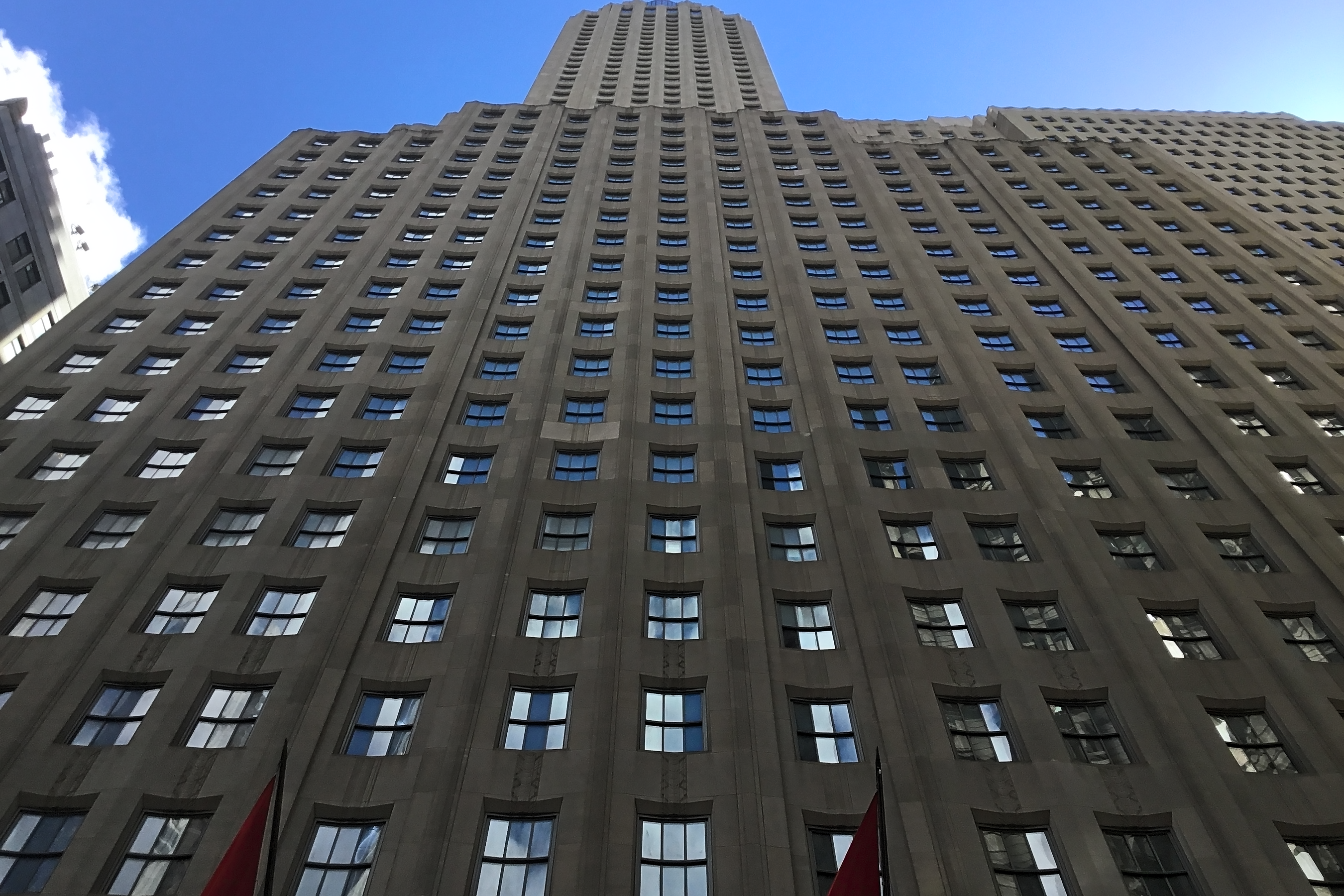
One Wall Street is a useful historical example because the New York Attorney General’s Real Estate Finance database identifies a One Wall Street Condominium offering plan with 566 residential units and one commercial unit. The record describes the construction as rehab and names MIP One Wall Street Acquisition LLC as sponsor.
The plan was accepted for filing in 2018 and later became effective.
The City’s Comptroller has also identified 1 Wall Street among Financial District office-to-residential conversions.
Those records support a carefully limited statement: One Wall Street is an example of a historically commercial building that was converted into a condominium offering. They do not, by themselves, establish the building’s current final CO, current sponsor inventory, present systems condition, or current lender eligibility. A seller should make those current claims only after obtaining current records.
The seller’s document story

A buyer’s attorney and lender will want documents answering different questions. The CO or TCO addresses occupancy. DOB records address approved work and inspections. The declaration and certified floor plans establish units and common interests. The Attorney General offering plan and amendments disclose the sponsor’s offering, risks, projected costs, and purchase terms.
Verify the Public Offering Record
The Attorney General maintains an offering-plan database searchable by project name, address, plan number, sponsor, or principal. An accepted plan is not a warranty that the building has no defects. It is the public offering document for sponsor sales and a source for original disclosures.
The City’s condominium approval process also matters. The Department of Finance reviews the declaration and professional floor plans, verifies unit designations, uses, and common-interest percentages, and records the approved documents through ACRIS. Compare those records with the unit being sold.
Do not confuse the offering plan with the recorded declaration. The plan describes the sponsor’s public offering, the declaration creates the condominium structure, the CO establishes legal occupancy, and permits show the work path. A careful sale file connects all four.
CO, TCO, and permit history

Start with a current DOB property profile. Older filings may be in BIS and newer filings in DOB NOW. DOB NOW jobs do not appear in BIS, so checking only one system can leave a false gap.
Review original commercial occupancy information and alteration or alteration-CO filings. Look for approved plans, inspection sign-offs, post-approval amendments, certificates of completion, and the final occupancy record. The question is whether the current residential use and unit configuration are authorized.
Read the Temporary Certificate
If the building has a TCO, read the document itself. Confirm the covered floors or units, issue date, expiration date, conditions, and any pending final work. Ask the managing agent or sponsor for evidence of renewals and the expected final CO path.
A seller should disclose the TCO accurately and avoid promising that a final CO is imminent unless the records support that statement.
A pre-1938 building may have special CO rules, but that does not create a blanket exemption for a later change of use. If a property has no conventional CO, a Letter of No Objection may be relevant, but it is not interchangeable with a final CO in every transaction.
Offering plan, declaration, and amendments

A sponsor selling a condominium unit publicly must work within the Attorney General’s offering-plan framework. The plan identifies the sponsor, describes the property and units, states the material terms of the offer, and addresses risks and physical conditions. For an existing building conversion, the sponsor’s engineer and known managing-agent complaints can be reflected in the disclosures.
A buyer’s attorney will often examine the plan, every material amendment, the declaration, bylaws, house rules, budget, and exhibits.
The original plan may not describe today’s building perfectly. Amendments can change prices, unit counts, budgets, amenities, sponsor rights, financing disclosures, or other material terms. Provide the complete set rather than a promotional excerpt.
Sponsor sale versus resale

A sponsor sale is a sale by the sponsor or a successor sponsor of an unsold unit under the offering plan. A resale is a later sale by an individual unit owner or another non-sponsor owner. The distinction affects disclosures and transaction documents; concessions, transfer-tax allocation, and warranties depend on the actual contract and sale.
The Attorney General explains that a resale is not regulated as a new public offering by the Attorney General, and no new offering plan is required merely because a resale occurs. That does not mean the original plan is irrelevant. It may contain the building’s original physical disclosures, restrictions, warranty provisions, common-interest allocations, and sponsor-control terms.
A seller should identify the transaction type early. If the seller is a sponsor or successor sponsor, the offering plan and amendments must be reviewed for current obligations and representations.
If the seller is a unit owner, the file should make clear that the sale is a resale and should include the available plan documents without representing that they are current descriptions of every building condition.
Systems buyers will ask about
Office buildings were designed around commercial floor plates, centralized services, and office occupancy. Conversion work may preserve structural or exterior elements while adding or modifying residential plumbing, electrical distribution, heating, cooling, ventilation, fire protection, elevators, windows, and life-safety systems. The amount retained versus replaced is building-specific.
The Attorney General advises purchasers to examine the facade, roof, elevators, heating and cooling, windows, electrical wiring, and plumbing. Assemble objective records rather than saying “everything was replaced” or “the building is fully modernized.”
Façade, Elevators, and Boilers
For a tall FiDi building, façade records are important. Buildings over six stories generally require a façade inspection every five years through the Façade Inspection and Safety Program. Reports may classify the façade as safe, safe with a repair and maintenance program, or unsafe. Open repairs, sidewalk sheds, extensions, or pending filings can affect timing and buyer negotiations.
Elevators are another recurring diligence item. NYC requires inspections and tests, and owners must maintain current compliance records. Ask management for recent inspection reports, correction filings, maintenance contracts, and any active violations. The same principle applies to boilers. Applicable boilers require annual inspections and timely reports, with requirements depending on equipment and building use.
Energy and Capital Planning
Energy compliance is now part of the building conversation. Local Law 97 generally covers buildings exceeding 25,000 gross square feet and requires emissions reporting under applicable pathways. Condominium reporting occurs at building level through the board or management. Ask about current reports, capital plans, or projected energy assessments.
Lender project eligibility

A buyer’s mortgage lender evaluates the condominium as a project, not just the apartment. Lenders may review the declaration, insurance, budget, reserves, owner-occupancy, commercial-space percentage, litigation, delinquencies, critical repairs, and developer control. A conversion may receive different treatment depending on rehabilitation, completion, phasing, and sponsor control.
Fannie Mae distinguishes established projects from new or newly converted projects. Under its March 2026 policy, newly converted non-gut rehabilitation projects with more than 10 attached units generally require Project Eligibility Review Service, or PERS, review. Smaller projects may qualify for a review waiver if all requirements are met.
Other projects may be reviewed through Condo Project Manager or another permitted method. These are lender determinations and can change with program rules and project facts.
Commercial space can also matter. Fannie Mae’s published project standards generally limit non-residential or commercial space to 35 percent, subject to the applicable project rules and calculation. A mixed-use building can therefore be financeable, but the buyer’s lender must confirm the project’s treatment.
FHA financing has separate project and single-unit approval rules. FHA may require current legal documents, CO or TCO information, budgets, reserves, insurance, owner-occupancy data, commercial-space information, and litigation disclosures. A condo’s legal existence does not guarantee FHA approval or conventional eligibility.
To reduce surprises, ask management for the latest lender questionnaire, budget, insurance certificate, reserve information, delinquency data, assessments, and project approval history. Do not promise financing. Promise faster access to accurate records.
Taxes and financing costs

Separate recurring property taxes from transaction taxes. NYC property taxes depend on the Department of Finance assessment, tax class, abatements or exemptions, and current rates. A converted condominium unit is generally separately assessed with its common interest, but an old offering-plan budget is not a current tax bill.
The NYC Real Property Transfer Tax generally applies to a qualifying transfer above $25,000. Individual residential condominium units fall within the residential category, with NYC rates generally stated as 1 percent at consideration of $500,000 or less and 1.425 percent above $500,000.
New York State and NYC additional transfer taxes can apply at higher consideration thresholds, including the state mansion tax at $1 million or more and NYC supplemental taxes at $2 million or more. Liability and contractual allocation should be confirmed by the closing attorneys.
Mortgage recording tax is a buyer financing cost when a mortgage on NYC real property is recorded. The rate depends on mortgage amount and current law. A buyer may also face lender, title, appraisal, project-review, and escrow costs. Avoid quoting one all-in percentage for every buyer.
Tax abatements require special care. The NYC co-op and condo abatement has primary-residence, ownership, and filing conditions; DOF says sponsor-held units are ineligible. An owner selling a unit should provide current DOF records and avoid representing that an abatement will automatically transfer or continue unchanged.
Seller Strategy: make the file financeable

The best seller strategy is to prepare the building file before setting a price. Obtain the current CO or TCO, complete DOB and DOB NOW records, the offering plan and amendments, declaration and certified floor plans, recent tax bills, insurance information, budget, reserve data, assessments, litigation disclosures, and current systems reports.
Ask management to identify any open façade, elevator, boiler, energy, or other compliance matter.
Reconcile the Records
Next, reconcile names, unit numbers, square footage, legal use, common-interest percentage, tax lot, and sponsor status across the documents. Inconsistencies create more friction than a buyer’s ordinary request for diligence. If a record is incomplete, describe the limitation and obtain a written explanation rather than filling the gap with a broker assertion.
Price the apartment using current comparable sales, condition, carrying costs, tax exposure, and financeability. Ceiling height, windows, historic character, and layout can be valuable, but a buyer will also price future capital work, commercial exposure, reserves, assessments, and lender constraints.
For a FiDi conversion sale file and positioning review, TheNewYorkCityBroker.com/contact-me before listing. A preparation conversation is most useful before a buyer’s attorney discovers an unresolved document issue.
What to disclose in the listing

Use precise language: “residential condominium in a historically commercial building converted under the recorded condominium and DOB framework,” if the records support it. Identify mixed-use features where material. State whether the sale is sponsor inventory or a resale. Describe a TCO as a TCO and include the covered area and expiration information.
Avoid unsupported claims about a “gut renovation,” “all-new systems,” “final approval,” “lender approved,” “tax abatement,” “no assessments,” or “fully converted.” Those phrases can create expectations that the offering plan, current records, or buyer’s lender will not support.
The strongest listing is not the one with the most dramatic conversion language. It gives a buyer confidence that legal use, ownership structure, physical condition, carrying costs, and financing can be verified.
Frequently Asked Questions
Usually, a change from commercial or office use to residential use requires a new or amended CO because the legal use, occupancy classification, egress, or dwelling-unit configuration has changed. NYC Department of Buildings guidance specifically identifies commercial-to-residential change of use as a situation requiring a new or amended CO.
The exact filing depends on the building, scope, code in effect, and whether the work was partial. A permit approval is not the same as a final CO. Before marketing, obtain the current CO, or identify the TCO and its expiration and covered area.
A TCO can support lawful occupancy while specified final matters remain outstanding, but it is temporary and conditional. It does not automatically prove that every unit, floor, amenity, or building system is finally approved. Whether a lender, insurer, purchaser, or title company accepts a TCO depends on the document, the transaction, and current underwriting requirements.
Some lenders may require a final CO or additional legal review even when the TCO authorizes occupancy. Give the buyer the actual TCO, identify its expiration date, and disclose any pending final work. Do not call a TCO a permanent CO or imply that a final CO exists when it does not.
No new offering plan is generally required merely because an owner resells a condominium unit. The Attorney General distinguishes a sponsor’s public offering from a later resale by an individual unit owner or other non-sponsor seller. The original plan and amendments can still matter because they may contain physical disclosures, restrictions, warranties, budgets, common-interest allocations, and sponsor-control terms.
A seller should identify whether the transaction is sponsor inventory or a resale and provide the available original documents without claiming that an old plan is a current condition report.
No. The lender must evaluate both the buyer and the condominium project. Project review can consider legal documents, completion, conversion type, insurance, reserves, owner-occupancy, commercial space, delinquencies, litigation, critical repairs, assessments, and developer control.
Fannie Mae treats some newly converted non-gut rehabilitation projects differently from established projects; those with 11 or more attached units generally require PERS review under its March 2026 policy. A seller can make the process easier by supplying current project documents, but only the lender can determine eligibility for the proposed loan.
Ask the lender what project questionnaire, insurance, reserve, or approval evidence is required before relying on a buyer’s financing timeline.
Prepare records for the facade, roof, elevators, boilers, heating and cooling, plumbing, electrical service, windows, fire and life-safety systems, and energy compliance. The exact list depends on the building, its equipment, and the scope of the conversion. These records are building-level diligence, not promises about a particular apartment. For taller buildings, review façade inspection reports and open repair conditions.
For elevators and applicable boilers, obtain current inspection and correction records. For large buildings, ask about Local Law 97 reporting, emissions work, capital plans, and possible assessments. Avoid saying that all systems were replaced unless approved plans, engineering reports, or invoices support that statement.
Discuss recurring property taxes separately from transfer taxes and mortgage recording tax. Current property taxes depend on the Department of Finance assessment, tax class, exemptions, abatements, and current rates. NYC transfer tax generally applies to qualifying transfers above $25,000, with different residential rates and higher-threshold state and NYC taxes.
Mortgage recording tax applies when a buyer records a mortgage and depends on the mortgage amount and current law. Contract allocation, exemptions, abatements, and final calculations belong with the closing attorneys and lender. Thresholds and rates can change, so use current official forms and calculations for the closing date.
For selling an office-conversion condo in FiDi, or another NYC apartment, TheNewYorkCityBroker.com/contact-me.