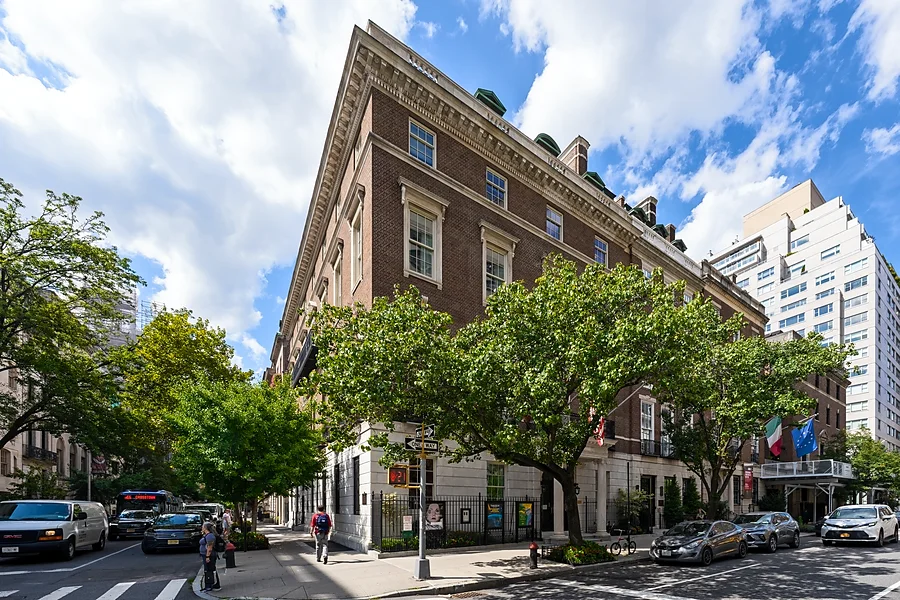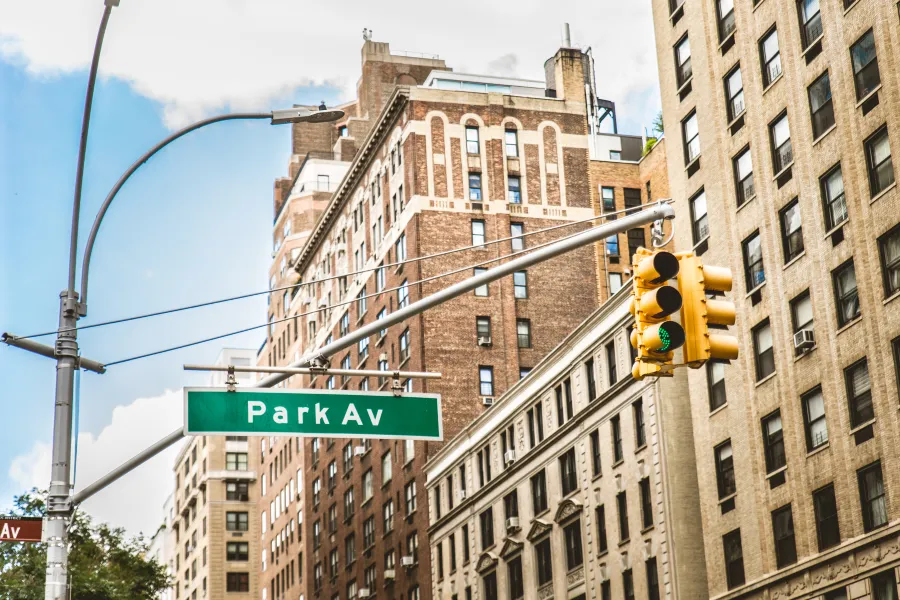

At At 1120 Park Avenue, current published information lists a 50% financing cap, a $750 buyer application fee, and a $180 credit and civil-litigation report fee per applicant. At 740 Park Avenue, the current building record lists financing as not permitted. Those two addresses make the point quickly: an Upper East Side co-op board package is not a neighborhood-wide form. It has to match the building’s current rules.
The package is a financial file that must reconcile. The board may review income, debt, purchase financing, source of funds, assets remaining after closing, references, and compliance with lawful building requirements. A polished cover letter cannot repair inconsistent numbers, and a complete package cannot guarantee approval. It can remove avoidable questions and delays.
Start With the Building’s Current Written Requirements
Typical NYC co-op packages often include a building application, financial statement, tax returns, income records, asset statements, references, the signed contract, proof of funds, and financing documents where applicable. That is a common outline, not a universal checklist. The managing agent’s current purchase package controls.
Ask for the revision date and the complete transfer-requirements list before preparing documents. A financing cap, debt-to-income method, liquidity standard, fee, interview, authorization, third-party report, or submission rule may appear in the application or written board policy rather than the original proprietary lease or offering plan.
For a broader explanation of how NYC co-op board approval works, review the process before signing a contract. Then return to the specific building’s package because its current instructions determine what must be submitted.
What the Package Usually Contains

The Financial Statement
The financial statement summarizes assets, liabilities, income, recurring obligations, and net worth. Every figure should reconcile to the documents behind it. If a brokerage balance, mortgage, credit line, or annual income figure differs between forms, explain the difference rather than leaving the managing agent or board to guess.
Tax Returns and Income Documentation
Buildings commonly request signed tax returns and schedules, recent pay statements, W-2s, 1099s, K-1s, employment verification, or other records appropriate to the applicant. Self-employed buyers may be asked for business returns, current profit-and-loss information, and an accountant letter. The exact number of years and acceptable documents are building-specific.
Bank and Brokerage Statements
Statements should show the funds used for the purchase and the assets expected to remain afterward. Include every page requested, even when a page appears blank or administrative. Large deposits and transfers are not automatically disqualifying, but they should be traced with statements, gift letters, sale records, or other source-of-funds evidence.
References and Building Forms
A package may request personal, professional, landlord, or other references, plus identification, authorizations, acknowledgments, insurance information, occupancy details, and building-specific forms. References should be specific and truthful, but financial capacity and package consistency usually require more attention than elegant prose.
Loan Commitment and Recognition Agreement
For a financed co-op purchase, the package commonly includes a loan commitment and recognition agreement, often called an Aztech agreement. This three-party document acknowledges the lender’s security interest in the shares and proprietary lease and sets notice and default procedures. The building may require its own form and charge a review fee.
The Financial Tests Are Building-Specific
Many NYC co-ops are marketed with down payments of 20% to 25%, while some require 30%, 50%, or all cash. Current public building information dated May 2026 lists maximum financing of 50% of the purchase price at 1120 Park Avenue. Current 1050 Fifth Avenue information says financing is discretionary and may not exceed 50% of apartment value. At 740 Park Avenue, a public building schedule dated April 2026 states that financing is not permitted. Each building’s current package and governing documents control.
A commonly cited co-op planning range for total debt-to-income is roughly 25% to 30%, but this is not a citywide rule. A board may calculate income and recurring obligations differently from a mortgage lender. Ask whether the building uses housing costs alone or total recurring debt, and do not convert a general benchmark into a claimed building policy.
Many practitioners also use 12 to 24 months of mortgage, maintenance, and applicable assessments as a preliminary post-closing-liquidity range. The actual multiplier and acceptable assets vary. Cash and taxable marketable securities may receive different treatment from retirement accounts, trusts, business interests, restricted stock, gifts, or overseas assets.
If a hypothetical mortgage is $4,500 per month and maintenance is $2,000, combined monthly carrying costs are $6,500. Twelve months equals $78,000 and 24 months equals $156,000. That is an illustration, not proof that 1120 Park, 1185 Park, 1050 Fifth, or another building requires exactly that amount.
If you want a straight answer on what a specific building may expect from your package before you make an offer, reach me at TheNewYorkCityBroker.com/contact-me and I can assist you.
Current Upper East Side Building Examples
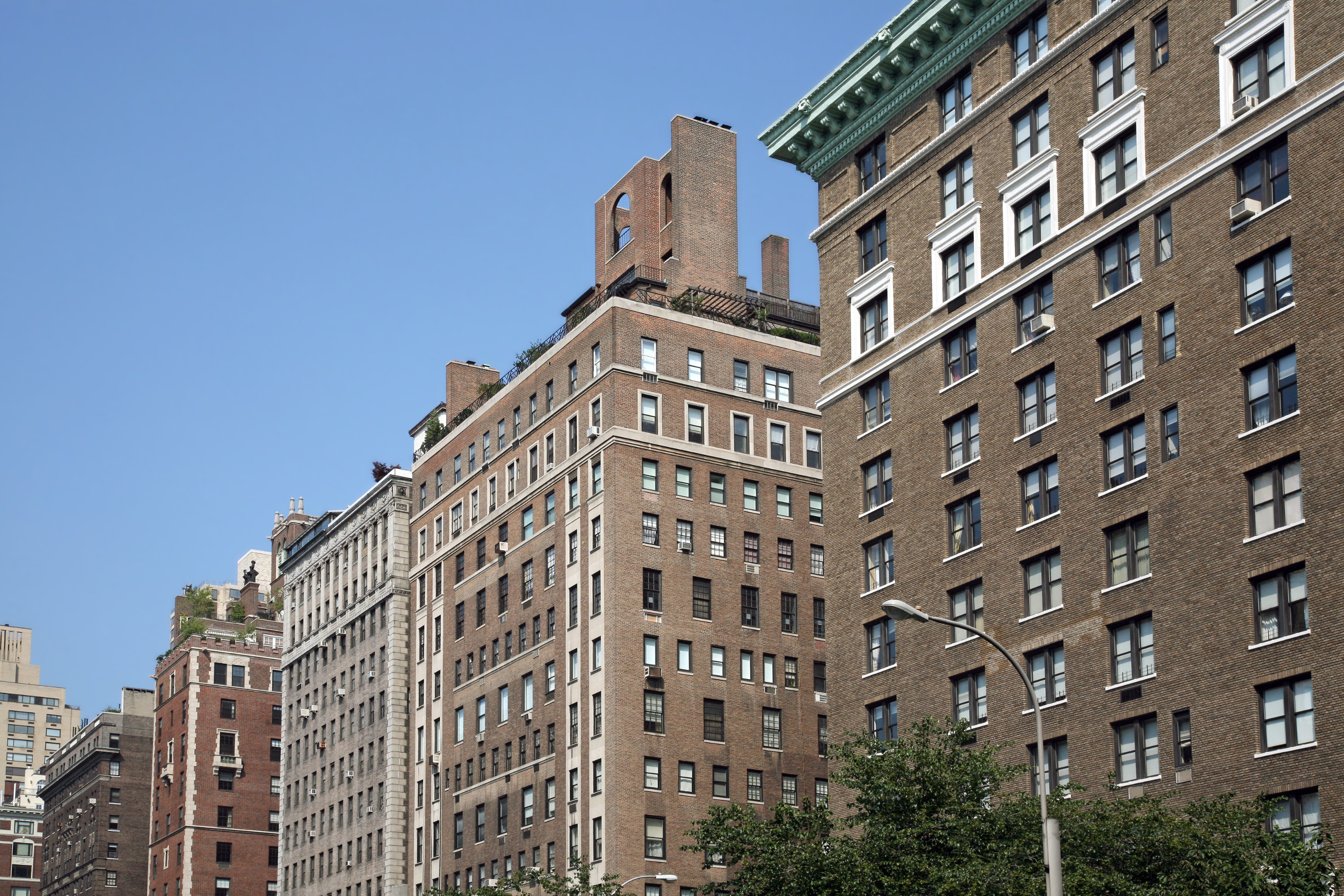
1120 Park Avenue
Current public building information dated May 2026 lists maximum financing of 50% of the purchase price, a $750 application fee, a $180 credit and civil-litigation report fee per applicant, and a $500 recognition-agreement fee when applicable. It also lists a transfer fee equal to 2% of gross consideration and labels the responsible party as the shareholder. The current package, transfer-fee amendment, and contract should confirm the calculation and who bears the cost in the transaction.
1185 Park Avenue
Current public management-attributed information dated August 2026 lists a $600 application-processing fee, a $250 fee per co-applicant or guarantor, a $125 background-report fee per applicant, a $75 criminal check if required, a $300 financing fee, and a $2,000 move-in fee. It also lists a 2% transfer fee on gross sales price, payable by the buyer for qualifying contracts signed on or after January 1, 2009. The current package and contract should confirm all charges and exceptions.
1050 Fifth Avenue and 740 Park Avenue
At 1050 Fifth Avenue, current public information dated August 2026 says financing is not a matter of right and may not exceed 50% of apartment value. It lists a $600 application-processing fee, a $300 recognition-agreement fee if financing, a $250 move-in fee, and a $2,250 refundable move-in deposit. The same schedule directs parties to the transfer-fee amendment rather than stating a current rate. At 740 Park Avenue, a public schedule dated April 2026 states that financing is not permitted and lists a 3% buyer-paid flip tax on the purchase price. All terms should still be confirmed in the live purchase package and governing documents.
The Mistakes That Create Avoidable Delay
An incomplete package is a preventable problem. Missing signatures, omitted statement pages, expired documents, inconsistent names, or an unanswered question can stop intake before the board begins substantive review. Use the building’s checklist line by line and keep a final index showing where every required item appears.
Overstating liquidity creates a deeper issue. Retirement balances, restricted assets, real-estate equity, or expected sale proceeds may not receive full credit. Present the building’s calculation honestly and distinguish cash available for closing from assets remaining after closing. If treatment is unclear, ask before submitting.
Unexplained changes invite follow-up. A new job, variable compensation, self-employment, a gap in income, a large transfer, gifted funds, or a new debt obligation may be entirely manageable when documented. State the facts briefly and attach the evidence. Never assume silence makes an issue disappear from tax returns, credit records, or account statements.
A strong submission is complete, consistent, candid, and easy to audit. The board is reviewing whether the buyer meets lawful building requirements and understands the rules, not whether the prose sounds impressive.
What to Expect From the Interview

An interview is not legally required in every co-op. Where the building requires one, it commonly follows the managing agent’s initial package review. The board may clarify financial information, intended occupancy, and plans governed by written building rules, including renovations, pets, or subletting where relevant.
Keep answers brief, accurate, and consistent with the package. Do not negotiate contract terms in the interview. If renovation comes up, explain that any work will follow the building’s alteration agreement and approval process. The interview does not guarantee approval, and its format, participants, questions, and scheduling vary by building.
The 2026 Application Timeline
For covered NYC co-ops, generally those with 10 or more dwelling units and excluding HDFC, certain government-supervised, and smaller cooperatives, Local Law 58 applies to applications submitted on or after July 28, 2026. The co-op must generally acknowledge receipt within 15 days by email and registered mail and state whether the submission is complete. If incomplete, it must identify missing items by reference to the application requirements.
After a complete application is acknowledged, or after an application is deemed complete because the acknowledgment deadline was missed, the co-op generally has 45 days to communicate approval, conditional approval, or denial by email. The law permits one extension of up to 14 days without buyer consent when timely noticed. A properly adopted summer-recess notice can toll applicable periods. Missing a deadline can trigger civil penalties, not automatic approval.
The law regulates process, not substantive financial standards. It does not create a citywide DTI ratio, down-payment minimum, liquidity multiplier, or right to approval. Contract negotiation, lender underwriting, package preparation, interview scheduling, and closing coordination can still extend the total transaction.
A secondary building guide has estimated roughly six to ten weeks from contract through approval and closing at 1120 Park Avenue, but that is not a published building guarantee. Use the law’s timing rules and the current managing-agent calendar rather than promising a fixed closing date.
If the Board Denies the Application
Local Law 58 requires timely notice of approval, conditional approval, or denial, but it does not currently require the board to provide detailed reasons. Board discretion remains limited by governing documents, good-faith business judgment, and federal, state, and city fair-housing laws.
Under the standard NYC co-op contract structure, an outright board rejection ordinarily permits cancellation and return of the contract deposit when the purchaser complied in good faith. The signed contract and rider control. A seller may dispute release, and the escrow agent may continue holding funds pending joint instructions or a court order. Application, report, portal, and legal fees may be nonrefundable.
Do not assume the reason for a denial is obvious from the numbers, and do not treat a prior rejection as proof that another building will decide the same way. Review the package with counsel and the broker, correct any factual or documentation problem, and compare the next building’s written requirements before proceeding.
Costs Behind the Board Package
A resale co-op often has lower buyer-side closing costs than a condo because an individual co-op share loan generally avoids mortgage recording tax and a standard deed-based title-insurance policy. A 1% to 2% planning range may apply before mansion and supplemental taxes, but attorney, lender, UCC, lien-search, recognition-agreement, application, move-in, and building charges vary. Ask the attorney and lender for transaction-specific estimates.
For NYC residential purchases, the buyer generally pays a 1% New York State mansion tax from $1 million to $1,999,999. A separate NYC supplemental tax begins at $2 million. The combined buyer-side rates are 1.25% from $2 million to $2,999,999; 1.5% from $3 million to $4,999,999; 2.25% from $5 million to $9,999,999; 3.25% from $10 million to $14,999,999; 3.5% from $15 million to $19,999,999; 3.75% from $20 million to $24,999,999; and 3.9% at $25 million or more.
The applicable rate is charged on the full purchase price. At exactly $2 million, the mansion tax is $20,000 and the supplemental tax is $5,000, for $25,000 combined. A private building transfer fee is separate from government transfer taxes and may be assigned to the buyer or seller under the governing documents and contract.
If You Are Selling in a Board-Approval Building
Know the building’s current package, financing cap, transfer fee, liquidity expectations, application fees, and interview process before listing. Share material requirements with serious buyers early. A hurdle disclosed in week one is cheaper than discovering after contract that the buyer’s proposed financing or remaining assets do not fit.
Review buyer strength alongside price. A slightly lower offer from a buyer who comfortably satisfies the building’s financing and liquidity standards may be more compelling than a higher offer that leaves little room. That does not make the lower offer automatically better, and no screening guarantees board approval. Compare price, financing, documentation, timing, and execution risk together.
Prepare the current financial statements, underlying-mortgage information, proprietary lease and amendments, application, transfer requirements, fee schedule, insurance, assessment history, and capital-project details. Clean records help the buyer’s attorney and lender complete diligence while the buyer builds the package.
Clear preparation also helps preserve momentum if the first offer does not proceed.
Upper East Side Co-op Board Package: Prepare Before Contract
Request the current written checklist, confirm the building’s financing and financial standards, reconcile every number, trace unusual deposits, and prepare income and asset records before signing. Then follow the 2026 submission and decision timeline without treating it as a promise of approval or closing.
If you’re weighing an Upper East Side co-op or another New York City property, contact Brett through TheNewYorkCityBroker.com/contact-me to talk through the right next step.
Frequently Asked Questions
A typical package includes the building’s application and checklist, a financial statement, tax returns, income records, bank and investment statements, references, the signed contract, identification, authorizations, proof of funds, and financing documents where applicable. A financed purchase may also require a commitment letter and recognition agreement. This is a common outline, not a universal list. The managing agent’s current written package controls. Request the revision date, use the checklist line by line, include every requested page and signature, and make sure each summary figure reconciles with the supporting statements. Before submitting, create an index and verify that every account balance, income figure, liability, signature, and name matches the supporting document. If the building requests a particular date range or file format, follow it exactly rather than substituting a document that seems equivalent.
Boards generally review income, recurring debt, assets, liabilities, source of purchase funds, proposed financing, and qualifying assets remaining after closing. A commonly cited DTI planning range is roughly 25% to 30%, while many practitioners use 12 to 24 months of carrying costs as a preliminary liquidity assumption. Neither is a neighborhood-wide rule. The building may calculate income, debt, mortgage, maintenance, assessments, retirement funds, gifts, trusts, or securities differently. Confirm the current written standard and present every number consistently across tax returns, employment documents, account statements, and loan records.
There is no single Upper East Side timeline. For covered applications submitted on or after July 28, 2026, Local Law 58 generally requires acknowledgment within 15 days and a decision within 45 days after a complete or deemed-complete application, subject to a limited extension and summer-recess rules. Those periods do not include every contract, lender, interview, or closing step. A secondary guide estimates roughly six to ten weeks for some 1120 Park transactions, but that is not an official guarantee. Ask the managing agent for the current calendar and submit a complete package promptly.
Expect questions that clarify the submitted application and lawful building requirements. The board may discuss finances, intended occupancy, and plans covered by rules, such as renovation, pets, or subletting where relevant. Interviews are building-specific and not legally required in every co-op. Keep answers concise, truthful, and consistent with the written package. Do not negotiate contract terms or volunteer unsupported renovation details. If work is planned, state that it will follow the alteration agreement and approval process. Every question remains subject to federal, state, and city fair-housing law. Review the package immediately beforehand so dates and figures are fresh. If a question falls outside the application or raises a legal concern, answer carefully and consult counsel rather than improvising.
Yes, a co-op board generally may deny an application without providing a detailed reason, but its discretion is not unlimited. Local Law 58 requires timely notice of approval, conditional approval, or denial for covered applications, yet it does not currently require a written explanation. Decisions must remain consistent with governing documents, good-faith business judgment, and applicable fair-housing and anti-discrimination laws. A complete package cannot guarantee approval. If a denial occurs, review the contract, escrow position, and application with counsel rather than guessing at the reason or assuming another building will reach the same result.
Many practitioners use 12 to 24 months of mortgage, maintenance, and applicable assessments as a preliminary planning range, but the actual requirement is building-specific. If mortgage and maintenance total $6,500 per month, 12 months equals $78,000 and 24 months equals $156,000. The building may credit cash, brokerage accounts, retirement funds, trusts, gifts, or other assets differently. The reserve usually remains the buyer’s property rather than being paid to the building. Ask for the current formula before making an offer and do not attach this general example to a named building without written confirmation.