
A Kips Bay new development sponsor purchase is not simply a newer version of a resale. Eastlight’s Attorney General record lists 144 residential units, VU lists 100, and the Hendrix House filing contains an unusual count issue: the current plan summary shows 59 units, while an accepted amendment says the condominium increased from 59 to 60 and the project is marketed as 60 residences. Those details are exactly why buyers should read the legal file rather than rely only on sales-gallery shorthand.
Eastlight became effective in May 2022, VU in June 2021, and the legal plan associated with Hendrix House became effective in September 2024. Buyers may encounter sponsor inventory, resales, or both within the same building, with different contracts, costs, and delivery terms.
What Does a Kips Bay New Development Purchase Involve?

A sponsor purchase is a sale by the developer or another holder of unsold sponsor inventory. In a new condominium, it is usually the apartment’s first sale. The filed offering plan and amendments, executed purchase agreement and rider, declaration, bylaws, deed, and closing documents define the transaction. Marketing statements should be confirmed in those materials, especially when they concern unit count, amenities, taxes, projected common charges, completion dates, or sponsor obligations.
A resale is sold by a later owner and normally uses a different contract and cost allocation. Sponsor unit and new development are not perfect synonyms because sponsor inventory can remain in older conversions.
For a broader explanation, review this guide to sponsor units in NYC before comparing the legal structure and total cash required for a specific apartment.
Current Kips Bay New Development Buildings
.png)
Eastlight at 501 Third Avenue
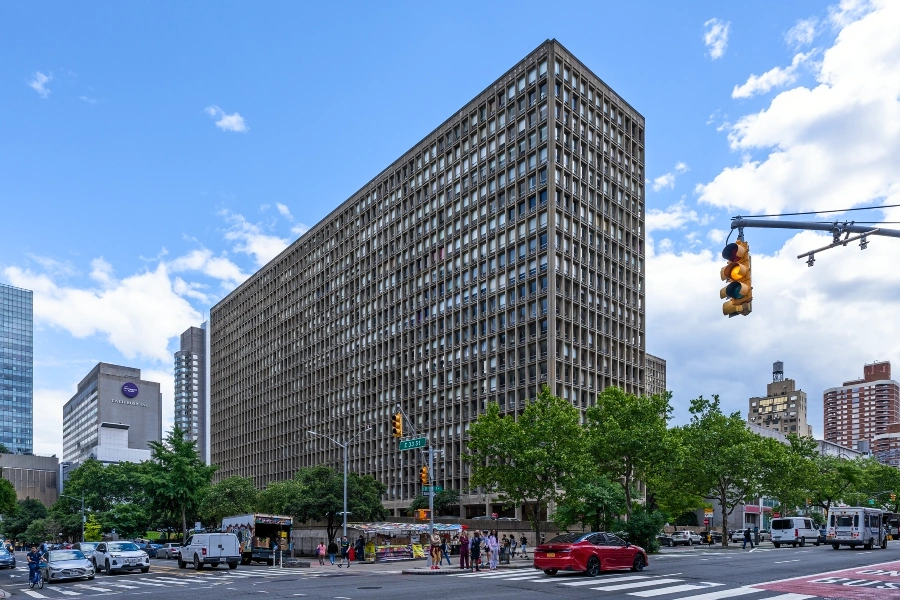
Eastlight is the marketed name for the condominium at 200 East 34th Street, also known as 501 Third Avenue. New York Attorney General plan CD200130 lists 144 residential units and one commercial unit. The plan was accepted on April 19, 2021 and became effective on May 17, 2022. Public reporting indicates that closings began in late 2022.
A November 2025 snapshot showed sponsor asks near $895,000 for a studio, $1.285 million to $1.495 million for listed one-bedrooms, and $2.295 million to $2.45 million for listed two-bedrooms. An April 2026 history showed a $2.795 million penthouse ask. These dated asks are not a permanent range.
Hendrix House at 250 East 25th Street
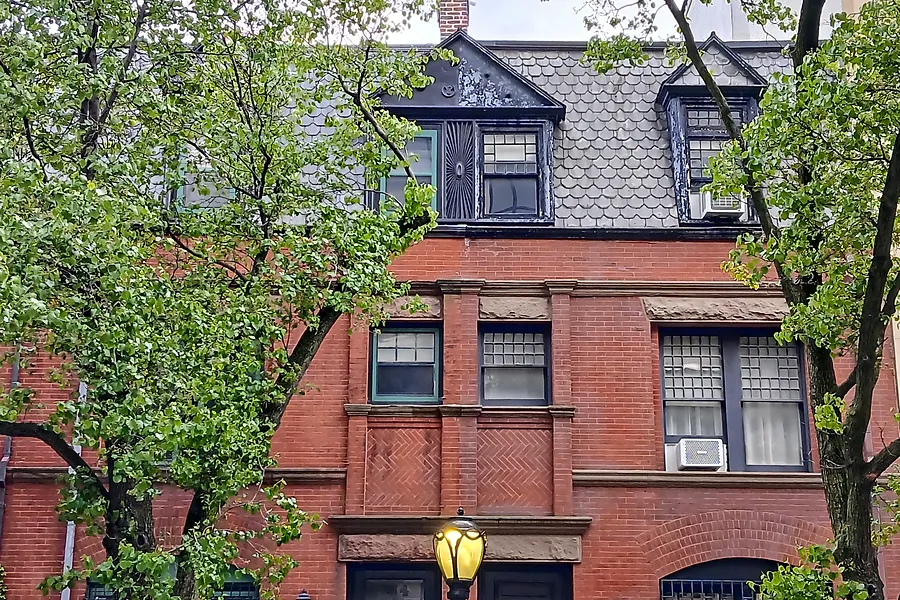
Hendrix House is marketed at 250 East 25th Street. The related Attorney General filing is plan CD230102, legally named 429 Second Avenue Condominium. The summary card displays 59 residential units, while accepted Amendment 2 expressly describes an increase from 59 to 60 units. Marketing materials use 60 residences, so the current plan and amendment package should be checked together rather than presenting either number without explanation.
The plan became effective on September 25, 2024, and reporting placed first closings in June 2025. A November 2025 snapshot showed one-bedrooms around $1.52 million to $1.58 million and two-bedrooms around $1.695 million to $2.905 million. Refresh availability and concessions for the exact unit.
VU at 368 Third Avenue
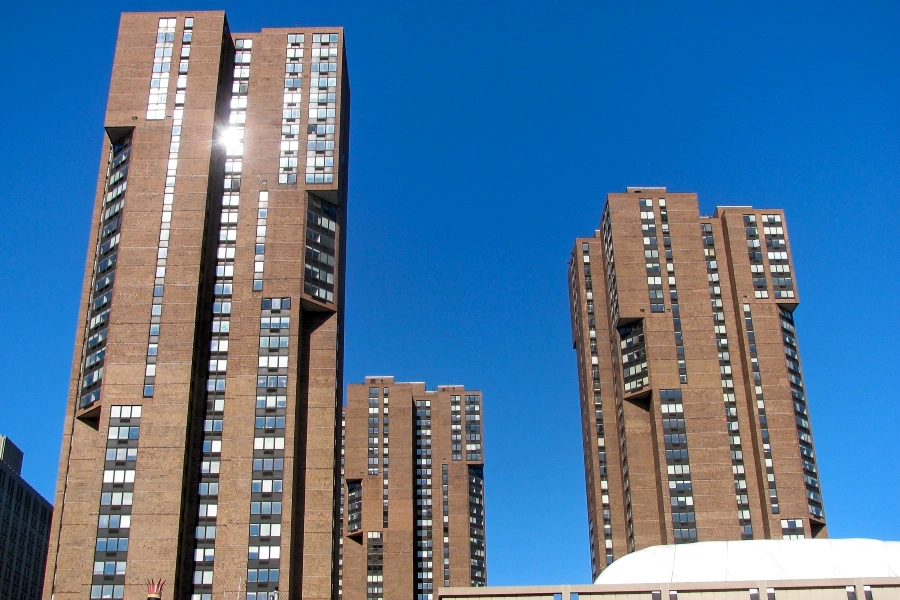
VU is a 100-residence condominium under plan CD190151, effective June 30, 2021. Public reporting stated that closings had started by April 2022, and sponsor and resale listings have appeared over time.
Dated 2026 public listings ranged from about $1.395 million to $8.695 million, but that span combined different apartment sizes and both sponsor and resale inventory. Compare the same line, size, floor, exposure, monthly cost, condition, and seller type.
Hillrose28 and Kips Bay Towers
Hillrose28 at 181 East 28th Street is a 43-residence condominium under plan CD190173, effective April 28, 2021. A public history reports that resale apartment 1402 sold for $2.85 million in February 2026.
Kips Bay Towers is a condominium, not a cooperative. Its website describes 1,118 residences across two towers. It is resale competition, not a current new-development project. Public-record based summaries reported 2026 sales examples from about $665,000 to $899,500.
How Sponsor Closing Costs Differ

In a typical resale, New York City and New York State transfer taxes are generally seller obligations. A sponsor contract may require the buyer to bear or reimburse those taxes. That changes the economic allocation between the parties, but it does not erase the statutory tax framework. The contract also may assign sponsor counsel fees, working-capital or reserve contributions, move-in charges, and other building-specific payments to the buyer.
The offering plan and contract should identify the amount, purpose, payor, and refund treatment of any working-capital contribution. A financed buyer may also face mortgage recording tax, lender title coverage, an optional owner title policy, attorney fees, bank-attorney charges, appraisal and recording fees, prepaid items, and building charges.
For an itemized estimate of a specific Kips Bay sponsor contract before signing, contact Brett to review the transaction in the context of the buyer’s price, loan, contract, and concessions.
Closing Costs at Current Kips Bay Price Points
.png)
Percentage ranges are planning tools, not statutory rates. A financed resale condominium is often modeled at roughly 3% to 5% of price, while a sponsor or new-development condominium may be modeled at roughly 4% to 7% when the buyer bears seller taxes and sponsor charges. Those ranges can be wrong for a particular deal. The actual estimate requires the price, loan amount, tax classification, contract allocation, possible gross-up, title quote, lender Loan Estimate, offering plan, building charges, and negotiated credits.
At a $988,000 sponsor unit with 80% financing, the loan is $790,400. The statutory mortgage-recording-tax total for an individual residential condominium loan of at least $500,000 is generally 2.175%. The typical borrower share is 1.925% when the lender bears the 0.25% special additional component, producing an estimated borrower amount of $15,215.20. If the contract shifts nominal seller transfer taxes, the NYC tax at 1.425% is $14,079 and the NYS base tax at 0.4% is $3,952, totaling $18,031 before any contract-specific gross-up. There is no mansion tax below $1 million.
At a $1.595 million sponsor unit with 80% financing, the loan is $1.276 million. The 1% buyer mansion tax is $15,950, and the typical 1.925% borrower mortgage-recording-tax share is about $24,563. Nominal shifted seller transfer taxes are approximately $29,108.75. The mansion tax plus shifted seller taxes therefore total about $45,058.75. Including the estimated borrower mortgage-recording tax, those three tax categories total about $69,621.75 before title, legal, lender, working-capital, and building charges.
These examples assume an individual residential condominium, no CEMA or blanket-mortgage credit, no exemption, no tax-changing concession, and no gross-up. The contract, attorneys, title company, and lender determine the final wire.
Mansion and Supplemental Tax Thresholds
.png)
New York State mansion tax starts at 1% when residential consideration is $1 million or more. A separate New York State supplemental transfer tax applies to qualifying New York City residential conveyances of $2 million or more. Combined buyer-side rates are 1% from $1 million to below $2 million, 1.25% from $2 million to below $3 million, 1.5% from $3 million to below $5 million, 2.25% from $5 million to below $10 million, 3.25% from $10 million to below $15 million, 3.5% from $15 million to below $20 million, 3.75% from $20 million to below $25 million, and 3.9% at $25 million or more.
The applicable rate is applied to the relevant consideration, not only the dollars above the threshold. A $999,000 residential purchase has no mansion tax, while a $1 million purchase generally creates a $10,000 buyer tax. For NYC residential conveyances of $3 million or more, New York State also imposes an additional base transfer tax of 0.25%, generally a seller obligation unless the contract shifts the economic burden. Credits and concessions require transaction-specific tax and lender review.
Deposits, Escrow, and Financing Protection

A 10% sponsor-contract deposit is common, not mandatory. A sponsor may request a different percentage or staged payments tied to construction milestones. Confirm the full schedule, escrow agent, bank, interest treatment, release conditions, and treatment of upgrade payments before signing. Attorney General rules generally require pre-closing purchaser funds to be held under a written escrow agreement in a segregated, federally insured account controlled by the escrow agent, with disclosure and notice protections. An IOLA structure can change how interest is handled.
Escrow protects custody of funds. It does not make a deposit freely refundable if the buyer changes course or defaults. A mortgage contingency is also not automatic. The rider should state the loan amount, commitment deadline, commitment standard, appraisal or project-review conditions, notice procedure, extension rights, and consequences if financing is unavailable at closing. A preapproval is not a final commitment to fund.
For many conventional loans, the lender evaluates both the borrower and project eligibility. Insurance, litigation, construction, sponsor ownership, budgets, reserves, commercial exposure, certificate status, and appraisal can affect review. Requirements vary by loan program.
Project Approval and Building-Level Underwriting

Review plan effectiveness, amendments, sponsor inventory, construction financing, insurance, reserves, projected owner occupancy, litigation, and violations. Unsold inventory does not automatically make a project unfinanceable, but a loan program may apply eligibility or concentration standards.
Compare any sponsor financing incentive with outside options. The rider should address changed lender terms, a low appraisal, or a closing beyond the rate lock. Put every credit and extension arrangement in the signed contract or rider.
Timelines and Certificates of Occupancy

A resale is often planned around 30 to 60 days after contract, though title, lender, and managing-agent issues can extend it. A sponsor closing may depend on plan effectiveness, construction, unit completion, notice, and certificate status. The signed outside date matters more than a sales-office estimate.
A temporary certificate of occupancy can permit legal occupancy while specified work remains incomplete. NYC Department of Buildings says a TCO typically expires after 90 days and may be renewed, but renewal is not guaranteed. Confirm that the certificate covers the unit and intended use, identify open work, review the sponsor obligation to obtain a final certificate, and ask whether the lender and insurer will proceed. DOB advises buyers to negotiate a closing based on a final certificate where practicable.
Rate locks follow the lender’s timetable, not the sponsor’s. A delay can require a paid extension or new lock, so coordinate the contract with a lease, another sale, and moving plans.
Read the First-Year Budget as a Forecast

Schedule A and Schedule B contain projected common charges, property taxes, income, and expenses. They are forecasts, not guarantees. Compare staffing, insurance, utilities, reserves, amenities, tax assumptions, abatements, and sponsor subsidies. Taxes may change after completion, reassessment, or an abatement.
Ask what changes when the building is fully occupied or sponsor support ends. Where operating history exists, compare projections with the current budget, financial statements, insurance, staffing, and reserves.
New construction does not guarantee a defect-free apartment or building. Document the walkthrough and punch list, set completion deadlines, and make sponsor repair commitments survive closing in writing. New York’s statutory housing merchant implied warranty applies only to qualifying new homes, including covered condominium units in structures of five stories or fewer. Taller projects should not be assumed to receive that statutory warranty, though an express contractual warranty or other legal remedies may apply.
What Is Negotiable

Government tax rates and statutory default liability are fixed, but a sponsor and buyer may negotiate who bears the economic cost. Depending on the apartment and sellout, buyers may ask about sponsor payment of transfer taxes, sponsor counsel, common-charge credits, working capital, storage, upgrades, closing timing, deposit staging, financing protection, rate buydowns, punch-list deadlines, and final-certificate safeguards.
A sponsor may prefer a credit over a price reduction because the price can affect remaining inventory and appraisals. Leverage varies by unit, sell-through, market conditions, and certainty of closing. Put every concession in the contract.
If You Are Selling a Resale Against New Development
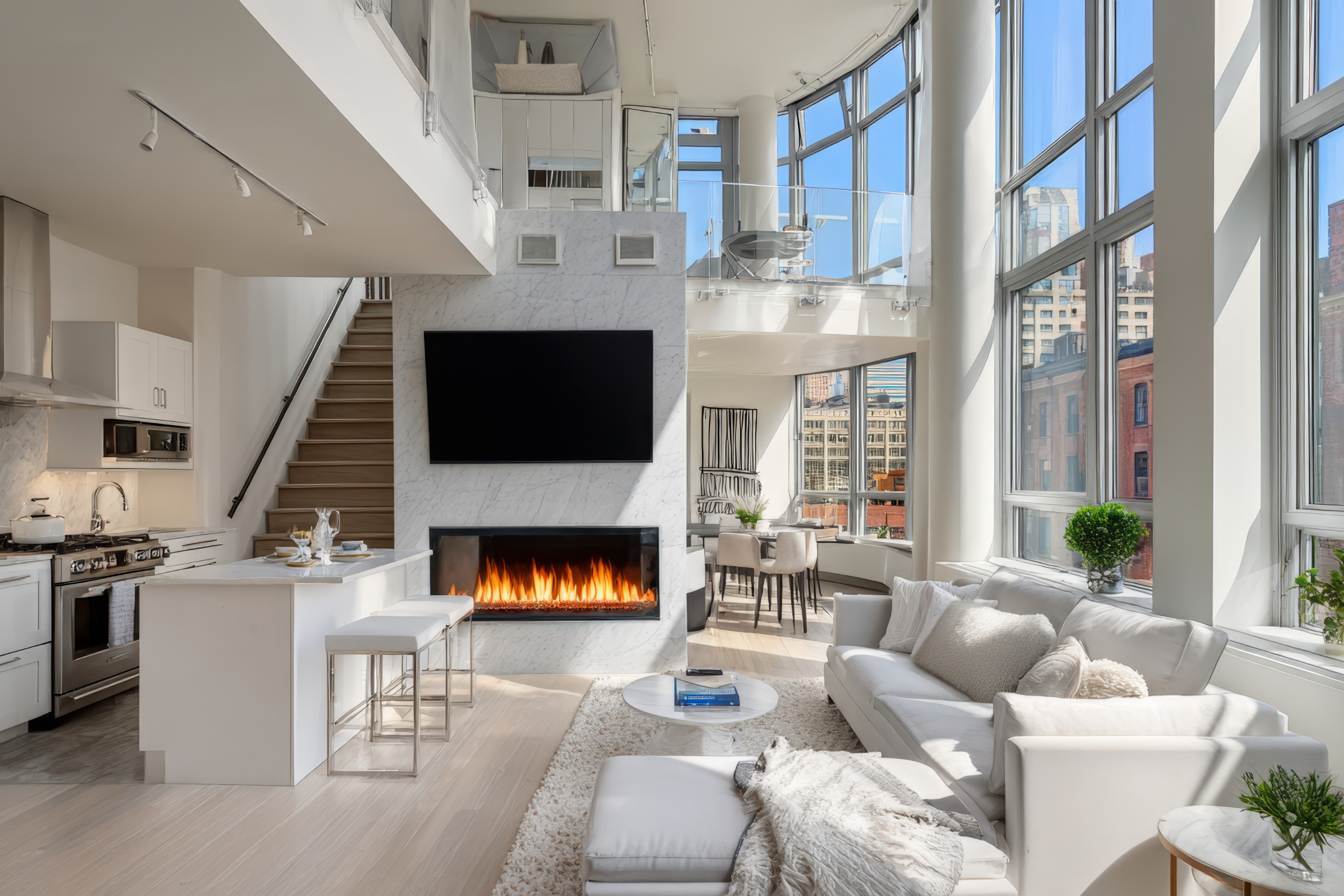
A resale can compete by offering actual operating history, current financial statements, a lived-in building, and a transaction schedule that is less tied to construction. It may also carry lower buyer closing costs if the sponsor alternative shifts seller transfer taxes and sponsor charges. Present those differences with a transaction-specific comparison rather than claiming that every sponsor purchase costs more.
Price against closed sales in the same building and comparable lines, then compare active sponsor and resale competition. Sponsor asking prices may include credits, tax concessions, model-unit presentation, or different buyer costs, so headline prices are not directly comparable. Calculate an effective price and total cash requirement for each option.
Prepare current financial statements, common-charge history, reserves, insurance, assessments, capital-project records, transfer requirements, and alteration documentation before listing. Buyers who toured a polished sales gallery will still value certainty. A complete file, accurate floor plan, clean presentation, documented repairs, and a realistic closing schedule can make the resale easier to evaluate.
Near $1 million, model search behavior and the mansion tax without letting the threshold override comparable sales and net proceeds. The launch price must still reflect the apartment, building, competition, and likely negotiating range.
Kips Bay New Development: Read Before Signing

Confirm whether the apartment is sponsor inventory or resale. Read the current offering plan and every relevant amendment. Itemize the closing costs, identify gross-up language, understand the deposit and financing protections, test the first-year budget, verify certificate status, and document delivery timing and sponsor obligations. Then compare total cash and monthly costs with established condominiums, not only with another sponsor unit.
If the choice is between a Kips Bay sponsor purchase and another New York City property, contact Brett to compare the contract, building evidence, and total transaction cost before committing.
Frequently Asked Questions
A sponsor purchase is a sale by the developer or another holder of unsold sponsor inventory. In a new condominium, it is usually the apartment’s first sale under the offering plan, but sponsor units can also remain in older conversions. The filed offering plan and amendments, executed contract and rider, declaration, bylaws, deed, and closing documents define the transaction. Confirm the seller’s status, plan number, latest amendments, projected or actual budget, certificate status, deposit terms, and every buyer charge. Marketing descriptions are useful for orientation, but material promises about taxes, completion, amenities, repairs, or concessions should appear in the signed documents.
Current examples include Eastlight at 501 Third Avenue, Hendrix House at 250 East 25th Street, VU at 368 Third Avenue, and Hillrose28 at 181 East 28th Street. Attorney General records list 144 Eastlight residences, 100 at VU, and 43 at Hillrose28. Hendrix requires extra care: its plan summary displays 59 residences, while an accepted amendment says the condominium increased from 59 to 60 and marketing uses 60. Kips Bay Towers is an established 1,118-residence condominium complex and a resale comparison, not a current new-development project. Always refresh inventory, seller type, asking price, and concessions for the exact apartment.
Closing costs depend on the actual contract, financing, taxes, and concessions. A sponsor buyer may use 4% to 7% of price as a rough planning range, while a financed resale condominium may be modeled around 3% to 5%, but neither range is a statutory rate. Shifted seller taxes, gross-up language, mansion and supplemental taxes, mortgage recording tax, title coverage, sponsor counsel, working capital, lender charges, prepaid items, and building fees can move the result materially. Ask the attorney, lender, and title company for an itemized estimate using the price, loan amount, current plan, contract allocation, and negotiated credits before signing.
Buyers often bear the sponsor’s NYC and NYS transfer taxes when the purchase agreement shifts those seller obligations, but the contract controls the economic allocation. The buyer’s mansion tax and NYS supplemental tax are separate buyer-side obligations. Ask for the nominal seller-tax calculation, any required gross-up, sponsor counsel fee, and every reserve or working-capital contribution in writing. A sponsor may agree to pay or credit selected costs, particularly for certain inventory or at a later sellout stage. The attorneys and title company should confirm the final taxable consideration because buyer-paid seller obligations and concessions can affect the calculation.
A 10% deposit is common, but it is not a universal statutory amount. The contract may require a different percentage or staged payments tied to milestones. Confirm the escrow agent, bank, account type, interest treatment, notice, release conditions, upgrade funds, and remedies if the sponsor or buyer does not perform. Attorney General escrow rules generally require covered pre-closing purchaser funds to be held under a written agreement in a segregated, federally insured account, subject to specific notice and release protections. Escrow protects custody, not a free cancellation right. Any financing contingency must state the loan amount, deadlines, project review, notice procedure, and deposit consequences clearly.
The closing date depends on plan effectiveness, construction, the contract notice procedure, unit completion, certificate status, title, lender approval, and sponsor scheduling. A temporary certificate can permit occupancy before the final certificate, but NYC Department of Buildings says it typically expires after 90 days and renewal is not guaranteed. Review the outside date, sponsor extensions, delivery condition, delay remedies, punch-list process, final-certificate obligation, and deposit risk. Confirm that the certificate covers the unit and intended use and that the lender and insurer will proceed. Coordinate the sponsor timetable with the mortgage rate lock, lease expiration, sale of another home, movers, and backup housing.