

A buyer can qualify for a mortgage and still fall short of a Manhattan co-op’s financial review. The missing number is often post-closing liquidity: board-recognized assets expected to remain after the down payment and closing costs are paid. At $6,500 in monthly mortgage and maintenance, an informal 12-to-24-month planning range equals $78,000 to $156,000 left after closing.
That money normally stays in the buyer’s accounts rather than being paid to the building. The board may want proof that the assets will remain available at closing. There is no Manhattan-wide legal multiplier, and every building can define the formula and acceptable assets differently. A rule of thumb is never a substitute for the current written application and transfer requirements.
What Post-Closing Liquidity Actually Means
For a co-op application, post-closing liquidity generally means liquid or near-liquid assets remaining after purchase cash, closing costs, and other required transaction funds are deducted. A planning worksheet may divide recognized assets by monthly carrying costs, such as mortgage principal and interest, maintenance, and assessments, to express the result in months.
Brokers and applicants sometimes model 12 to 24 months of carrying costs, but that is an industry planning assumption, not a citywide rule or verified standard for every board. A building may require less, more, a different denominator, or a case-by-case financial showing. Two years is a conservative test, not a promise of approval.
The requirement may appear in the board application, transfer policies, managing-agent instructions, or another current document. It is not necessarily in the proprietary lease or bylaws. Obtain the latest package and confirm exactly how the building values assets and expenses.
Calculate liquidity as of the expected closing date, not the offer date. A scheduled bonus, security vesting, tax payment, tuition bill, renovation budget, or delayed sale can change the available balance. Use conservative values for anything that may move before closing and keep a cushion beyond the stated minimum.
Why Co-op Boards Look at Remaining Assets
The co-op corporation owns the building and depends on shareholders to pay maintenance and assessments. Those payments support staff, insurance, repairs, reserves, taxes, and any underlying mortgage. A shareholder’s nonpayment can affect the corporation and other owners, so liquidity is one way a board evaluates financial resilience.
New York courts generally defer to board decisions made within the board’s authority, in good faith, and for a legitimate corporate purpose. That deference does not authorize discrimination, bad faith, self-dealing, action outside the governing documents, or inconsistent treatment without a bona fide reason. Financial standards should be objective, disclosed, and applied consistently, subject to applicable accommodation duties.
For the ownership and approval differences behind this review, read co-op vs. condo in NYC: the full guide.
How to Calculate Post-Closing Liquidity

A $6,500 Monthly Carrying-Cost Example
If the board counts a $4,500 mortgage payment and $2,000 maintenance, monthly carrying costs equal $6,500. Twelve months equals $78,000 and 24 months equals $156,000. Add an assessment or other recurring obligation only if the building includes it. The written policy determines the denominator.
A $2 Million Purchase Example
Assume a $2 million co-op, a 50% financing cap, and a $1 million, 30-year loan at a hypothetical fixed 6.5%. Monthly principal and interest is approximately $6,320.68. Add $3,000 maintenance and the example carrying cost becomes $9,320.68. Twelve months equals $111,848.16 and 24 months equals $223,696.33.
The down payment is $1 million. At exactly $2 million, the buyer generally owes a $20,000 New York State mansion tax and a $5,000 New York State supplemental tax applicable to NYC residential transfers. Both are buyer-side obligations under the current state framework. Attorney, lender, managing-agent, UCC, application, and other charges also require cash. The modeled $111,848 to $223,696 is remaining documented wealth, not another fee paid to the building.
The ordinary New York State base transfer tax and NYC real property transfer tax are generally seller-side obligations, unless the contract or a statutory exception changes the result. Co-op taxable consideration can also require transaction-specific analysis of allocated underlying debt. Work backward from purchase cash, transaction costs, carrying costs, and assets that must remain.
What Assets May Count

Cash and Marketable Securities
Checking, savings, money-market accounts, and other readily documented funds are usually the simplest assets to present. Publicly traded stocks, bonds, and mutual funds may also receive credit. A building may discount volatile assets under its written policy, but there is no uniform Manhattan haircut to assume.
Retirement Accounts
Retirement accounts may receive full, partial, or no credit depending on the building. Access restrictions, taxes, vesting, and withdrawal penalties can affect treatment. Lender reserve rules are separate from board rules, so mortgage approval does not establish that the co-op will value the same account the same way.
Real Estate, Businesses, Trusts, and Restricted Assets
Treatment of property equity, private-company interests, business assets, digital assets, trusts, restricted stock, and anticipated sale proceeds is building-specific. Ask whether the board requires evidence of access, vesting, valuation, lack of encumbrance, or a completed sale. Do not present unvested compensation as cash available today.
Gifts and Recent Deposits
A lender may permit a documented gift, while the board may apply a separate source-of-funds review. Trace recent transfers and large deposits with statements, gift letters, sale documents, or other evidence. Documentation standards should be objective and consistently applied. Until the source and availability are established, the lender or board may not credit the funds.
For a building-specific estimate before touring or offering, contact Brett to model the full financial picture.
Liquidity, Down Payment, and DTI Work Together
Down-payment and financing rules vary by building. A co-op may permit financing, cap the loan-to-value ratio, require a larger cash contribution, or require all cash. A larger down payment lowers debt service but consumes assets that might support post-closing liquidity. It can help or hurt depending on the complete calculation.
Some buildings also compare recurring debt with income, but there is no citywide co-op DTI rule. The board and lender may use different definitions, income periods, and treatment of obligations. Obtain the building standard and lender decision separately rather than relying on an uncited 25% or 30% benchmark.
Use four lines: purchase cash, transaction costs, monthly carrying costs, and remaining recognized assets. Test several loan amounts. The strongest structure is not automatically the largest down payment; it is the one that fits the building while leaving the buyer financially comfortable.
Keep the board worksheet separate from the personal emergency fund. A buyer can technically satisfy a building formula and still feel overextended after moving, furnishing, repairs, or an income interruption. Board approval is a transaction gate, not a complete financial plan, so preserve additional margin where possible.
Building Examples Show Why General Rules Fail
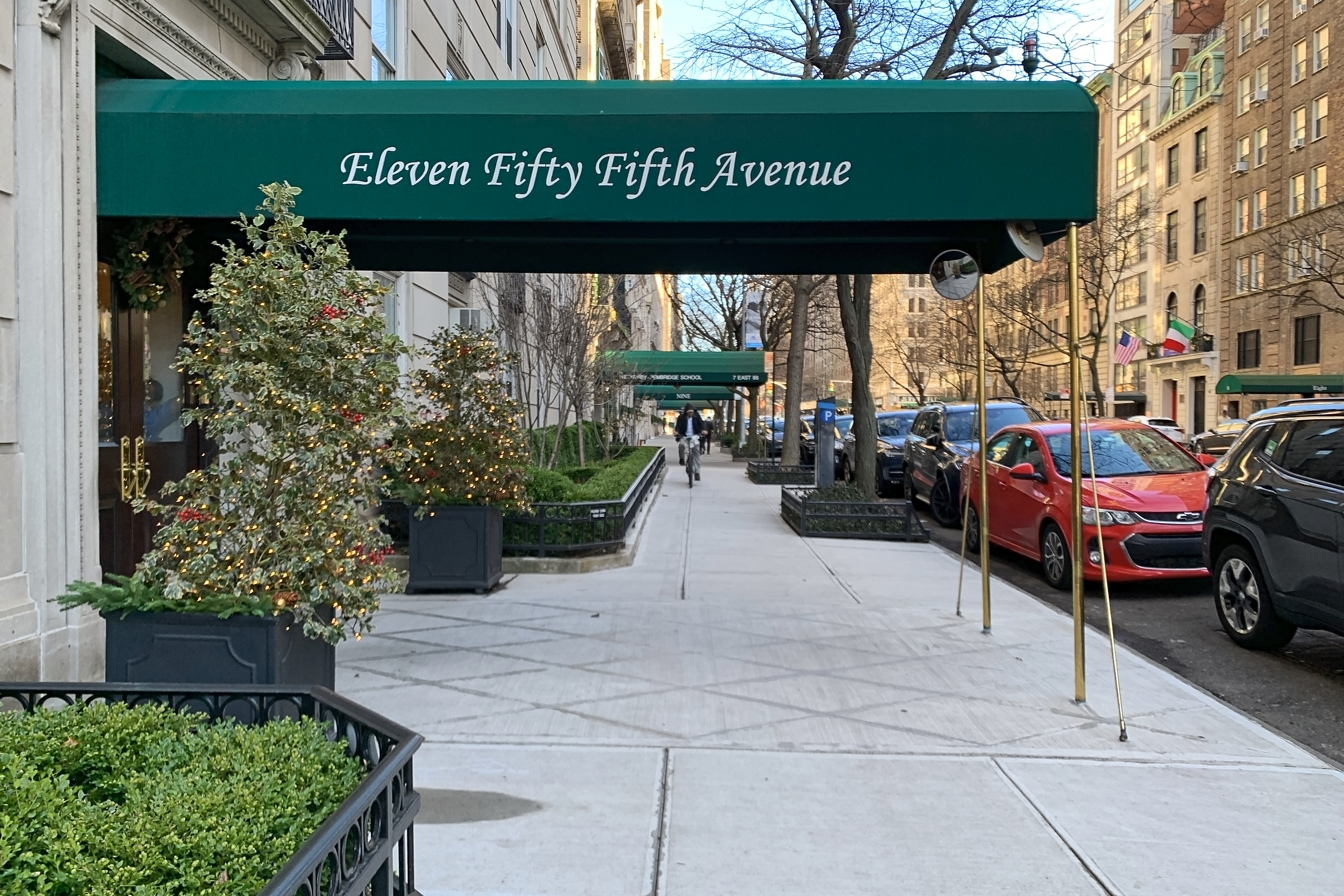
Management-provided information dated May 7, 2026 states that 1120 Park Avenue permits maximum financing of 50% of purchase price. Management-provided information dated August 12, 2026 says financing at 1050 Fifth Avenue is not a matter of right, allows at most 50% of apartment value to be pledged, lets the board use purchase price or an independent appraisal, and permits the board to approve less.
Public brokerage listings report that 1185 Park Avenue permits up to 50% financing, but the dated management page reviewed does not state the financing policy. Treat that as a lead to verify, not final authority. None of these public pages states a verified 12- or 24-month liquidity multiplier, so do not attach one to any address without the current application package or written managing-agent guidance.
Building fees also reduce closing cash. Dated management information for 1185 Park lists application processing, background, move-in, and financing charges. The 1050 Fifth page lists application, recognition-agreement, move-in, registered-mail, and refundable deposit charges. Fees change, and platform processing charges may be separate from building fees, so use the current package rather than copying an old schedule.
When reviewing a fee schedule, separate nonrefundable fees, refundable deposits, seller-paid transfer charges, lender charges, and platform processing costs. Only the buyer-paid cash due before or at closing reduces the post-closing balance, although a refundable deposit can still affect short-term cash availability.
Self-Employed and Variable-Income Buyers

Variable income can be approved, but it needs a clear record. For agency-eligible financing, Fannie Mae generally starts with a two-year self-employment history and documentation, with specified exceptions. Freddie Mac and individual lenders may use different requirements or overlays. A co-op board may separately request tax returns, business financials, ownership information, commission or bonus history, and explanations of unusual income.
Present the pattern rather than the strongest year. Separate vested, sellable compensation from unvested awards and explain one-time events or large account movements before review. Neither lender approval nor self-employment status establishes the building liquidity calculation, and no universal rule requires a self-employed buyer to hold more reserve months.
What to Do if You Are Short

First, verify the calculation. Confirm which assets count, whether securities or retirement accounts receive partial credit, which costs belong in the denominator, and whether the review uses a fixed multiplier. A wrong assumption can create a shortfall that does not exist.
Next, compare buildings and loan structures. Reducing the mortgage lowers monthly debt service but consumes more cash, so it helps only when the reserve benefit outweighs the lost liquidity. A documented gift, completed asset sale, or more time to build reserves may help, subject to board and lender rules.
Do not solve a liquidity shortage with money that is not actually accessible. A pending home sale, unsigned gift promise, unvested award, or business valuation may look substantial on a personal balance sheet but fail the building’s documentation test. Resolve timing and evidence before contract where possible.
A condominium usually does not use the same proprietary-lease and co-op board-consent structure, but its declaration and bylaws may provide a right of first refusal, waiver package, financial documentation, or other review. Lender and project underwriting still apply. Changing property type changes the analysis; it does not eliminate financial diligence.
The 2026 Co-op Application Timeline

Local Law 58 of 2026 was enacted January 29, 2026 and took effect July 28, 2026 for applications made on or after that date. It does not cover every co-op: exclusions include certain HDFC or government-supervised cooperatives and corporations with fewer than 10 dwelling units. Covered co-ops must maintain and provide their application and transfer requirements promptly upon request.
Within 15 days after receiving an initial or later submission, a covered co-op must acknowledge it by email and registered mail, state whether it is complete, identify missing items with citations to the requirements, and request needed clarification. If no timely acknowledgment is sent, the application is deemed complete when acknowledgment was due. A decision is due within 45 days after completeness is acknowledged or deemed.
The buyer may agree to an extension. The co-op may use one additional extension of up to 14 days with timely notice, and a qualifying summer recess can toll deadlines. Violations can produce civil penalties, but the law regulates procedure rather than setting liquidity, down-payment, or DTI standards. It does not automatically approve a purchase or require written reasons for denial under a separate proposal that had not been enacted in the official record reviewed.
If You Are Selling in a Building With a Liquidity Requirement

Know the building’s current written requirements before listing and share them with serious buyers early. A hurdle disclosed in week one can prevent an unworkable structure from surfacing after contracts, legal fees, and lost marketing time.
Compare execution risk with price. A slightly lower offer from a buyer who comfortably meets financing, income, and liquidity standards may be more compelling than a higher offer with little margin. That does not make the lower offer automatically better, and no screening guarantees approval. It means financial fit belongs in the decision.
Ask the buyer’s agent for a post-closing estimate supported by proof of funds while respecting law and confidentiality. Prepare the current application, transfer requirements, financial statements, underlying-mortgage information, assessments, and fees. Apply objective standards consistently and avoid requesting or using information tied to protected characteristics.
Price against the building and apartment line rather than assuming a stronger market will cure an application that does not fit. A clean package and realistic financial structure protect the seller’s timetable and reduce avoidable board risk.
Post-Closing Liquidity: Calculate It Before You Offer
Confirm the building’s down payment, DTI approach, liquidity formula, asset treatment, fees, and application requirements. Then calculate purchase cash, closing costs, carrying costs, and recognized assets remaining. That complete picture is the budget the buyer is actually shopping with.
If the choice involves a Manhattan co-op or another New York City property, contact Brett to compare the building rules and complete cash requirement.
Frequently Asked Questions
Post-closing liquidity is the board-recognized liquid or near-liquid wealth expected to remain after the buyer pays the down payment, closing costs, and other transaction cash. A planning formula may divide recognized assets by monthly carrying costs, such as mortgage, maintenance, and assessments, to express the result in months. The money generally remains in the buyer’s accounts rather than being paid to the building. At $6,500 per month, 12 months equals $78,000 and 24 months equals $156,000. The exact denominator, reserve period, and eligible assets are building-specific, so the current written application and transfer requirements control.
There is no Manhattan-wide legal requirement. Applicants and brokers sometimes use 12 to 24 months of carrying costs as an informal planning range, but a building may ask for less, more, or a case-by-case showing. Two years is a conservative stress test, not proof that every board requires or accepts it. Confirm whether the board uses a fixed multiplier, which monthly expenses it includes, and how it values each asset. Do not infer one building’s standard from another address or a prior buyer. The current application, transfer policy, managing-agent guidance, and attorney review are more reliable than a neighborhood rule of thumb.
Retirement accounts may receive full, partial, or no credit depending on the building’s written approach. Access restrictions, taxes, vesting, withdrawal penalties, and account ownership can make them less liquid than cash or a taxable brokerage account. Lender reserve rules are separate and may treat retirement assets differently, so mortgage approval does not establish the co-op board’s calculation. Ask whether the building uses the current balance, a discounted value, or excludes the account. Keep statements showing ownership, vesting, current value, withdrawal rights, loans, and restrictions ready, and avoid assuming that an inaccessible or unvested balance is available cash.
Condos usually do not use the same proprietary-lease and co-op board-consent structure, but that does not eliminate financial review. A lender may require reserves and project approval. The condominium declaration and bylaws may create a right of first refusal, waiver package, application, fees, financial documentation, or other conditions. A sponsor contract can add separate requirements. Moving from a co-op to a condo may remove one discretionary admission screen, but the buyer still needs enough cash for closing, lender reserves, taxes, monthly expenses, and unexpected repairs. Review the specific condominium documents and loan program rather than treating condo ownership as approval-free.
The board may deny or condition approval if the application does not meet a lawful building standard. First verify the calculation, asset treatment, and documentation because a mistaken assumption can create a false shortfall. A larger down payment can lower debt service but also consume liquidity, so model both sides before changing the loan. Additional qualifying assets, a documented gift, a completed sale, or more time to build reserves may help if board and lender rules permit them. Another building may use a different financing cap or asset policy. Do not assume a stated requirement will be waived, and understand the contract consequences of a denial before signing.
Co-op boards care because the corporation and shareholders are financially connected. Maintenance and assessments fund staff, insurance, repairs, reserves, taxes, and any underlying mortgage even when one shareholder has an income interruption or unexpected expense. Remaining assets give the board evidence that the buyer may continue meeting obligations after closing. Liquidity is only one part of the review alongside income, debt, down payment, credit, and governing documents, and no number guarantees approval. Board decisions must remain within authority, in good faith, for a legitimate corporate purpose, and compliant with federal, state, and city fair-housing and anti-discrimination law.