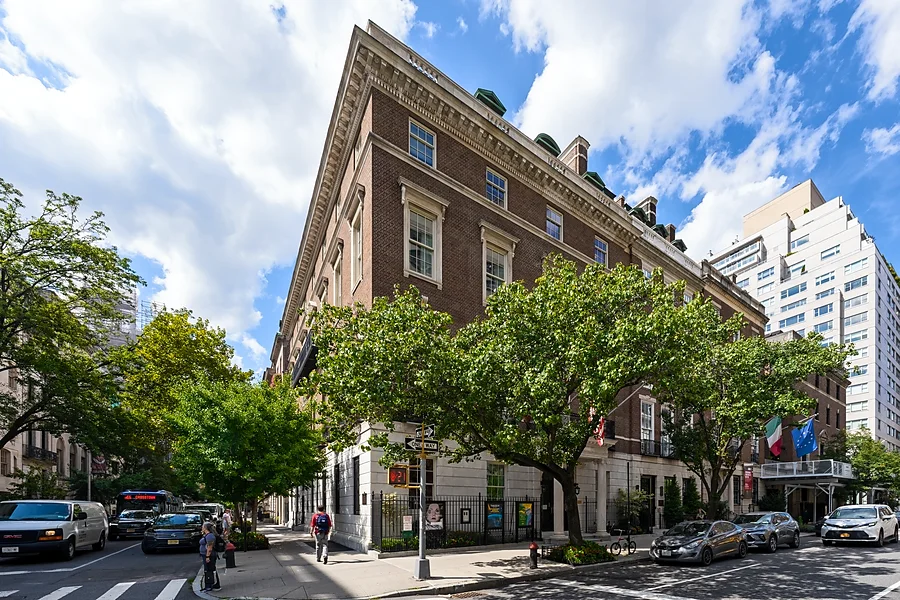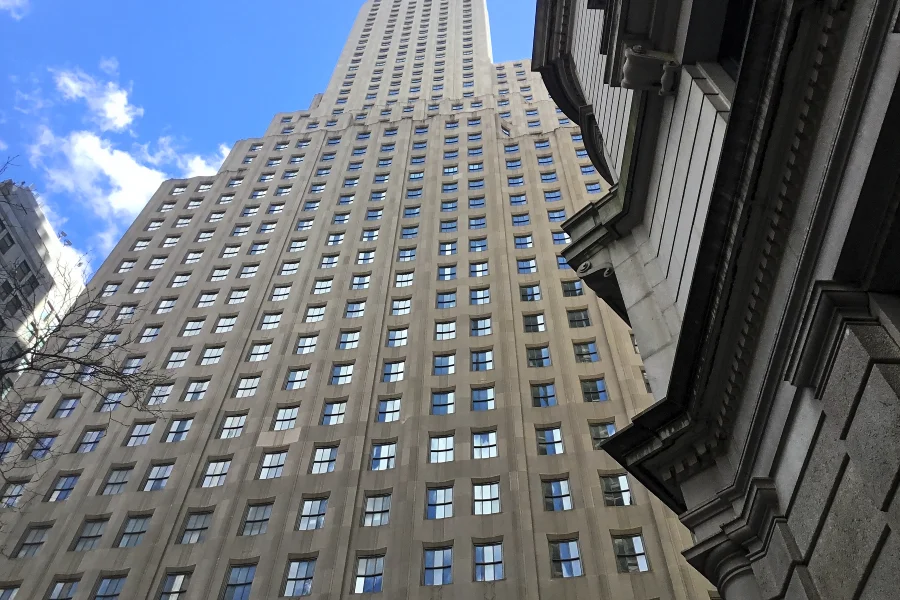

One Wall Street’s operative Attorney General plan lists 566 residences, while the legal plan for 130 William Street lists 244 even though several marketing sources use 242. Both projects had sponsor inventory visible in dated 2025 and 2026 records after reaching major filing, construction, and occupancy milestones. That is the challenge of evaluating a Manhattan new development: the apartment, legal status, operating budget, construction record, and current sellout position must be tested separately.
A sales gallery helps a buyer picture the home. The harder work is evaluating the building behind it. Read the current offering plan and amendments, research the sponsor and principals, verify certificates and construction status, stress-test projected common charges and taxes, model the complete closing statement, and put material promises into signed documents.
Start With the Offering Plan, Not the Price Sheet
The offering plan is the sponsor’s legally required disclosure document. Together with amendments, the purchase agreement and rider, declaration, bylaws, deed, and closing papers, it describes the project, apartment, common elements, costs, governance, risks, and sponsor obligations. Acceptance for filing by the New York Attorney General is not approval of the price, construction quality, projected expenses, or investment merit.
Acceptance for filing, effectiveness, and consummation are separate milestones. Acceptance means the plan has been filed. Effectiveness occurs after the plan’s stated conditions are satisfied and the required filing or notice is made. Consummation is later and generally requires effectiveness, filing of the condominium declaration, and a first title transfer. None of these labels alone proves that construction is complete or that a particular apartment is ready to close.
Read every filed amendment. Amendments can revise prices, budgets, tax projections, construction disclosures, certificates, sponsor information, board control, and closing terms. A rescission right may arise from a particular material adverse change or regulatory trigger, but it is not automatic for every amendment or delay. The attorney should identify changes affecting the unit, the required notice, and any deadline.
For a practical companion checklist, review these common mistakes when buying Manhattan new development before signing.
Read Schedule A and Schedule B as Projections
.png)
Schedule A generally identifies the apartment, approximate area, offering price, percentage of common interest, and projected first-year common charges and property taxes. Schedule B contains the projected first-year operating budget and its assumptions. These figures are important, but they are forecasts for a stated period rather than permanent ceilings.
Staffing, Amenities, and Operations
Compare staffing assumptions with the building size and promised services. Door staff, concierge coverage, resident management, cleaning, porters, security, pools, gyms, lounges, terraces, elevators, and mechanical systems create recurring costs. A modest projection is not automatically unrealistic, but the footnotes should show how the promised operation is funded.
Insurance, Utilities, Repairs, and Reserves
Review insurance, utilities, service contracts, maintenance, management fees, contingency, and reserves. Ask what is subsidized by the sponsor and what changes when support ends. Working capital and a reserve fund are different concepts. The plan should explain each amount, purpose, payor, use, and replenishment arrangement.
Property-Tax Assumptions
Projected taxes can change after completion, reassessment, or the phase-out of an exemption or abatement. Ask which assessment and benefit assumptions support the estimate, when reassessment is expected, and what taxes could be without the projected benefit. Compare the original projection with the latest amendment, adopted budget, and any actual operating results.
Research the Sponsor and Its Principals

Search the Attorney General’s database using the sponsor’s exact legal name, disclosed principals, project addresses, and plan numbers. Review filing dates, effectiveness amendments, withdrawn or abandoned plans, budget revisions, certificate disclosures, sponsor-controlled board provisions, unsold-unit obligations, and disclosed litigation or financial issues. The database is a starting point, not a complete litigation or financial-condition search.
Check prior projects through NYC building records for permits, complaints, violations, inspections, and certificates. Visit completed buildings where possible and ask objective questions about delivery, punch lists, common-charge changes, management, water intrusion, elevators, mechanical systems, and unresolved work. An unavailable document in the online database does not prove it does not exist; some records may require a request.
A first-time sponsor is not automatically a poor choice, and a long record is not automatically clean. Verify the people behind a single-purpose project company and compare disclosures with the physical and operating history of earlier buildings.
For a transaction-specific view of whether a Manhattan new development supports its asking price, contact Brett before signing.
Check the Project’s Actual Legal and Construction Status

One Wall Street is an office-to-residential conversion. Attorney General plan CD170216 classifies the project as rehabilitation, lists 566 residential units, records acceptance on May 3, 2018, and records effectiveness on January 11, 2023. First move-ins and closings began in early 2023. Dated public records showed sponsor inventory in 2025 and 2026, from a visible ask near $995,000 in a November 2025 snapshot to an $8.795 million four-bedroom listed in February 2026. Those are dated asks, not closed-sale evidence or a permanent range.
130 William is ground-up construction. Attorney General plan CD180040 lists 244 residential units, records acceptance on June 7, 2018, and effectiveness on December 4, 2019. Several sponsor, marketing, and architectural sources use 242 residences. The reason for that two-unit difference should be checked against the current Schedule A, amendments, declaration, and DOB records rather than guessed. Occupancy had begun by 2022, construction was reported complete in 2023, and dated 2025 and 2026 records still showed sponsor inventory, including a penthouse asking $20 million in September 2025 and $18 million in April 2026.
A current project can occupy a different stage. A plan may be accepted but not effective. Another can be effective while final construction or a permanent certificate remains outstanding. Verify the latest amendment, current certificate, unit coverage, and closing conditions rather than relying on phrases such as occupancy soon.
Conversion and Ground-Up Projects Need Different Questions

A conversion inherits an existing structure. Ask what was retained or replaced, including facade, windows, roof, elevators, plumbing, electrical systems, heating and cooling, fire protection, waterproofing, and structural components. Review the engineer’s description, known conditions, violations, and planned capital work. Disclosure of an existing condition does not necessarily mean the sponsor promised to correct it.
Ground-up diligence focuses more on construction execution, sequencing, approvals, substitutions, delivery condition, unit tolerances, finish schedules, common-element completion, amenity delivery, construction financing, and first-year operations. Neither category is inherently defect-free. Follow the actual construction history instead of assuming newer means lower risk.
Understand Deposits, Escrow, and Financing Risk

A 10% deposit is common in sponsor contracts, but it is not a universal legal rule. Confirm the amount, installments, due dates, escrow agent, bank, account type, interest treatment, release conditions, default provisions, and separate payments for upgrades. Attorney General rules govern custody and release of covered purchaser funds under the written escrow agreement.
Escrow protects custody and segregation. It does not make a deposit freely refundable if the buyer changes course or defaults. Never assume the contract includes a mortgage contingency. If financing is essential, state the loan amount, commitment deadline, notice procedure, appraisal and project-review conditions, extension rights, and what happens if a commitment expires before closing.
A preapproval is not a commitment to fund. Insurance, litigation, reserves, construction, appraisal, certificate status, sponsor ownership, and the budget may affect project eligibility. Fannie Mae standards apply only to loans intended for its programs; other lenders may use different standards. Ask the lender whether it has reviewed the exact project and how it handles rate-lock extensions.
Plan Around TCO, Final CO, and the Moving Date

A temporary certificate of occupancy can authorize legal occupancy of the covered portion while final work remains. NYC Department of Buildings says a TCO typically expires after 90 days and may be renewed, but renewal is not guaranteed. Confirm that the current certificate covers the apartment and intended use, identify outstanding work, and review the path and sponsor obligation for a final certificate. A final certificate has no expiration date.
The plan’s projected construction or first-closing date may not be a binding outside date. Read delay, extension, notice, certificate, default, security, and rescission provisions together. A delay does not automatically create a cancellation right. Coordinate the contract with a lease, another sale, movers, temporary housing, and the mortgage rate lock.
Document the Walkthrough, Punch List, and Warranty

Inspect before closing and document incomplete or defective work with photographs and precise descriptions. If work will continue after closing, place the punch list and sponsor’s repair commitment in enforceable closing documents and state that the obligation survives closing. The contract, rider, warranty, notice procedure, exclusions, and deadlines determine the remedy.
Do not assume every Manhattan high-rise receives New York’s statutory one-, two-, and six-year Housing Merchant Implied Warranty. The statute generally covers qualifying new homes, including eligible condominium units in buildings of five stories or fewer. High-rise purchasers should review the sponsor’s express warranty and contract. New construction can still have defects, open work, or future maintenance.
Where the Building Is in Its Sellout

Ask how many units are closed, in contract, available, sponsor-rented, or withheld from sale. Those categories are not interchangeable. The contracts used to declare effectiveness are not necessarily the current cumulative closings, and effectiveness does not guarantee unit-owner control.
Review the declaration, bylaws, plan, and amendments for sponsor board control, unsold-unit rights, rental rights, payment obligations, and transition conditions. A sponsor may retain influence through unsold units and board rights, but the duration and extent are project-specific.
Leverage also changes through a sellout. Early buyers may get broader selection while the sponsor protects pricing. Later buyers may get more operating history and sometimes flexibility on credits, taxes, storage, upgrades, or timing. Do not assume remaining units are inferior or that every late-stage sponsor will negotiate.
Compare New Development With a Resale Properly

Compare total cash, not asking price alone. Sponsor-condominium buyers sometimes use 4% to 6% as a preliminary closing-cost range, a financed resale condominium 2% to 4%, and a resale cooperative 1% to 2%. These are nonstatutory planning estimates, not quotes. Financing, price, shifted seller taxes, title coverage, sponsor counsel, working capital, building charges, and concessions can move the result materially.
At a $2 million wholly residential NYC condominium purchase, the buyer-side New York State mansion tax is $20,000 and the New York State supplemental tax applicable to NYC residential conveyances is $5,000. If the sponsor contract shifts the ordinary seller-side NYS base transfer tax and NYC RPTT to the buyer, the simple nominal calculation adds $36,500: $8,000 of NYS base tax plus $28,500 of NYC RPTT. The three categories total $61,500 before financing, title, legal, lender, building, or contract-specific NYC consideration adjustments.
For a wholly residential conveyance, combined buyer-side mansion and supplemental rates are 1% from $1 million to below $2 million; 1.25% from $2 million to below $3 million; 1.5% from $3 million to below $5 million; 2.25% from $5 million to below $10 million; 3.25% from $10 million to below $15 million; 3.5% from $15 million to below $20 million; 3.75% from $20 million to below $25 million; and 3.9% at $25 million or more. These cliff rates apply to the relevant consideration and exclude ordinary transfer taxes, mortgage recording tax, and transaction expenses.
New development may offer modern systems and finishes but not freedom from defects or maintenance. A resale supplies operating history, actual budgets, assessment records, and a settled physical record, but may need renovation or known capital work. Compare the specific homes rather than treating either category as automatically better.
If You Are Selling a Resale Near a New Launch

A nearby launch changes the buyer’s comparison. A resale can offer a more predictable schedule, actual common charges and taxes, financial statements, assessment history, and lower buyer costs when the sponsor alternative shifts transfer taxes and legal fees. Explain those differences with current figures rather than claiming every resale is cheaper.
Price against recent closed sales in the same building and line, then compare active sponsor and resale choices. A sponsor’s published price may include credits or different buyer costs. Normalize the effective price, apartment condition, monthly expenses, renovation, concessions, and timing before drawing a conclusion.
Presentation matters because buyers may arrive from a model unit. Fresh paint, repairs, lighting, decluttering, an accurate floor plan, and strong photography can sharpen the launch without implying every resale needs renovation. Prepare financial statements, insurance, assessments, capital-project records, transfer requirements, and alteration documents early so certainty becomes part of the offer.
Confirm the resale building’s transfer fees, waiver process, current assessments, and likely closing schedule before marketing the comparison. A clean document package and realistic timeline can be more persuasive than a broad argument about new versus old.
Manhattan New Development: Evaluate the Building, Not the Rendering
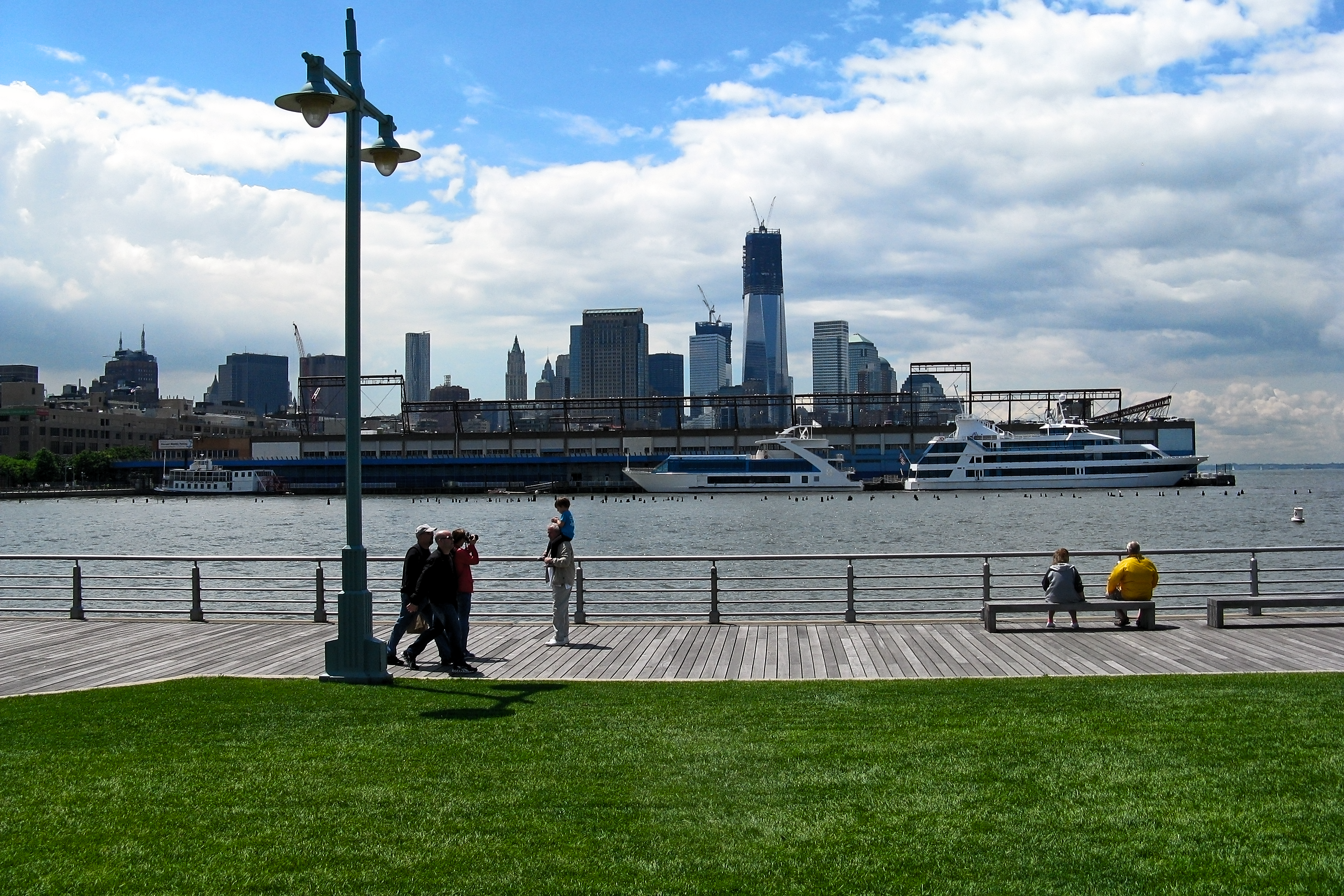
Read the current plan and amendments, test the budget and tax assumptions, research the sponsor, verify acceptance, effectiveness, certificate and closing status, understand deposits and financing risk, document the walkthrough, and compare total cash with a resale. The rendering explains the design. The documents explain the deal.
If the choice involves a Manhattan new development or another New York City property, contact Brett to compare the building evidence, contract, and complete transaction cost.
Frequently Asked Questions
Review the current plan and every amendment, then match them to the purchase agreement and rider. Focus on Schedule A, Schedule B, projected taxes, closing costs, deposit and escrow terms, financing protection, construction specifications, temporary and final certificate provisions, sponsor control, unsold units, default remedies, punch-list procedure, and warranty. Acceptance for filing is not government approval and differs from effectiveness and consummation. Ask the attorney to identify material changes, permitted substitutions, cancellation rights, notice methods, deadlines, and every cost or sponsor promise that must survive closing. Confirm that the unit description, common-interest percentage, floor plan, and finish schedule match what the buyer expects.
Evaluate the sponsor by researching the exact project entity, disclosed principals, prior addresses, offering-plan history, amendments, certificate records, litigation disclosures, unsold-unit obligations, and post-closing management record. Use the Attorney General database and NYC building records, but do not treat either as a complete litigation or financial-condition search. Visit completed projects where possible and ask objective questions about delivery, repairs, elevators, water intrusion, common-charge changes, and management responsiveness. Check the plan documents for sponsor financial disclosures, board control, and payment obligations. A first project can succeed and an experienced sponsor can have problems, so the useful answer comes from documented patterns rather than reputation alone.
No. Projected common charges and taxes are first-year forecasts based on assumptions, not guaranteed lifetime costs. Schedule A and Schedule B should show the projected charges, budget, and supporting footnotes for staffing, insurance, utilities, maintenance, reserves, amenities, management, and sponsor support. Actual costs may differ, and a subsidy, exemption, or abatement may end. Compare the original plan with the latest amendment, current adopted budget, and actual financial statements when available. Ask what the sponsor temporarily funds, how reserves are established, when reassessment is expected, and what taxes could be without a projected benefit. A low estimate is not automatically wrong, but the assumptions must support the promised operation.
Yes. A projected closing date can change when the contract permits it. Construction, plan amendments, lender requirements, unit completion, certificate status, and sponsor scheduling can move the timetable. A temporary certificate can permit occupancy of the covered portion before a final certificate, but DOB says it typically expires after 90 days and renewal is not guaranteed. Review the outside date, sponsor extension rights, notice periods, TCO or CO conditions, security, default provisions, and any rescission right. A delay alone does not always permit cancellation. Coordinate the contract with a lease, sale of another home, movers, temporary housing, and the mortgage rate lock, including extension fees and the risk of repricing.
A conversion adapts an existing structure, while ground-up construction creates a new building. For a conversion, investigate retained facade, windows, roof, elevators, plumbing, electrical, heating and cooling, waterproofing, structure, violations, and known conditions. For ground-up construction, focus on sequencing, approvals, substitutions, unit tolerances, finish schedules, common-element completion, amenities, and first-year operations. One Wall Street is a 566-residence rehabilitation conversion under its operative legal plan. The operative plan for ground-up 130 William lists 244 residential units, although several marketing sources use 242. Neither construction type is automatically safer or defect-free. The right diligence follows the building’s actual design, construction record, disclosures, certificates, and warranty.
Compare total cash, monthly expenses, condition, legal protections, construction status, operating history, and timing. Sponsor-condominium costs can rise when the contract shifts seller transfer taxes, sponsor counsel, working capital, or other charges to the buyer. A resale may offer actual budgets, assessment history, completed common areas, and a more predictable schedule, but it may need renovation or known capital work. Treat percentage closing-cost ranges only as preliminary estimates and obtain an itemized calculation from the contract, attorney, lender, title company, and building. Normalize concessions and effective price, then compare financing risk, taxes, common charges, reserves, insurance, warranty, and the buyer’s tolerance for construction or schedule uncertainty.