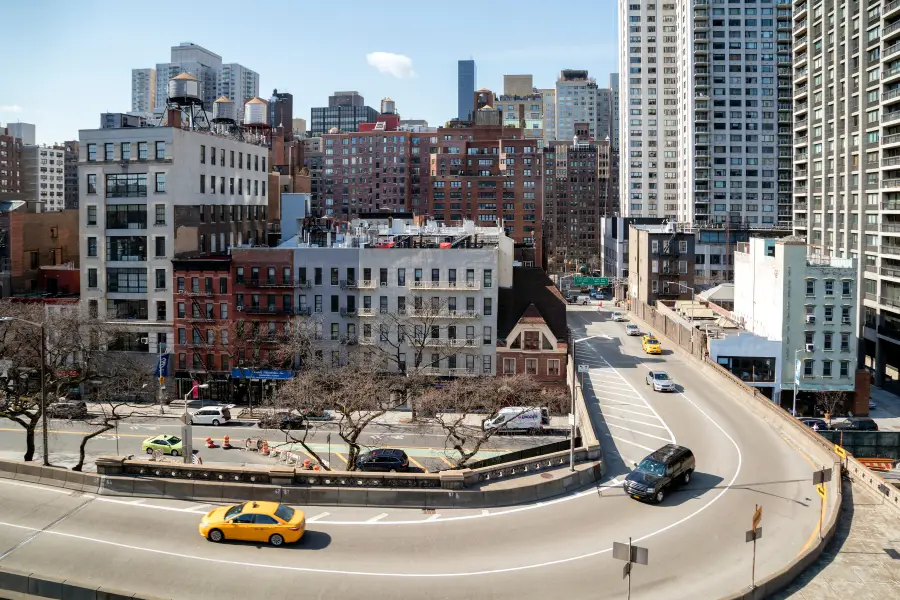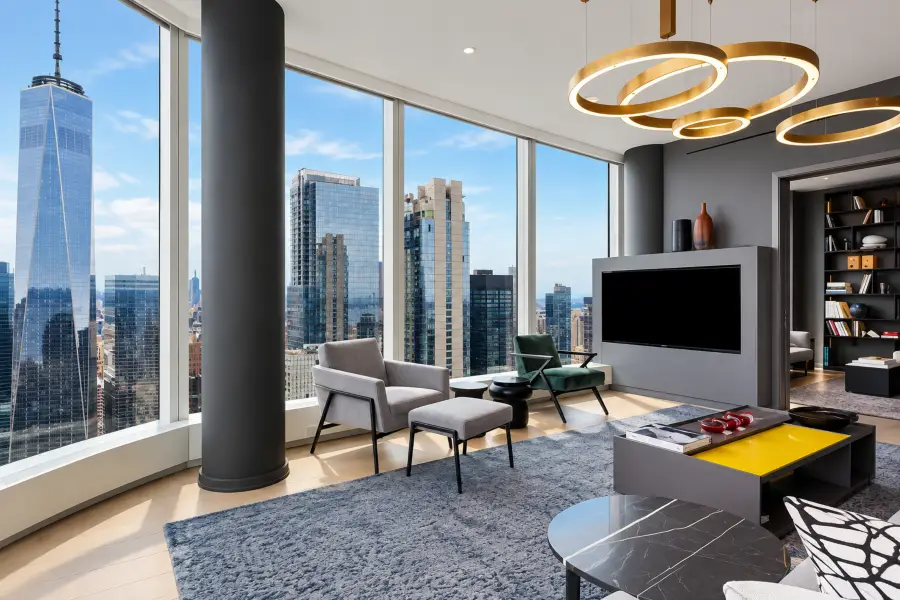

One Wall Street created 566 condominium residences inside a 1931 office tower. That is a true office-to-residential conversion. By contrast, 130 William is a ground-up tower with 244 residences in its legal plan. Those two buildings show why Financial District office conversions must be evaluated through their structure, systems, offering plans, and actual operating costs rather than a neighborhood label alone.
New York’s 421-g Lower Manhattan conversion incentive was used in 98 office buildings and produced 12,865 residential units. According to the Citizens Budget Commission, those homes represented about 43% of Lower Manhattan’s roughly 30,000-unit housing-stock increase from 1990 to 2020. Other conversions, ground-up development, and Battery Park City also contributed materially.
In Q1 2026, R New York’s combined FiDi and Battery Park submarket recorded a $1.30 million median sale price, 125 sales, and an average $1,427 per square foot. StreetEasy separately reported a 46.7% increase in combined buyer and renter searches for the Financial District, comparing January through November 2025 with the same period in 2024. These are market-context signals, not values for a specific converted apartment.
What Are Financial District Office Conversions?
An office conversion adapts an existing commercial structure for residential use. The original column grid, floor-plate depth, windows, core, facade, and portions of the building systems may shape the finished apartments. A ground-up residential tower begins with a new structure designed for residential use, although it still carries construction, delivery, warranty, and operating risks.
Conversions are not automatically condos. Lower Manhattan conversions have produced condominium and rental housing. In the NYC Comptroller’s post-pandemic citywide pipeline snapshot through Q1 2025, 16,510 of 17,432 identified units were rentals and 922 were condominiums. Confirm the legal ownership and plan type rather than inferring it from the building’s history.
For buyers, two similarly priced apartments can sit in buildings with very different origins and costs. Review the specific unit and building records rather than assuming one construction category is automatically better.
Conversion and Ground-Up Buildings Side by Side

A useful way to see the difference is to put two buildings beside each other.
One Wall Street
One Wall Street is a 566-residence office-to-condo conversion inside a tower completed in 1931. Its New York Attorney General offering plan became effective on January 11, 2023, and the conversion was completed in 2023. StreetEasy snapshots in late 2025 and 2026 showed sponsor asking prices from approximately $995,000 to $8.795 million. Asking inventory changes frequently, and plan effectiveness, legal occupancy, completion, sponsor inventory, and sellout are separate facts.
130 William Street
130 William is a 66-story ground-up condominium. The New York Attorney General offering plan identifies 244 residential units, while official developer and architect materials market 242 residences. The tower completed construction in 2023. Selected 2026 recorded sales ranged from approximately $1.325 million to $7.06 million. These are examples, not a building-wide value range, and 130 William was not an office conversion.
The Wider Inventory
99 John Street and Greenwich Club at 88 Greenwich Street are office-to-rental-to-condominium conversions. The 2008 condominium offering at 99 John was reported as 442 apartments, while current public building databases variously report 438 or 439 residences. Public building records generally report 452 residences at Greenwich Club, while some marketing copy uses 457. The recorded declarations and amendments should control. By contrast, 125 Greenwich Street, 15 William Street, and 77 Greenwich Street are ground-up projects.
Neither approach is inherently better. Compare apartment layout, building systems, current costs, reserves, legal status, and long-term capital needs. For a broader purchase framework, read buying a condo in the Financial District.
What to Check in a Conversion Specifically
A conversion requires more verification of existing conditions, system capacity, and construction sequencing than a blank-slate project. Ground-up construction has fewer inherited-condition questions but remains exposed to ordinary design, construction, delivery, and warranty risks.
Ask what was retained, replaced, repaired, or adapted. Review facade, windows, roof, elevators, plumbing, electrical service, heating and cooling, fire protection, waterproofing, and structural components. Retention alone does not prove deferred maintenance; condition, useful life, capacity, warranty, and reserve funding matter.
Evaluate each apartment’s legal rooms, windows, ceiling heights, columns, mechanical chases, acoustics, ventilation, and usable furniture placement. Deep office floor plates can influence layouts, but do not assume every conversion has dark interiors or awkward rooms.
Compare the first-year operating budget with the latest amendment and actual operating results when available. Amenities can add staffing, utility, insurance, repair, and replacement costs, but the full budget, commercial income, unit count, sponsor subsidies, and common-interest allocation determine common charges.
Review projected property taxes, current assessments, abatements, and phase-out schedules. The first-year figure is a projection, not a permanent guarantee.
If you want a straight answer on what a specific Financial District conversion may cost to own before you offer, reach me at TheNewYorkCityBroker.com/contact-me and I can assist you.
What It Costs to Buy

Budget closing costs by line item. As a preliminary planning range, not a quote, buyers often budget roughly 3% to 5% for a financed resale condo and roughly 4% to 7% or more for a sponsor or new-development purchase. The actual total depends on the contract, financing, title, building fees, taxes, and whether the purchaser absorbs seller-side costs.
In a sponsor transaction, the contract controls who bears New York State and NYC transfer taxes. Sponsor contracts often shift seller-side transfer taxes and may add sponsor counsel, working capital, or other disclosed charges, but this is a contractual allocation rather than a universal rule. The buyer may also pay mortgage recording tax, title and lender charges, mansion tax, building fees, and prepaid adjustments.
For NYC residential purchases, New York State generally imposes a 1% mansion tax at $1 million or more. A separate NYC supplemental residential tax starts at $2 million. Together, the buyer-side rates are 1% from $1 million to $1,999,999; 1.25% from $2 million to $2,999,999; 1.5% from $3 million to $4,999,999; 2.25% from $5 million to $9,999,999; 3.25% from $10 million to $14,999,999; 3.5% from $15 million to $19,999,999; 3.75% from $20 million to $24,999,999; and 3.9% at $25 million or more.
At a $1.30 million purchase price, 20% down is $260,000 and the buyer mansion tax is $13,000. A $1.04 million mortgage produces a total statutory mortgage-recording-tax calculation of $22,620 at 2.175%. For a qualifying individual residential condo mortgage, the commonly quoted borrower-side portion is $20,020 at 1.925%, while a 0.25% component may be paid by the lender under the applicable facts. The property classification, lender, mortgage documents, and ACRIS calculation control. Title, legal, lender, building, and prepaid charges are additional.
If a sponsor contract shifts ordinary seller transfer taxes on a $1.30 million residential condo, the NYC transfer tax at 1.425% is $18,525 and the New York State base transfer tax at 0.4% is $5,200, for approximately $23,725 combined before any unusual exemption, credit, or contractual adjustment. The offering plan and contract determine the final allocation.
Common Charges and Reserves in a Conversion
First-year common charges and taxes are projections. Compare Schedule A and Schedule B with the latest adopted budget, financial statements, reserve information, insurance, staffing, utilities, commercial income, sponsor-paid expenses or subsidies, assessments, and the unit’s common-interest percentage. A low first-year projection is not a guarantee of future costs.
A converted tower may retain some systems and replace others. Retained elements are not automatically future liabilities, while replaced systems are not automatically free of defects. Review condition, commissioning records, warranties, maintenance responsibility, and remaining useful life.
Amenities can increase operating and replacement costs, but they do not determine common charges by themselves. Ask what each amenity costs to staff, insure, maintain, and eventually replace, and what revenue or subsidy offsets those expenses.
A reserve draw in an early operating year is not automatically alarming. Ask what funded the expense, whether it was anticipated, and how the reserve will be replenished.
If the building has operated for a year or more, compare projected and actual figures. The gap is often more useful than either number alone.
Timing, Certificates, and Transfer Procedures

A straightforward resale condo may target roughly 30 to 60 days from a fully executed contract, but that is a planning range only. Financing, title, appraisal, managing-agent documents, and any waiver of the board’s contractual right of first refusal can extend it. The declaration, bylaws, managing-agent procedures, and contract control; this is not co-op-style discretionary approval.
A sponsor closing can be tied to offering-plan effectiveness, unit completion, and a temporary or final certificate of occupancy. These are separate milestones. A temporary certificate of occupancy means DOB considers the covered portion safe for occupancy while outstanding items remain before a final certificate. Confirm coverage, expiration, renewal history, the path to a final certificate, and lender acceptance.
Ask the lender whether it has approved the project and will close on the current certificate status. Review the contract’s outside date, delay rights, financing contingency, deposit, and default provisions.
If You’re Selling a Conversion Unit
Price against recent sales in your building and line, then compare active sponsor and resale inventory. A neighborhood median cannot adjust for floor, exposure, layout, condition, monthly costs, sponsor concessions, or shifted buyer taxes.
A resale may offer more predictable timing and lower buyer closing costs than remaining sponsor inventory. Explain that advantage using the actual sponsor terms and your resale estimate rather than claiming every sponsor deal costs the same.
Common charges belong in the pricing conversation. If yours are higher, explain what services, space, reserves, or capital work the difference supports. Buyers compare total monthly obligations, not only asking prices.
Prepare financial statements, current budgets, common-charge history, reserves, insurance, assessments, facade and elevator records, and planned capital work before listing. Conversion buyers may focus closely on retained systems and the gap between projected and actual costs.
Presentation matters because sponsor units may be staged. Fresh paint, repairs, lighting, decluttering, an accurate floor plan, and strong photography help buyers understand the resale without pretending every unit needs renovation. Build a seller net sheet covering brokerage, transfer taxes, legal and managing-agent fees, move-out costs, mortgage payoff, and any building transfer fee.
Financial District Office Conversions: Verify the Building History
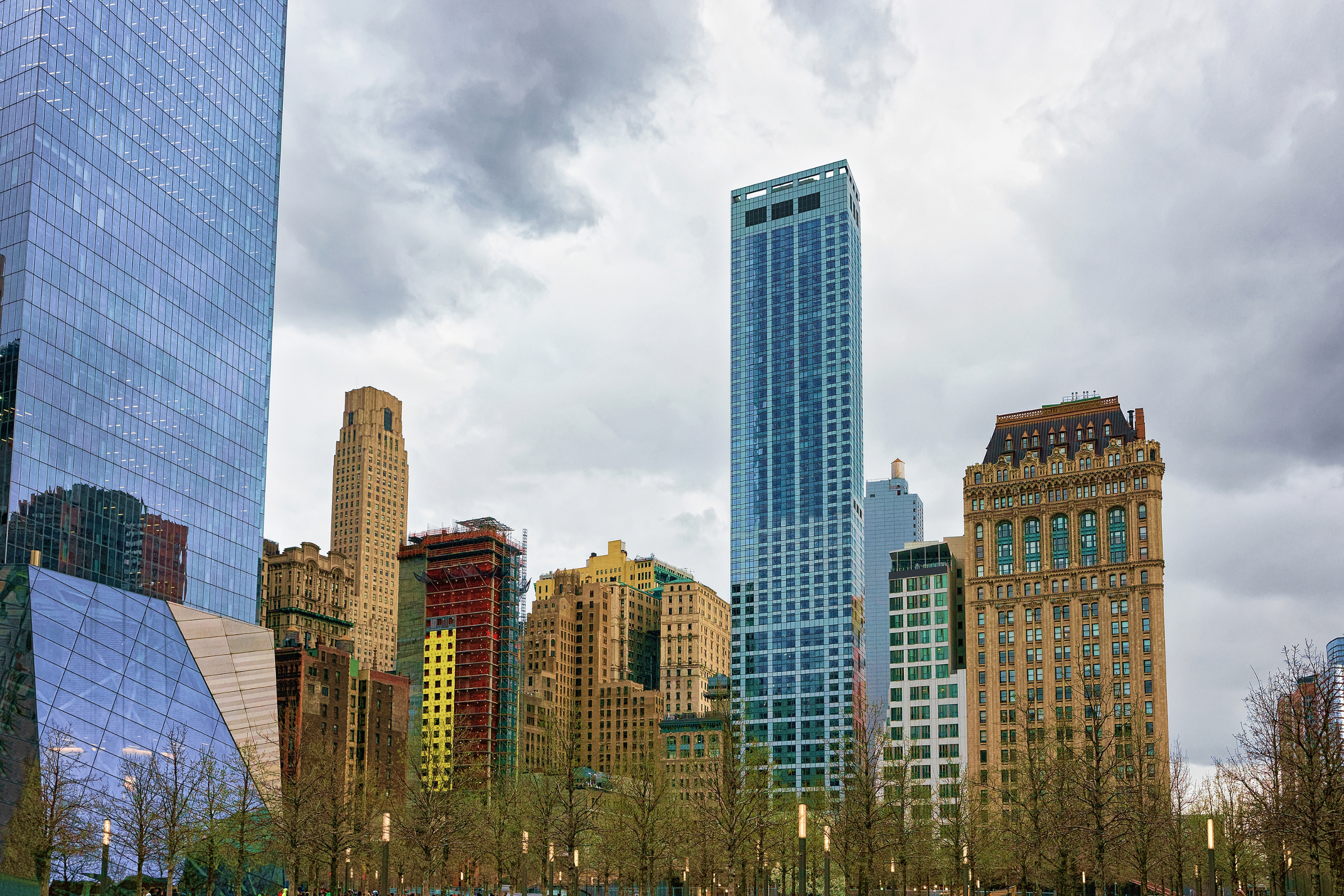
Confirm whether the building is a true conversion, what systems and structural elements were retained, and which legal and construction milestones have been reached. Then compare actual monthly costs and total closing cash with ground-up and resale alternatives.
Insurance and flood resiliency deserve building-specific review. Check the current FEMA flood map, the building’s elevation and water-intrusion history, the location of critical electrical and mechanical equipment, the master property and flood coverage, deductibles, exclusions, lender requirements, and completed or planned resilience work. Standard property policies generally do not cover flood damage. A high-floor apartment can still be affected by damage to entrances, elevators, electrical rooms, mechanical systems, storage, or common areas. These are property and operating facts, not neighborhood safety claims.
Commercial spaces also deserve attention because their operations, insurance, ownership, and share of common expenses can affect the residential budget. Confirm whether systems are shared and which party is responsible for facade, roof, mechanical, and loading-area work. Before offering, make one written comparison across the apartments under consideration. Include purchase price, down payment, closing costs, common charges, taxes, assessments, insurance, sponsor concessions, renovation needs, and expected capital work. Add the plan and status questions too: sponsor or resale inventory, current amendments, certificate status, open permits, litigation, reserves, and sponsor control.
Ask the attorney to compare the declaration, bylaws, offering plan, and amendments with the marketing materials. Confirm the unit’s common-interest percentage, boundaries, storage or terrace rights, alteration rules, leasing restrictions, and sponsor-retained rights. If the building has unsold sponsor units, review sponsor payment obligations, board-control provisions, rental rights, and how long the sponsor may influence operations. These facts are not automatically negative. They affect governance, financing, and future resale.
For an older conversion resale, ask whether original conversion work remains covered by an enforceable warranty and whether later capital projects replaced it. For sponsor inventory, put promised finishes, appliances, dimensions, credits, and repair obligations into the contract or rider. Review the apartment’s alteration history as well. A later owner may have moved walls, combined rooms, changed plumbing, or enclosed space after the original conversion. Confirm that material work received building and city approvals and that the current floor plan matches the legal and physical condition. An attractive renovation can still create diligence, insurance, or resale problems when permits and sign-offs are missing.
Ask how the condominium allocates expenses between residential and commercial components. A mixed-use declaration may assign different percentages, limited common elements, or maintenance duties to each group. Review whether a major repair can be charged only to one component or shared across the whole condominium. That allocation can affect future assessments even when the apartment’s current common charges look reasonable. Visit more than one apartment line when possible. Conversions can produce varied layouts because columns, windows, cores, and shafts remain fixed. The building’s history is useful context, but the specific apartment and documents determine whether it works for you.
If you’re weighing a Financial District conversion or another New York City property, contact Brett through TheNewYorkCityBroker.com/contact-me to talk through the right next step.
Frequently Asked Questions
An office-to-residential conversion adapts an existing commercial building for apartments. The original structure, columns, floor plates, windows, facade, and core may shape the residential layouts and systems. One Wall Street is a clear Financial District example, with 566 residences created inside a 1931 office tower. A conversion may become condos, rentals, or mixed use, so ownership form should be confirmed in the offering plan. Buyers should review what was retained, replaced, repaired, or adapted and verify condition, capacity, remaining useful life, warranties, and reserve funding rather than assuming conversion means inferior or superior construction. The legal plan, current amendments, building records, and physical inspection should all tell the same story before the buyer relies on a marketing description.
One Wall Street, 99 John Street, and Greenwich Club at 88 Greenwich Street are clear office-conversion examples. One Wall Street became a 566-residence condominium. 99 John began as a 1933 office tower, became rentals in 1999, and converted to condos around 2007 to 2008. Greenwich Club began as a 1929 to 1930 office building and became condominiums in 2007. By contrast, 130 William, 125 Greenwich, 15 William, and 77 Greenwich are ground-up projects. Public unit counts differ for some older buildings, so legal declarations and offering plans should control.
Buyers should review the effective offering plan and amendments, engineer report, DOB permits and sign-offs, certificate records, financial statements, reserves, assessments, board minutes, facade and elevator history, system specifications, warranties, and planned capital work. Ask what was retained, replaced, repaired, or adapted, then confirm condition, capacity, useful life, maintenance responsibility, and reserve funding. Review apartment layout, legal rooms, windows, ventilation, acoustics, heating and cooling, columns, and furniture placement. For sponsor inventory, also examine deposit, financing, delivery, closing-cost, and certificate provisions before signing.
Conversions begin with an existing structure, so they require more verification of inherited conditions, system capacity, floor plates, facade, elevators, waterproofing, and construction sequencing. Ground-up projects have fewer inherited-condition questions but still carry design, permitting, construction, delivery, warranty, and first-year operating risks. One Wall Street is a conversion, while 130 William is ground-up. Neither category is automatically better, more reliable, or free of defects. Compare the specific apartment, current records, actual operating costs, reserves, construction status, and long-term capital plan instead of choosing by category alone.
Closing costs depend on whether the unit is a resale or sponsor sale, whether it is financed, and which costs the contract assigns to the buyer. A financed resale condo may require roughly 3% to 5% as a planning range, while a sponsor conversion may run around 4% to 7% if transfer taxes, sponsor counsel, working capital, and other charges are shifted to the purchaser. A cash resale can be lower. Mansion tax begins at $1 million, mortgage recording tax applies to financed condos, and title, lender, legal, building, prepaid, and adjustment charges vary. Obtain a transaction-specific estimate. Ask the attorney and lender to model the exact purchase before signing because the loan size, title premium, sponsor allocations, tax thresholds, and building charges can materially change cash needed at closing.
Common charges can change when actual staffing, insurance, utilities, repairs, reserves, taxes, amenities, and sponsor subsidies differ from first-year projections. Conversion status alone does not prove charges will rise. Compare Schedule A and Schedule B with the latest amendment, adopted budget, audited financial statements, reserve balance, and assessment history. Ask what the sponsor temporarily funds and when that support ends. Amenities and retained systems can add costs, but the complete budget, commercial income, unit count, common-interest allocation, and capital plan determine the result. A first-year projection is useful evidence, not a permanent guarantee. For an operating building, compare at least two years when available and ask whether unusual repairs, temporary subsidies, or delayed amenities distort either period.