

Selling a UES co-op with high maintenance is not solved by apologizing for the monthly number or cutting the price automatically. Buyers compare the purchase price, share-loan payment, maintenance, assessments, financing rules, and cash expected after closing. A lower price can still feel expensive when the monthly burden is unclear.
The seller’s job is to show what the charge funds, compare the apartment with genuine co-op alternatives, document the building’s finances, and calculate the likely net at several contract prices. High maintenance is a valuation factor, not a verdict. When the building record supports the expense, clear evidence can be more persuasive than defensive marketing.
Why High Maintenance Changes a UES Co-op Sale
A buyer shops with a monthly budget, not only an asking-price ceiling. Two one-bedrooms can have similar prices but reach different audiences if one carries much higher maintenance. The higher monthly charge can affect lender debt-to-income analysis, board financial review, post-closing liquidity, and the buyer’s willingness to renovate after closing.
Maintenance also compounds over time. A $650 monthly difference equals $7,800 a year and $39,000 over five years before increases. That does not mean the apartment should be discounted by exactly $39,000. The lower-maintenance apartment may be smaller, less renovated, missing services, or facing future capital work. The comparison must normalize apartment and building quality.
Separate three numbers before pricing: recurring maintenance, temporary assessments, and the buyer’s own share-loan payment. Combining them into one unexplained figure makes the apartment look riskier than it may be. Showing the amount, purpose, duration, and included services lets buyers and their advisers test the actual obligation.
What UES Co-op Maintenance Actually Covers

Read the Charge Line by Line
Maintenance generally represents the apartment’s allocated share of the co-op corporation’s cash needs. It may fund staff, management, common utilities, insurance, repairs, reserves, real-estate taxes, and debt service on the building’s underlying mortgage. Exact inclusions are building-specific. Interior electricity, cable, apartment repairs, or other items may remain separate.
The underlying mortgage is corporate debt secured by the building, not the buyer’s personal share loan. Its debt service can still affect maintenance and resale value. Review principal balance, interest rate, maturity, amortization, and refinancing plans. A low current charge can rise after refinancing, while a higher charge may already reflect conservative funding or completed capital work.
Separate Maintenance From Assessments
A regular maintenance charge is recurring and budgeted. A special assessment is a separate levy that may fund facade work, elevators, a roof, a deficit, insurance, reserves, or another project. Confirm the amount, start and end dates, purpose, remaining balance, and whether another assessment is contemplated.
The contract should state who bears installments before and after closing and whether the seller pays the balance, gives a credit, or allocates by closing date. Do not advertise an assessment as ending on a date unless management confirms it in writing. An explained temporary assessment is easier to evaluate than an unexplained increase hidden in the monthly total.
How to Price a UES Co-op With High Maintenance
Start With the Building and Line
Prioritize recent closed sales in the same building and line. Adjust for floor, exposure, legal layout, usable size, condition, outdoor space, storage, and timing. If the same line has not traded recently, move outward carefully to apartments with similar services, financing rules, board standards, and monthlies.
Use active listings as competition, not proof of value. A listing that has sat for months or taken repeated reductions may show buyer resistance, but only a closed sale establishes an accepted price. Preserve dated listing histories and separate asking, contract, and closing figures throughout the analysis.
Adjust for Carrying Cost Without Double-Counting
Do not subtract an arbitrary amount because maintenance looks high. First compare what the buyer receives and whether the apartment is larger or better positioned. Then model the monthly difference under realistic financing. If a competing apartment costs $100,000 more but saves $1,000 a month, the higher price may still fit some buyers better while requiring more cash at closing.
Price at three levels: the launch ask, a realistic contract range, and the minimum acceptable net. Test each against buyer monthly cost, likely board qualification, current inventory, and expected negotiation. The best ask attracts enough qualified buyers to create leverage without ignoring the expense they will underwrite.
What Current UES Examples Show
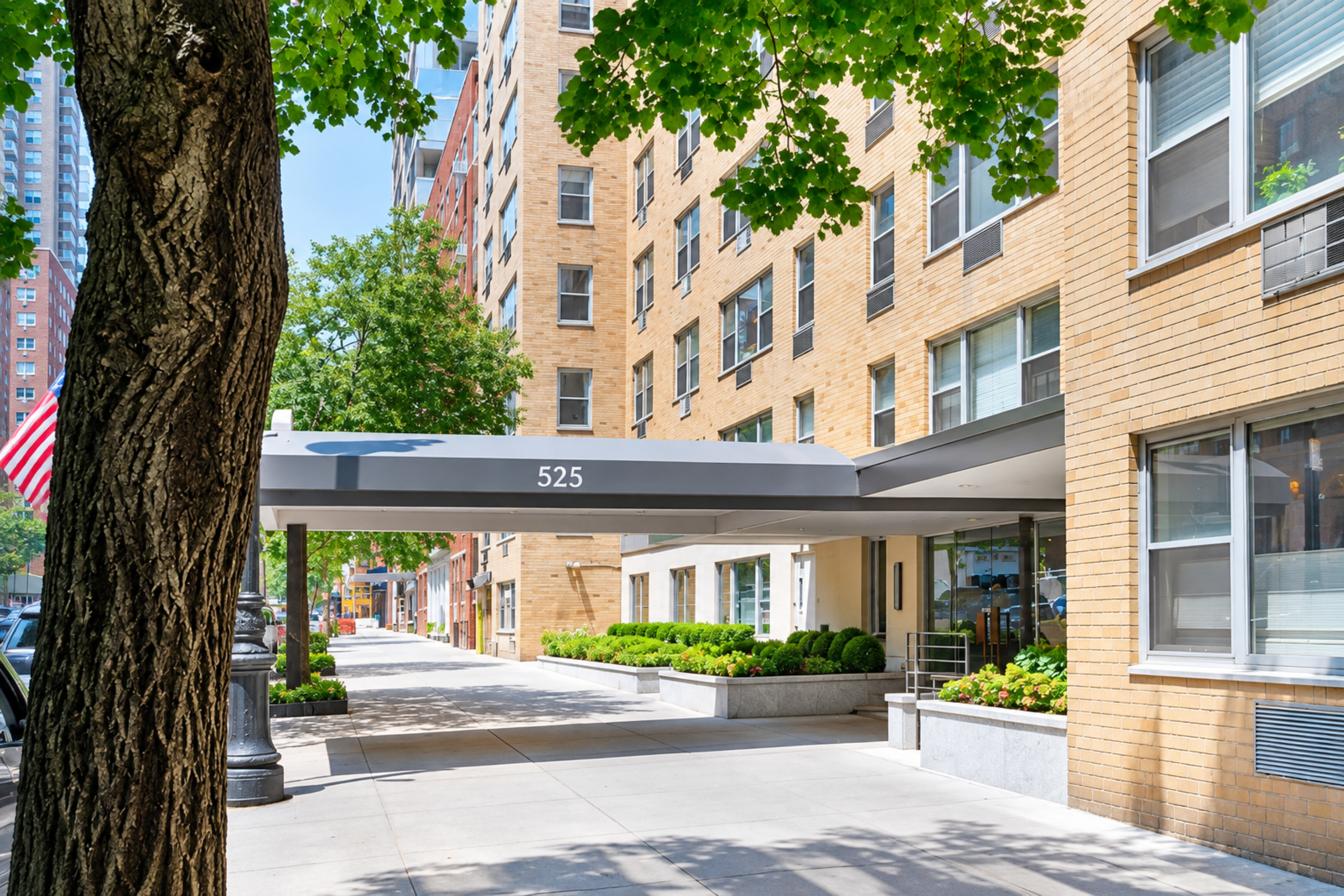
At 525 East 86th Street, Residence 4G sold for $730,000 in January 2025 after a $775,000 ask, with reported maintenance of $2,026 a month. That equals $24,312 a year, about 3.33% of the sale price. The record does not prove maintenance caused the discount, but it shows why annual carrying cost belongs beside price.
At 301 East 62nd Street, two 2026 one-bedroom listings showed a useful same-building contrast. Residence 14B was asking $565,000 with $1,530 monthly maintenance. Residence 14J was asking $635,000 with $872 maintenance, plus two reported $80.67 assessments through different dates. Through September 2026, the stated 14J burden would be $1,033.34. The lower-priced apartment was larger, so price, size, and monthly cost still required normalization.
At 345 East 69th Street, Residence 11A was asking $499,950 with reported maintenance of $931 a month, while the listing said building maintenance had declined 9% year over year. That kind of change can improve the story, but it should be confirmed with management and current financial statements before publication or negotiation.
Buyer Financing, Liquidity, and Board Review
A lender reviews the buyer and may also review the co-op project. The board applies its own financial standards. Higher maintenance can raise housing expense in both reviews, while the building may separately limit financing, require liquidity, or evaluate recurring debt. Mortgage preapproval does not prove board approval.
Ask for the current application and transfer requirements before listing. Confirm maximum financing, post-closing liquidity, debt-to-income treatment, guarantor rules, permitted ownership, flip tax, and interview process. There is no citywide co-op liquidity multiple or DTI rule. Use the building’s written requirements rather than another address’s reputation.
For agency-eligible share loans, project risks can include financial statements, insurance, litigation, critical repairs, engineering concerns, and the underlying mortgage. A seller cannot guarantee financing, but a complete building file helps the buyer and lender identify issues before they derail the timetable.
For a building-level pricing and seller-net analysis of a high-maintenance Upper East Side co-op, contact Brett before launching the listing.
When High Maintenance Signals a Building-Level Risk

A high charge deserves more scrutiny when it is rising faster than expenses are explained, reserves are weak, the underlying mortgage is approaching maturity, or major work remains unfunded. Insurance pressure, operating deficits, arrears, litigation, critical repairs, or repeated assessments can affect both buyer confidence and lender review. Do not present the monthly number as the only issue when the real concern is the building’s financial direction.
Review at least two or three years of financial statements and maintenance history where available. Compare actual expenses with budget, inspect reserve activity, identify nonrecurring income, and ask how the next capital projects will be funded. If refinancing is near, obtain the current principal balance, maturity, rate structure, and any board disclosure about expected terms. A seller cannot guarantee future charges, but can avoid creating distrust by giving buyers the same current records the attorney, lender, and board package will eventually require.
Make the Maintenance Understandable Before Listing
Build the Financial File
Collect the current budget, audited financial statements, maintenance history, assessment notices, reserve information, underlying-mortgage terms, insurance, litigation disclosures, and capital-project updates. Add the proprietary lease, bylaws, offering plan and amendments, transfer-fee schedule, application, financing rules, and managing-agent contacts.
Ask management to identify the apartment’s annual tax statement or Form 1098 information. Only the properly allocated deductible real-estate taxes and mortgage interest may qualify for tax treatment. The buyer should not assume the gross maintenance bill is deductible. Staff, utilities, insurance, principal, reserves, and ordinary repairs are not automatically deductions.
Show What the Buyer Receives
Translate the charge into verifiable value: staffing, included utilities, amenities, reserves, completed work, financial stability, or building debt strategy. Avoid saying that high maintenance is worth it without evidence. State what is included, what changed, and what the records show.
If expenses rose because insurance, labor, taxes, or debt service increased, explain that plainly. If the building recently completed major work, provide the scope and payment history. Buyers discount uncertainty more aggressively than a documented expense they can place in context.
Who the Apartment Competes With

Compare the apartment first with genuine Upper East Side co-ops serving the same buyer. Nearby co-ops with lower maintenance may compete even when they are smaller or less renovated. Condos and newer inventory can also compete when buyers value financing flexibility, deeded ownership, or a different approval process.
For the ownership, financing, and resale trade-offs buyers may compare, read this Upper East Side co-op versus condo comparison.
Normalize total monthly cost, cash at closing, condition, services, taxes, assessments, financing, and likely renovation. A co-op may offer more space or service at a lower price, while a condo may offer flexibility at a higher basis. The subject apartment should be positioned around the buyer problem it solves, not a blanket claim that one ownership type is better.
Seller Strategy: Price the Net, Not Maintenance Alone
Build a seller net sheet at the asking price, expected contract price, and minimum acceptable outcome. For an individual residential co-op above $500,000 and below $3 million, ordinary seller transfer taxes are generally 1.425% NYC RPTT plus 0.4% NYS base transfer tax, totaling 1.825%. At $3 million or more, an additional 0.25% NYS base tax generally applies.
Add negotiated brokerage compensation, attorney and transfer-agent costs, move-out fees, assessment adjustments, concessions, the building’s authorized flip tax, and the share-loan payoff. Keep payoff separate from transaction expenses because it reduces cash proceeds but is not the cost of selling. Capital-gains and nonresident estimated tax require separate analysis.
For illustration, a $2.4 million sale with a $900,000 payoff, 5% commission, 2% seller flip tax, 1.425% NYC RPTT, 0.4% NYS transfer tax, and $3,000 legal or transfer costs produces an estimated $1,285,200 before income taxes. The assumptions are not a quote; replace every line with the building documents, negotiated terms, and actual payoff.
Compare offers by net and execution. A slightly lower buyer with credible financing, sufficient liquidity, and a complete board package may outperform a higher offer with fragile approval assumptions. Apply financial criteria objectively and consistently. No offer structure guarantees lender or board approval.
The 2026 Co-op Application Timeline

Local Law 58 of 2026 took effect July 28, 2026 for covered co-op applications submitted on or after that date. Covered buildings generally have 15 days to acknowledge each submission, state completeness, and identify missing items. A decision is generally due within 45 days after completeness is acknowledged or deemed, subject to permitted extensions and summer-recess tolling.
The law excludes certain HDFC or government-supervised cooperatives and buildings with fewer than 10 dwelling units. It regulates process, not substantive maintenance, financing, liquidity, or approval standards. A missed deadline can trigger penalties but does not automatically approve the buyer or set the closing date.
Launch and Negotiate From Evidence
Prepare the apartment and building file together. Fresh paint, repairs, lighting, decluttering, an accurate floor plan, and strong photography help, but presentation cannot substitute for the budget, assessment history, and mortgage information a buyer will review.
Track qualified showings, repeat visits, questions, and offer quality during the first two weeks. If the same objection recurs, identify whether it is the asking price, maintenance, assessment, condition, financing rule, or missing documentation. Do not make small reactive reductions without deciding which problem the reduction is meant to solve.
In negotiation, show the buyer the complete monthly and building picture. A concise maintenance breakdown, current tax allocation, assessment schedule, recent capital work, and realistic closing process make the apartment easier to compare. Evidence protects value better than insisting that the monthly charge should not matter.
Selling a UES Co-op With High Maintenance: Set the Number From the Building Out

Document what maintenance funds, separate assessments, compare same-building evidence, model buyer financing and liquidity, and calculate seller net before choosing the ask. High maintenance narrows some buyer budgets, but a clear building story and disciplined price can still produce a strong sale.
If you are selling a high-maintenance Upper East Side co-op or planning another New York City real-estate move, contact Brett to compare price, maintenance, and likely proceeds.
Frequently Asked Questions
Price it from recent closed sales in the same building and line, then adjust for floor, exposure, legal layout, usable size, condition, outdoor space, storage, assessments, and timing. Compare active co-ops buyers can choose now, but treat asks as competition rather than proof of value. Model the buyer’s total monthly payment and the seller’s net at the launch ask, expected contract price, and minimum acceptable outcome. Do not subtract an arbitrary amount merely because maintenance looks high. First determine what the charge includes, whether the apartment is larger or better positioned, and whether competing buildings face deferred work, lower services, or different financing rules.
Not automatically. High maintenance is a pricing factor because buyers compare total carrying cost and qualification, but the correct adjustment depends on the apartment and building. A higher charge may support staff, utilities, taxes, underlying-mortgage debt service, reserves, or completed capital work. It may also reflect an expense problem or refinancing risk. Explain the components, compare them with genuine alternatives, and test how the monthly difference changes the buyer pool. If repeated qualified feedback shows the apartment loses to similar co-ops because of carrying cost, adjust the price decisively rather than making small reductions without a clear valuation reason.
Maintenance generally includes the apartment’s allocated share of the corporation’s operating costs and may cover staff, management, common utilities, insurance, repairs, reserves, real-estate taxes, and debt service on the building’s underlying mortgage. The exact inclusions are building-specific, and apartment electricity, cable, interior repairs, or other costs may be separate. An assessment should be shown separately unless management states otherwise. Buyers should review the current budget, financial statements, offering plan and amendments, proprietary lease, assessment notices, and underlying-mortgage terms. They should also obtain the annual tax allocation rather than assuming the full monthly charge is deductible.
Buyers need both lender approval and, where required, board approval. Higher maintenance increases the monthly housing expense used in affordability analysis and may reduce the loan amount or buyer pool. The building may separately cap financing, require post-closing liquidity, review recurring debt, or apply income standards. A mortgage preapproval does not establish that the co-op project or buyer will satisfy every board requirement. Sellers should obtain the current application, financing limits, liquidity guidance, flip-tax schedule, and questionnaire contact before listing. Complete financial, insurance, litigation, engineering, and underlying-mortgage records help the lender assess the project without preventable delays.
Yes. Disclose known assessments and material expense information accurately and early. Provide the monthly amount, purpose, start and end dates, remaining balance, project status, and expected contract allocation. If another increase or capital project is under consideration, do not describe the current charge as final without written support. Buyers and attorneys will review the budget, financial statements, board minutes where available, capital work, reserves, insurance, and underlying mortgage. A documented temporary assessment can be easier to price than a surprise discovered after contract. Early disclosure also lets the seller decide whether to pay the balance, offer a credit, or price the obligation into the listing.
A typical seller may pay NYC RPTT, New York State transfer tax, negotiated brokerage compensation, attorney and transfer-agent charges, move-out fees, assessment adjustments, concessions, and any authorized building flip tax. For an individual residential co-op above $500,000 and below $3 million, ordinary seller transfer taxes generally total 1.825%. At $3 million or more, the additional 0.25% NYS base tax generally raises the stack to 2.075%. The seller’s share-loan payoff also reduces proceeds but should be shown separately from transaction costs. Capital-gains tax and possible nonresident estimated income-tax payments require individualized tax advice and should not be guessed from the contract price alone.