
Manhattan seller closing costs in 2026 begin with the sale price, but a condo, co-op, or townhouse sale involves more than that number. Transfer taxes, brokerage compensation, attorney work, building charges, loan payoff costs, and possible withholding can materially change the cash you receive.
For a practical overview of who pays which charges, see Brett’s NYC seller closing costs guide early in your planning. This article focuses on 2026 rules and the line items that should appear in a seller’s net sheet.
The key distinction is between a transaction cost and an income tax. Transfer taxes are generally calculated from consideration or sale price. Capital gains tax is calculated from gain after selling expenses and adjusted basis. A mortgage payoff reduces cash proceeds, but does not automatically reduce taxable gain.
Manhattan Seller Closing Costs 2026: Start With the Net
A standard Manhattan resale usually has four major seller costs: broker compensation, NYC Real Property Transfer Tax, New York State Real Estate Transfer Tax, and legal and building charges. A co-op may add a flip tax. A sponsor sale can move seller costs to the buyer under the signed contract.
NYC Real Property Transfer Tax

NYC RPTT applies to transfers of real property and economic interests in New York City when consideration exceeds $25,000. It also reaches certain transfers of a controlling interest in an entity that owns or leases NYC real property and transfers of cooperative housing stock.
The grantor, normally the seller, is liable for NYC RPTT. If the grantor is exempt or does not pay, the grantee can become liable. A contract can allocate the economic burden differently, but a private allocation does not erase the statutory backstop.
Residential condo and co-op rates
For an individual residential condominium unit, individual cooperative apartment, or one to three family house, the residential schedule applies. Consideration of more than $25,000 through $500,000 is taxed at 1%.
When residential consideration is more than $500,000, the NYC RPTT rate is 1.425% on the applicable consideration. This is a cliff structure. A $501,000 qualifying residential transfer is not taxed at 1% on the first $500,000 plus 1.425% on the balance.
The 1.425% residential rate applies to the entire taxable consideration once the threshold is crossed. The exact consideration calculation can differ for special transfers, multiple units, liens, and unusual economic interests.
Other transfers use the higher schedule: 1.425% when consideration is $500,000 or less, and 2.625% when consideration is more than $500,000. Multiple condo or co-op units transferred together can be treated as a higher rate transaction unless facts support treatment as one integrated individual residential unit.
NYC filing timing
The NYC RPTT return and payment are generally due within 30 days after the transfer, even when the return reports no tax. Deed transfers are handled through the recording process. A co-op stock transfer does not record a deed; NYC Finance uses a separate Cooperative Transfer Summary return alongside applicable transfer-tax documents.
New York State transfer taxes

New York State imposes a base real estate transfer tax when consideration exceeds $500. The base rate is $2 for each $500, or effectively 0.4% of consideration. The seller, as grantor, is the statutory payer unless the contract shifts the economic burden.
For NYC residential conveyances at $3 million or more, New York adds an additional base tax of $1.25 for each $500. That is an additional 0.25%. The ordinary seller-side NYS rate therefore becomes 0.65% at $3 million or more, combining the 0.4% base tax and 0.25% additional base tax.
NYS supplemental tax and mansion tax
The buyer generally pays two separate NYS charges that sellers often see on closing statements. The mansion tax is 1% of residential consideration when the entire consideration is $1 million or more. The NYC supplemental tax applies to residential conveyances of $2 million or more. Its rate depends on the entire conveyance amount and ranges from 0.25% to 2.9%. It is paid by the buyer, but if the buyer fails to pay, the seller can become liable under the statute.
The combined buyer-side rate is 1% from $1 million to under $2 million, 1.25% from $2 million to under $3 million, 1.5% from $3 million to under $5 million, and 2.25% from $5 million to under $10 million. It is 3.25% from $10 million to under $15 million, 3.5% from $15 million to under $20 million, 3.75% from $20 million to under $25 million, and 3.9% at $25 million or more.
Broker compensation is negotiated

New York does not set a mandatory residential commission rate. The Department of State says compensation and its terms are negotiable. The listing agreement controls the amount, who receives it, when it is earned, and whether the seller offers compensation or a concession toward the buyer’s agent.
Co-op flip tax and building fees

A co-op flip tax is a private transfer fee, not a city or state tax. It may be imposed by the proprietary lease, bylaws, offering plan, or a properly adopted amendment. The documents also determine the payer and formula.
Common formulas include a percentage of sale price, a percentage of profit, a dollar amount per share, a flat charge, or a sliding formula based on ownership duration. Market examples often fall around 1% to 3%, but there is no universal range and some buildings charge no flip tax.
Request a written calculation from the managing agent before listing. Read the proprietary lease, bylaws, offering plan, and amendments. A board cannot necessarily impose a new fee by informal practice when governing documents do not authorize it.
A named Manhattan example appears in the New York Attorney General’s Real Estate Finance Database. It identifies 220 Central Park South Condominium at 220 Central Park South, New York, NY 10019, as a Manhattan condominium offering plan, file CD140184. That record confirms the plan identity, Manhattan address, sponsor, and condominium offering-plan metadata. It does not establish seller expenses, fee schedules, or current resale obligations for a unit there.
Condos generally do not have co-op flip taxes because a condo transfers a deeded real property interest. Typical seller-side charges can include managing-agent processing, co-op attorney work, stock-transfer fees, move-out fees, refundable deposits, title closer or pickup fees, condo resale package charges, UCC-3 termination, deed recording fees, and adjustments for unpaid charges.
Mortgage payoff and CEMA

The lender’s payoff statement shows principal, per diem interest, charges, and the date through which the quote is valid. The payoff is deducted from closing proceeds. It is not a seller closing cost in the same sense as transfer tax, but is essential to the cash-net calculation.
A condo or townhouse seller may explore a purchase CEMA. A qualifying purchase CEMA can assign and consolidate the seller’s existing mortgage with the buyer’s financing, potentially reducing mortgage recording tax on previously taxed debt. A separate NYS continuing-lien deduction depends on the lien remaining after conveyance and other statutory conditions, not merely the CEMA label.
A purchase CEMA requires cooperation from the existing lender and buyer’s lender. It can involve assignment documents, lender fees, timing risk, and title coordination. It does not automatically reduce NYC RPTT. The attorney must confirm whether it works for the particular loan and transfer.
Sponsor contracts and shifted costs

A sponsor or new-development sale is not the same as a normal owner resale. The offering plan and purchase contract may require the buyer to pay NYC RPTT, NYS transfer taxes, the sponsor’s attorney fee, working capital, and other charges normally associated with a seller.
The signed contract controls the allocation. Read the offering plan, amendments, purchase agreement, sponsor rider, tax provisions, and closing-cost schedule before treating any cost as buyer or seller responsibility.
FIRPTA and foreign sellers

FIRPTA is federal income-tax withholding, not a transfer tax. When a foreign person disposes of a U.S. real property interest, the buyer is generally the withholding agent. The general withholding rate is 15% of the amount realized. Amount realized is not the seller’s net profit. It can include cash, property value, and debt assumed or otherwise taken into account. FIRPTA withholding can therefore be much larger than eventual tax on gain.
The buyer generally reports and remits withholding on Forms 8288 and 8288-A. A seller or buyer can request reduced or zero withholding using Form 8288-B. A valid nonforeign certification, IRS withholding certificate, or statutory exception may eliminate or reduce withholding. Co-op shares can themselves be a US real-property interest, so stock form alone is not an exemption.
The buyer-residence exception requires its own price and use tests.
New York nonresident estimated income tax
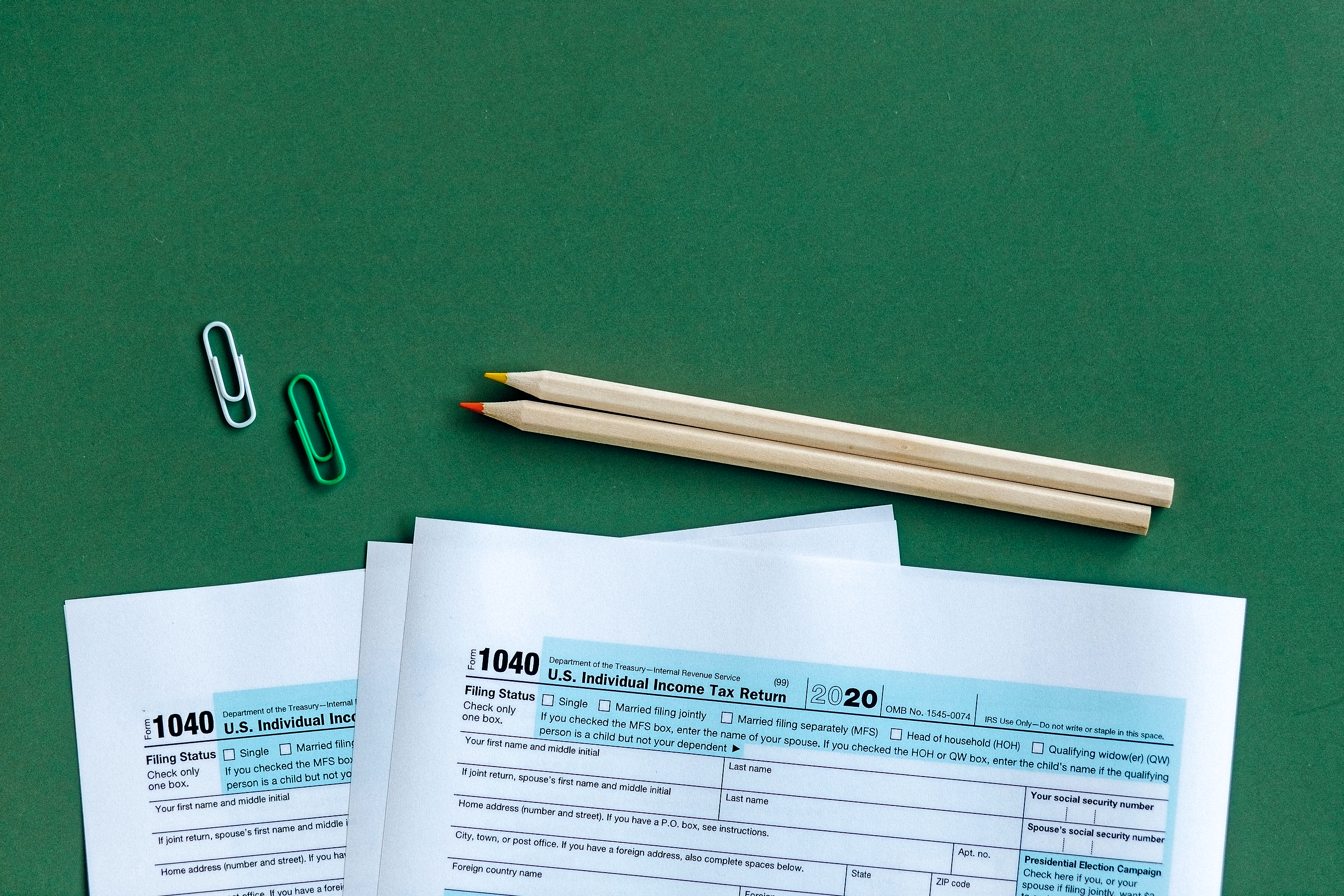
New York separately requires certain nonresident individuals, estates, and trusts to estimate income tax on gain from a sale or transfer of New York real property. This is an income-tax prepayment, not the NYS real estate transfer tax.
Use Form IT-2663 for a fee-simple real property transfer. Use Form IT-2664 for a nonresident sale or transfer of co-op shares connected with a proprietary lease. The 2026 forms use a 10.90% highest-rate calculation for the estimated payment. A New York resident does not have the nonresident payment requirement, but the resident and transfer still use applicable transfer-tax forms. A qualifying principal residence can support an exemption. A no-gain or loss sale is not itself a filing exemption: the applicable form generally still must be submitted with zero estimated tax. The form instructions control.
The estimated payment is credited on the seller’s New York income-tax return. It generally cannot be refunded before the return is filed. A nonresident seller should not confuse it with final New York tax liability.
Income tax versus cash proceeds

Cash proceeds are what remains after transaction deductions and debt payoff. Taxable gain is a separate computation. The IRS generally starts with sale price, subtracts selling expenses to determine amount realized, then subtracts adjusted basis. Adjusted basis can include acquisition cost, qualifying improvements, and certain purchase costs. A mortgage payoff does not by itself reduce gain. It simply pays debt from money generated by the sale.
An eligible principal-residence seller may exclude up to $250,000 of gain, or up to $500,000 for a qualifying married couple filing jointly. Ownership, use, look-back, rental, depreciation, and reporting rules matter. A Form 1099-S can require reporting even when gain is excluded.
$1.5 million Manhattan seller net example

This illustrative condo resale assumes a $1,500,000 sale price, 5% negotiated total commission, no flip tax, $3,500 seller attorney fee, $2,500 building and recording charges, and a $500,000 mortgage payoff.
At $1.5 million, NYC RPTT is 1.425% because residential consideration exceeds $500,000. The NYC tax is $1,500,000 multiplied by 0.01425, which equals $21,375.
NYS base RETT is 0.4% because the sale is below $3 million. The NYS tax is $1,500,000 multiplied by 0.004, which equals $6,000. The 0.25% additional base tax does not apply, and buyer mansion and supplemental taxes are not seller deductions in this example.
The commission is $1,500,000 multiplied by 0.05, or $75,000. Adding commission, NYC RPTT, NYS base RETT, attorney fees, and building charges gives $75,000 plus $21,375 plus $6,000 plus $3,500 plus $2,500, or $108,375.
Net before mortgage payoff is $1,500,000 minus $108,375, or $1,391,625. After the assumed $500,000 payoff, estimated cash to the seller is $891,625.
If a co-op’s governing documents imposed a seller-paid 2% flip tax on gross sale price, that assumed fee would be $30,000. A per-share or profit-based formula would yield a different amount. Net before payoff would become $1,361,625, and estimated cash after the same payoff would become $861,625. Building documents control whether a flip tax exists.
Seller Strategy
Build the net sheet before pricing
Ask your broker for signed commission assumptions and your attorney for a seller-cost estimate before setting a list price. Add the building’s written fee schedule and a current lender payoff. Recalculate at each material offer because price changes can cross the $500,000 or $3 million threshold.
Confirm the building formula
For a co-op, request the flip-tax calculation, proprietary lease, bylaws, offering plan, amendments, stock-transfer requirements, and move-out charges. For a condo, request resale documents, waiver or right-of-first-refusal charges, managing-agent fees, and deed or title requirements.
Separate taxes from withholding
Mark each line as a transaction tax, private fee, debt payoff, estimated income-tax payment, or withholding. This prevents treating FIRPTA or IT-2663 as a final tax bill, or treating mortgage payoff as a reduction of taxable gain.
Escalate unusual facts early
Tell counsel immediately about foreign status, nonresident status, an LLC or trust owner, multiple units, a sponsor seller, a CEMA request, a prior refinance, a pending lien, a tenant, or a planned unit combination. These facts can change documents, timing, tax treatment, or the payer.
For a personalized Manhattan planning conversation, visit TheNewYorkCityBroker.com/contact-me.
Use the contract, not custom
The signed listing agreement controls commission. The signed purchase contract can shift certain costs. The offering plan can control sponsor charges. The proprietary lease and bylaws can control a co-op transfer fee. Put every allocation in writing and have counsel confirm it before signing.
Recheck the numbers before closing
Obtain a fresh payoff statement, updated building figures, current transfer-tax forms, and a final closing statement. Compare final figures to the offer-stage net sheet. Keep the settlement statement, improvements records, prior purchase documents, and tax forms for the future income-tax return.
Frequently Asked Questions
The seller, as grantor, is normally liable for NYC RPTT. For an individual residential condo or co-op unit, the rate is 1% when consideration is more than $25,000 through $500,000, and 1.425% when consideration exceeds $500,000. If the seller is exempt or fails to pay, the buyer can become liable.
A contract can shift the economic burden, especially in a sponsor sale, so the signed contract controls the allocation. The return is generally due within 30 days after transfer, even when no tax is reported. The closing attorney usually prepares the return.
Normally no. New York’s 1% mansion tax is imposed on the buyer when residential consideration is $1 million or more. NYC residential conveyances of $2 million or more can also trigger the buyer’s supplemental tax, ranging from 0.25% to 2.9% based on the full conveyance amount.
If the buyer fails to pay, the seller can become liable under the statute, but that differs from the ordinary allocation. A seller should still check the contract for any negotiated reimbursement or shifted charge. The mansion tax is not a seller income tax.
The NYS base transfer tax is 0.4% of consideration. For NYC residential conveyances at $3 million or more, the additional base tax adds 0.25%, producing a combined seller-side NYS rate of 0.65%. The 0.25% applies to full taxable consideration, not only the amount above $3 million.
The current NYC return is TP-584-NYC, and filing is generally within 15 days after delivery of the instrument. The $3 million test concerns the entire residential conveyance amount. Do not confuse this with the buyer’s $1 million mansion-tax threshold.
There is no statewide or citywide flip-tax rate. A co-op flip tax is a private building charge authorized by the proprietary lease, bylaws, offering plan, or properly adopted amendment. Formulas can use sale price, profit, share count, a flat amount, or a sliding scale.
Market examples often fall between 1% and 3%, but some buildings charge nothing and others use a different formula. Obtain a written calculation before listing. The contract can also allocate a fee differently from the building’s customary practice. The managing agent should confirm the amount in writing.
A mortgage payoff reduces cash received, but does not by itself reduce NYC RPTT or taxable gain. A qualifying purchase CEMA can sometimes create a NYS continuing-lien deduction and reduce the buyer’s mortgage recording tax, but it requires lender cooperation. It does not automatically reduce NYC RPTT. Your attorney should determine whether a CEMA is available and economical for the particular loan. It can also create timing and documentation risk. The buyer and both lenders must cooperate.
A foreign seller may be subject to federal FIRPTA withholding, generally 15% of amount realized, with the buyer acting as withholding agent. Form 8288-B can request reduced or zero withholding. A nonresident individual, estate, or trust may also owe New York estimated income tax on gain.
Use IT-2663 for fee-simple property and IT-2664 for a co-op transfer. These are separate from transfer taxes and final income-tax liability. Raise both issues before contract signing. The correct form depends on the property interest and seller’s status.
For Manhattan seller closing costs or another NYC sale, contact TheNewYorkCityBroker.com/contact-me. Have your attorney and tax adviser confirm final numbers.